
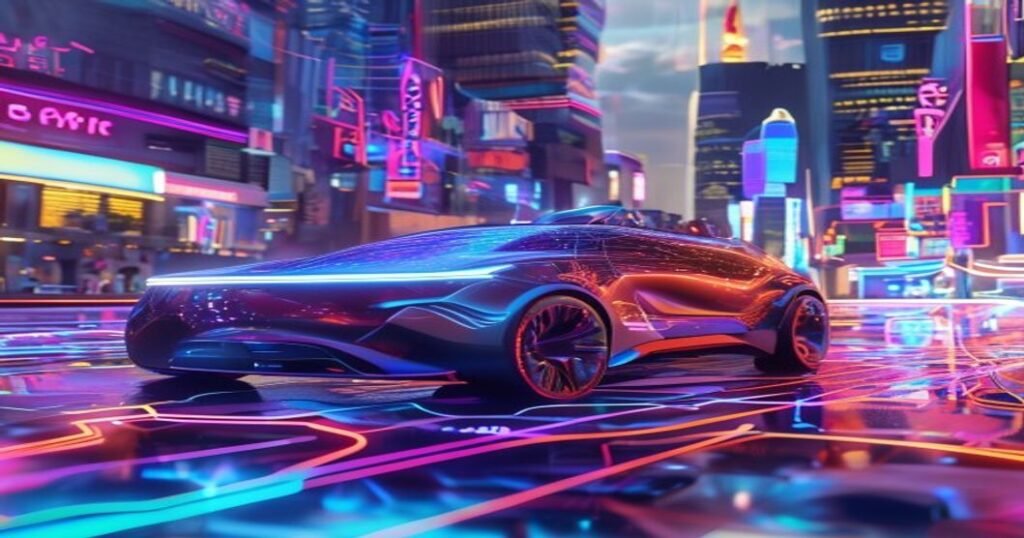

Alright, let’s talk cars. But not just any cars – we’re talking about a seismic shift in how we conceive, interact with, and even feel about the machines that move us. If you think the auto industry is just about new models and flashy paint jobs, you’re missing the forest for the trees. What’s happening now is nothing short of a complete overhaul, a profound transformation driven by electrification, artificial intelligence, and a vision of autonomy that would have seemed like science fiction just a decade ago. It’s not just an evolution; it’s a full-blown revolution, and frankly, it’s exhilarating to witness.
For decades, the internal combustion engine (ICE) reigned supreme, dictating everything from vehicle design to fuel infrastructure. But that era is rapidly fading into the rearview mirror. The rise of electric vehicles (EVs) isn’t merely about cleaner emissions; it’s about fundamentally rethinking vehicle architecture, performance, and the very concept of ‘fueling up.’ EVs bring with them instantaneous torque, silent operation, and a smoother, often more thrilling, driving experience. Gone are the days of gear shifts and engine roar – replaced by the quiet hum of electric motors and a surge of power that can pin you to your seat.
The Electric Juggernaut: More Than Just a Battery
When you strip away the engine, transmission, and fuel tank, you’re left with a ‘skateboard’ platform that opens up incredible possibilities for design and utility. Batteries can be integrated into the floor, creating a lower center of gravity, more interior space, and entirely new cabin layouts. Manufacturers are no longer bound by the bulky mechanics of the ICE, allowing for everything from frunks (front trunks) to lounge-like interiors. This isn’t just about efficiency; it’s about reimagining the car as a flexible space, a mobile living room, or even a workspace.
Of course, the transition isn’t without its speed bumps. Charging infrastructure remains a key challenge, demanding massive investment and clever solutions to ensure convenience and accessibility for everyone. Range anxiety, while diminishing with improving battery technology, still lingers for some. Yet, the momentum is undeniable. Governments, environmental regulations, and consumer demand are all pushing us towards an electric future, and the innovation pouring into battery technology, charging speeds, and sustainable manufacturing processes is staggering. It’s a brave new world, and frankly, I’m all for it.
AI and Autonomy: Giving the Wheel to Code
Perhaps the most mind-bending shift is the integration of Artificial Intelligence. It’s not just about self-parking anymore; it’s about cars that can perceive, predict, and ultimately, drive themselves. From advanced driver-assistance systems (ADAS) that offer adaptive cruise control and lane-keeping assistance to fully autonomous vehicles promising to revolutionize urban mobility, AI is the silent co-pilot – or perhaps soon, the sole pilot – in our vehicles. These systems are constantly learning, collecting data, and improving, making our roads potentially safer and our commutes less stressful. Imagine a world where traffic jams are optimized by AI, and accidents due to human error become a rarity. That’s the promise, and it’s a powerful one.
This deep integration of AI means our vehicles are becoming more than just transportation; they’re becoming intelligent companions. They can learn our preferences, anticipate our needs, and even entertain us. This leads us to a fascinating discussion: Beyond the Wheel: How EVs & AI Are Redefining What It Means To Drive. It’s no longer just about the act of driving, but about the experience within the vehicle, which AI is increasingly curating and enhancing. This evolution blurs the lines between a car and a personal assistant, a data hub, and an entertainment system, all rolled into one smart package.
The Car as a Digital Ecosystem
Think about your smartphone. Now imagine that level of connectivity, customization, and constant updates applied to your car. That’s where we’re headed. Modern vehicles are becoming hyper-connected digital ecosystems on wheels. Over-the-air (OTA) updates can improve performance, add new features, and even fix software bugs without ever needing a trip to the dealership. Infotainment systems are merging seamlessly with our digital lives, offering everything from streaming services to integrated productivity tools. Our cars are becoming extensions of our digital selves, always connected, always updating, always evolving.
This digital transformation, however, isn’t just about entertainment. It’s about data. Billions of data points are collected every second – from traffic patterns and road conditions to driver behavior and vehicle diagnostics. This data fuels the AI that drives autonomous systems, helps city planners optimize infrastructure, and enables manufacturers to constantly refine their products. It’s a goldmine of information, and it’s reshaping urban planning and personal mobility in ways we’re only just beginning to grasp.
Transformative Travel: Redefining the ‘Escape’
As vehicles become more autonomous and connected, the very purpose of a journey shifts. If you’re not constantly focused on driving, what are you doing? This opens up incredible possibilities for productivity, relaxation, or even social interaction during transit. Imagine catching up on work, watching a movie, or having a face-to-face conversation with family members while your car safely navigates a long road trip. The dreaded commute could become an opportunity, not a chore.
This redefinition of the journey fundamentally alters our concept of travel. It’s no longer just about getting from A to B; it’s about the quality of the time spent during the journey. The concept of The Great Escape Reinvented: How Tech & AI Are Unleashing the Future of Transformative Travel perfectly encapsulates this. Whether it’s a daily commute or a cross-country adventure, the in-car experience is poised to become an integral, perhaps even the primary, part of the travel narrative. Our cars are evolving from mere conveyances into dynamic, personalized environments that enhance our lives on the move.
The Human-AI Duet: Creativity in the Driver’s Seat
While some fear that AI might diminish the human element in driving, I believe it’s quite the opposite. This isn’t about replacing human ingenuity, but augmenting it. The development of these sophisticated systems, from sleek EV designs to intuitive AI interfaces, still requires immense human creativity and problem-solving. Engineers, designers, and UX specialists are working in tandem with AI tools to simulate scenarios, optimize aerodynamics, and craft user experiences that are both futuristic and deeply human. It’s a true collaboration, an The Human-AI Duet: Why Your Creativity Isn’t Dying, It’s About to Sing Louder Than Ever, where human vision guides AI capabilities to create something truly groundbreaking. Far from stifling innovation, AI is providing new canvases and tools for human creativity to flourish, pushing the boundaries of what a vehicle can be.
The Road Ahead: Navigating the New Landscape
This transformation isn’t just happening in showrooms; it’s shaking up entire industries and challenging established norms. From manufacturing processes to sales models, from insurance policies to urban planning, every aspect of our relationship with the automobile is being re-evaluated. Traditional automakers are scrambling to adapt, while tech giants are entering the fray, bringing fresh perspectives and deep pockets. The competition is fierce, the innovation relentless, and the pace of change truly astounding.
Of course, there are significant hurdles to clear: regulatory frameworks, cybersecurity concerns, ethical considerations of AI decision-making, and the sheer cost of building out new infrastructure. But these challenges, formidable as they are, are being met with equally formidable determination and ingenuity. The current landscape of the auto industry is indeed a The Road Ahead: Why the Auto Industry’s Wild Ride Towards Electric & Autonomous Is Shaking Up Everything We Know. It’s a bumpy, thrilling, and ultimately revolutionary journey that promises to reshape not just how we drive, but how we live.
A New Era of Mobility
So, what does this all mean for you, the everyday driver (or future passenger)? It means a future where your vehicle is smarter, safer, cleaner, and more integrated into your life than ever before. It means more choices, more convenience, and perhaps, more freedom. The days of simply ‘driving a car’ are evolving into an era of ‘experiencing mobility.’ It’s a shift that will touch every aspect of our urban and rural landscapes, redefine travel, and create entirely new economic opportunities. I, for one, am strapped in and ready for the ride. The future of automotive isn’t coming; it’s already here, and it’s spectacular.

