
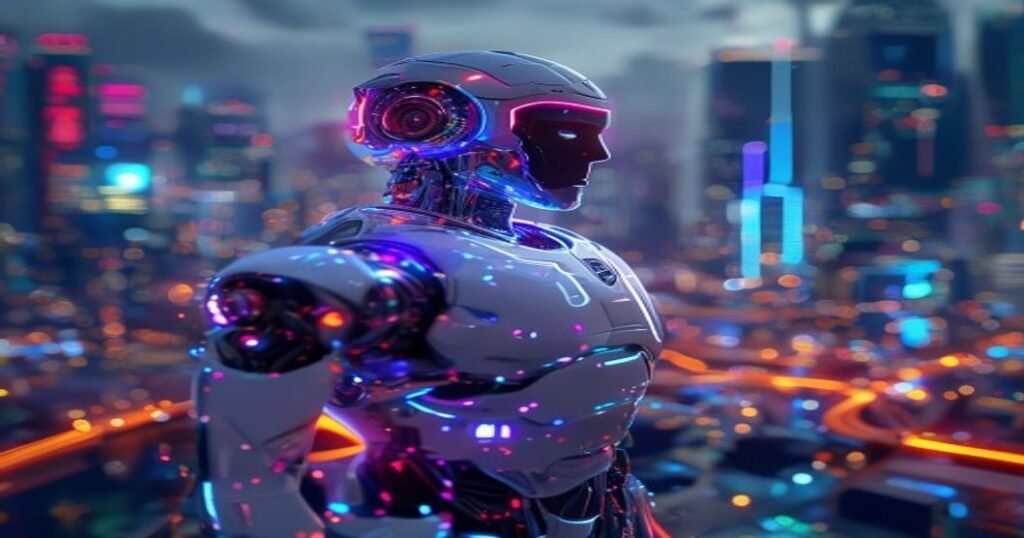

Alright, let’s talk about the elephant in the room – or rather, the incredibly smart, incredibly fast-learning elephant that’s currently reshaping every corner of our professional lives: Artificial Intelligence. You’ve heard the headlines, haven’t you? ‘AI is coming for our jobs!’ ‘Robots will replace us all!’ It’s enough to make anyone a little nervous, maybe even trigger a mild panic attack during a morning commute. But here’s my take, and I believe it’s a crucial one: the narrative isn’t about replacement; it’s about reinvention. The world of work isn’t ending; it’s simply evolving at warp speed, creating entirely new opportunities that we’re only just beginning to grasp.
Think about it. Every major technological leap, from the printing press to the internet, has brought with it a wave of disruption, followed by an even greater wave of innovation and new job creation. AI is no different, only faster, more pervasive, and arguably more intelligent. It’s not just optimizing spreadsheets; it’s writing code, designing graphics, diagnosing illnesses, and even composing music. The question isn’t whether AI will change your job; it’s how you’re going to adapt, grow, and frankly, thrive in this thrilling new landscape.
The AI Tremors: Dispelling the Doom and Gloom
Let’s get one thing straight: the fear of job loss due to automation is legitimate. Historically, repetitive, predictable tasks are the first to be automated. Factories saw this with assembly lines; now, office work is seeing it with data entry, routine customer service, and basic content generation. This isn’t a dystopian novel; it’s the natural progression of technology. However, what often gets lost in the alarmist chatter is the immense upside. For every task automated, new needs arise: for AI trainers, prompt engineers, ethical AI specialists, data annotators, and algorithm auditors.
Imagine being freed from the mundane, the tedious, the soul-crushing tasks that drain your creativity and energy. That’s the promise of AI for many roles. Instead of spending hours compiling reports, you could be analyzing the insights AI provides and formulating strategic recommendations. Instead of manually sifting through data, you could be designing innovative solutions based on AI-driven predictions. This isn’t just about efficiency; it’s about elevating human potential and allowing us to focus on what we do best: innovate, empathize, and create.
Beyond Automation: The Surge of ‘Uniquely Human’ Roles
If AI is so good at logic and data, what’s left for us? A lot, actually. The jobs of the future, and indeed many of the most valuable jobs right now, are those that tap into our distinctly human capabilities. Think critical thinking, complex problem-solving, emotional intelligence, creativity, ethical reasoning, and collaboration. These are the superpowers that AI, for all its brilliance, still struggles to replicate authentically.
- Creativity & Design: While AI can generate art or text, the unique vision, emotional depth, and narrative coherence often still require a human touch. Think of prompt engineering – the art of asking AI the right questions – which is a new creative skill in itself.
- Strategic Leadership & Vision: AI can analyze market trends, but it can’t set a bold new vision for a company or inspire a team through uncertainty.
- Complex Problem Solving: Situations requiring nuanced understanding, cross-cultural sensitivity, or dealing with novel, ill-defined problems remain firmly in the human domain.
- Interpersonal & Emotional Intelligence: Healthcare, education, counseling, sales, and management roles fundamentally rely on human connection and understanding.
- Ethical Oversight & Governance: As AI becomes more powerful, the need for humans to ensure its ethical deployment and fairness becomes paramount.
The Human-AI Duet: Learning to Play Together
This brings me to perhaps the most exciting aspect of this transformation: the concept of augmented intelligence. It’s not about humans versus AI; it’s about humans with AI. Think of it as a duet, where each partner brings their unique strengths to create something far more powerful than either could achieve alone. AI handles the heavy lifting of data processing, pattern recognition, and rapid iteration, while humans provide the intuition, context, empathy, and creative spark. This synergy is where the magic truly happens.
If you’re interested in exploring how our creative faculties are actually being amplified, rather than diminished, by this technological partnership, I highly recommend checking out The Human-AI Duet: Why Your Creativity Isn’t Dying, It’s About to Sing Louder Than Ever. It really dives into how we can leverage AI as a co-pilot, not a replacement, for our most imaginative endeavors.
Industry-Specific Revolutions: Beyond the Traditional Desk Job
The impact of AI isn’t confined to digital roles. Every sector is feeling the reverberations. Take the automotive industry, for example. It’s not just about building cars anymore; it’s about intelligent vehicles, autonomous systems, and sustainable energy. This shift demands entirely new skill sets, from software engineers specializing in AI algorithms for self-driving cars to experts in battery technology and charging infrastructure. These are jobs that barely existed a decade ago, and they’re flourishing now.
To truly grasp the monumental changes happening in this space, and how AI is fundamentally redefining what we even mean by ‘driving,’ you might find this read insightful: Beyond the Wheel: How EVs & AI Are Redefining What It Means To Drive. It’s a perfect example of how established industries are being completely rewired, creating cascades of new job requirements.
The Skills Imperative: Future-Proofing Your Career
So, what do you do with all this information? You adapt. You learn. You lean into the uniquely human skills that AI can’t replicate. Here are some key areas to focus on:
- Digital Literacy & AI Proficiency: This isn’t just about using a computer; it’s about understanding how AI tools work, how to interact with them effectively (prompt engineering!), and how to integrate them into your workflow.
- Critical Thinking & Problem Solving: AI provides data and answers, but humans need to interpret them, question assumptions, and apply them to complex, real-world scenarios.
- Creativity & Innovation: The ability to think outside the box, generate novel ideas, and connect disparate concepts will become more valuable than ever.
- Emotional Intelligence & Communication: Collaboration, negotiation, leadership, and customer service all hinge on our ability to understand and connect with other humans.
- Adaptability & Lifelong Learning: The pace of change isn’t slowing down. A growth mindset, a willingness to continuously learn new skills, and the flexibility to pivot are non-negotiable.
Navigating the Hyper-Connected Workspace: A Personal Reflection
As we embrace AI and more sophisticated digital tools, our work lives also become increasingly interconnected. The lines between professional and personal can blur, and the constant influx of information can be overwhelming. This ‘always-on’ culture, while offering immense flexibility, also presents challenges to our well-being and productivity. It’s a paradox: technology designed to make us more efficient can sometimes make us feel more stretched.
Learning to manage your digital footprint, set boundaries, and cultivate periods of focused work and genuine rest is becoming as crucial as any technical skill. If you’ve ever felt the drain of constant notifications or the pressure of being perpetually available, you’ll find solace and strategies in this piece: The Hyper-Connected Paradox: Why Your Digital Life Needs a Deep Breath and How to Get One. It’s a vital read for anyone navigating the modern professional landscape.
Embracing the Future, Not Fearing It
The AI revolution is not a threat to humanity; it’s a profound shift that demands our attention, our adaptability, and our ingenuity. It’s an invitation to redefine what ‘work’ means, to shed the repetitive burdens, and to elevate our collective potential. The jobs being created now are fascinating, challenging, and often require a blend of technical prowess and uniquely human insight.
So, instead of seeing AI as the enemy, view it as an incredibly powerful tool. A co-worker. A catalyst. The future of work isn’t about us against the machines; it’s about how well we learn to work with them. It’s about empowering ourselves with new skills, embracing continuous learning, and focusing on the irreplaceable human qualities that make us, well, us. The great job reinvention is already here, and it’s an incredible opportunity for those willing to lean in and shape it.

