
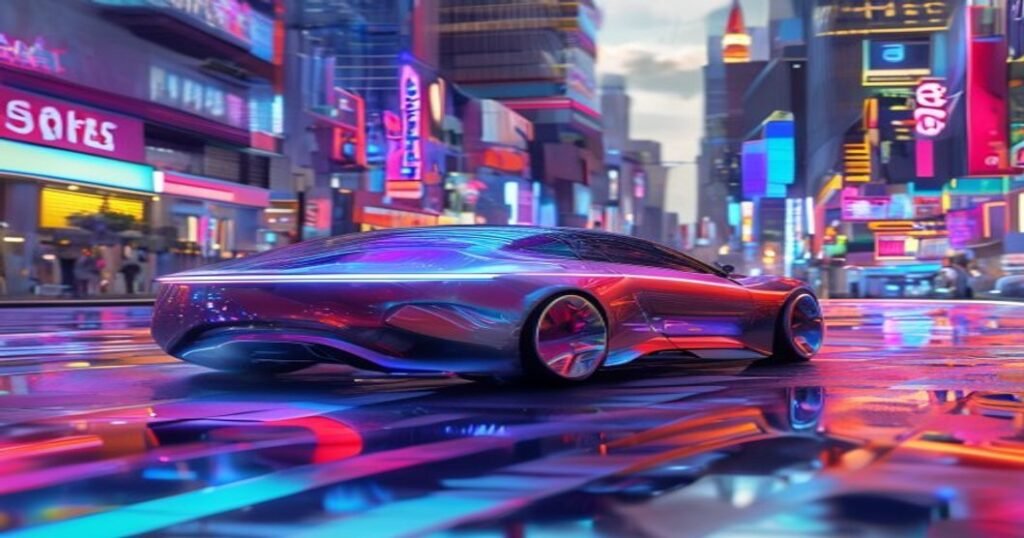

The Road Ahead: Why the Auto Industry’s Wild Ride Towards Electric & Autonomous Is Shaking Up Everything We Know
Let’s be honest, for decades, the automotive industry felt… predictable. A new model year, a fresh coat of paint, maybe a few more horsepower. But if you’ve been paying attention lately, you know that predictability has been thrown out the window. We are in the midst of a tectonic shift, a seismic disruption that’s reshaping not just how we get from A to B, but how we interact with technology, our environment, and even our jobs. It’s an exhilarating, sometimes terrifying, but utterly unmissable spectacle. And trust me, you want to understand what’s happening under the hood (or, increasingly, under the battery pack).
The Electric Surge: More Than Just a Battery, It’s a Movement
Remember when electric vehicles (EVs) were a quirky niche? Something for early adopters or eco-warriors? Well, those days are long gone. EVs are here, and they’re not just a fad; they’re the undeniable future. From sleek sedans to powerful pickups, every major manufacturer is pouring billions into electrification, and the results are stunning. We’re talking instant torque that pins you to your seat, whisper-quiet rides, and a growing sense of responsibility towards our planet. My opinion? The transition might be bumpy, with range anxiety and charging infrastructure still evolving, but the benefits – cleaner air, reduced reliance on fossil fuels, and a genuinely superior driving experience – are too compelling to ignore. It’s not just about swapping out a gas tank for a battery; it’s about rethinking energy, design, and even urban planning. The pace of innovation in battery technology alone is breathtaking, with new materials promising faster charging, longer ranges, and even lower environmental footprints in production.
But this shift isn’t just about the car itself. It’s about the ecosystem around it. Governments are offering incentives, charging networks are expanding (albeit not always fast enough!), and even home energy solutions are adapting to integrate EV charging. It’s a holistic change, and one that demands a new kind of thinking from consumers, manufacturers, and policymakers alike. We are, quite simply, witnessing the rebirth of personal transportation.
The Brain Behind the Wheel: AI and the Autonomous Dream
Now, if EVs are the new muscles of the automotive world, Artificial Intelligence (AI) is undoubtedly its brain. Self-driving cars, once the stuff of science fiction, are slowly but surely becoming a reality. We’re not quite at the ‘hop in and nap’ stage for everyone, everywhere, but advanced driver-assistance systems (ADAS) are already making our cars safer and smarter. Features like adaptive cruise control, lane-keeping assist, and automatic emergency braking are powered by sophisticated AI algorithms constantly analyzing sensor data – cameras, radar, lidar – to perceive the world around them.
This isn’t just a gimmick; it’s a profound shift in how we conceive of driving. Think about the potential: fewer accidents caused by human error, optimized traffic flow, and perhaps even a world where commuting isn’t a stressful chore but productive (or relaxing) time. Of course, the ethical dilemmas, the regulatory hurdles, and the sheer complexity of teaching a machine to navigate the unpredictable chaos of human roads are immense. But the progress is undeniable. And as AI systems become more robust and reliable, the very nature of human interaction with vehicles will change. This evolution naturally leads us to ponder The AI Tsunami: Why Your Job Isn’t Disappearing, It’s Evolving — And How to Thrive in the Next Economy. Driving, as a profession and as a skill, is undergoing a profound transformation, and understanding these shifts is crucial for anyone looking to navigate the future economy.
The sheer volume of data these autonomous systems process is staggering. Every turn, every pedestrian, every traffic light is an input that AI must analyze in real-time to make split-second decisions. This isn’t just big data; it’s colossal data, constantly being fed into machine learning models to improve their performance. It’s safe to say that when we talk about the information explosion, the automotive sector is a huge contributor. This continuous, complex data processing reminds me of how quickly The AI Truth Bomb: How Our Information Landscape Just Exploded (And What It Means for You) has affected nearly every facet of our lives, from how we consume news to how our cars operate.
Connectivity and the Connected Car Ecosystem
Beyond electrification and autonomy, our cars are becoming seamlessly integrated nodes in a larger digital network. The connected car is a mobile data center, communicating with other vehicles (V2V), infrastructure (V2I), and even pedestrians (V2P). This Vehicle-to-Everything (V2X) communication promises to unlock unprecedented levels of safety, efficiency, and convenience. Imagine your car receiving real-time updates about traffic conditions, automatically finding and reserving parking spots, or even predicting potholes. Over-the-air (OTA) updates, once reserved for our smartphones, are now common in vehicles, allowing manufacturers to improve performance, add features, and fix bugs without you ever needing to visit a service center.
This connectivity also opens up a world of personalized infotainment, seamless navigation, and predictive maintenance. Your car won’t just tell you when it needs an oil change; it might tell you *why* based on your driving habits and predict exactly when a specific part might fail. It’s an incredibly rich, personalized experience that’s moving far beyond simply playing your favorite music.
Sustainability Beyond the Tailpipe: A Holistic View
While EVs tackle tailpipe emissions, the pursuit of sustainability in auto extends far beyond that. The industry is grappling with the entire lifecycle of a vehicle: from raw material extraction for batteries and components, to the energy used in manufacturing, to the eventual recycling and disposal. There’s a massive push towards circular economy principles – designing cars for longevity, repairability, and ultimately, for their materials to be reused in new vehicles. Battery recycling, for instance, is a huge challenge and opportunity. Developing efficient and environmentally sound methods to reclaim valuable metals like lithium, cobalt, and nickel from spent EV batteries is critical for the long-term viability of the electric revolution.
Furthermore, we’re seeing innovation in lightweight materials, sustainable interior fabrics, and manufacturing processes that reduce waste and energy consumption. It’s a complex puzzle, but one that the industry is increasingly committed to solving, understanding that true sustainability means looking at the bigger picture.
Challenges and the Road Ahead: Navigating the New Frontier
Of course, such a monumental shift isn’t without its challenges. The infrastructure for widespread EV adoption needs to accelerate dramatically. The cost of EVs, while dropping, remains a barrier for many. Public perception and trust in autonomous technology are still evolving, especially after highly publicized incidents. Regulatory frameworks need to catch up with the pace of innovation, particularly concerning safety, liability, and data privacy in connected and autonomous vehicles. Cybersecurity also becomes paramount; a car that’s essentially a computer on wheels is a prime target for malicious actors.
The global nature of this transformation also means that countries and economies must adapt. For aspiring digital natives and tech enthusiasts in regions like Pakistan, understanding and contributing to this technological frontier is vital. The skills needed in the auto industry are no longer purely mechanical; they are digital, data-driven, and AI-centric. It’s a silent revolution happening on a global scale, where The Silent Revolution: How Pakistan’s Youth are Building a Digital Empire, One Pixel and Gig at a Time (and Why AI is Their Unseen Ally), highlighting the importance of digital literacy and innovation to participate in these new industries.
This isn’t the first time humanity has undergone such a massive shift in how we move. From the invention of the wheel to the steam engine, and then the internal combustion engine, each era brought its own set of disruptions and opportunities. Remembering The Unseen Threads of Time: How Ancient Disruptions Still Define Our Modern World – And What We Miss When We Forget Them, we can see parallels between past technological leaps and the current one, reminding us that while the technology changes, the human capacity for adaptation and innovation remains constant.
Conclusion: Buckle Up, The Future Is Now
The automotive industry is in the midst of its most exciting, unpredictable, and rapid transformation ever. It’s a thrilling confluence of engineering prowess, environmental imperative, and artificial intelligence. The cars of tomorrow won’t just take us places; they’ll be cleaner, smarter, safer, and an integral part of our digital lives. Yes, there are bumps in the road, but the destination – a future of sustainable, intelligent, and accessible mobility – is one worth striving for. So, buckle up, because the journey is only just beginning, and it promises to be one wild ride!


