
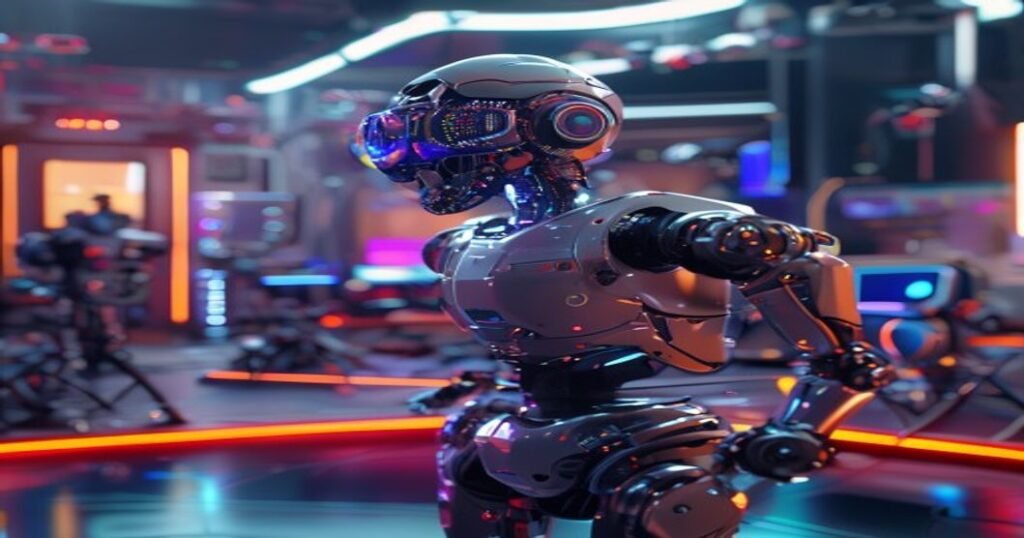

Lights, Camera, AI: How Artificial Intelligence is Radically Reshaping the Entertainment Universe (And Your Couch Potato Habits)
Let’s face it, we’re living in a golden age of entertainment. From binge-worthy series that redefine storytelling to gaming worlds so immersive you forget where reality ends, our options are limitless. But what if I told you that the very fabric of this entertainment universe is undergoing a seismic shift, powered by an unseen hand? I’m talking about Artificial Intelligence, and trust me, it’s not just optimizing your Netflix recommendations anymore. It’s writing scripts, composing symphonies, designing game levels, and fundamentally changing how we create, consume, and even define ‘entertainment’.
For a long time, AI felt like a distant, sci-fi concept. Now, it’s an undeniable force, an algorithmic avalanche reshaping everything, and entertainment is at its epicenter. We’re witnessing a revolution where algorithms aren’t just tools; they’re becoming collaborators, creators, and curators in ways that would have seemed impossible just a few years ago. It’s both exhilarating and, if I’m honest, a little bit terrifying. But one thing is for sure: you can’t afford to be left behind.
The Rise of the Algorithmic Auteurs: AI as a Creative Partner
Remember when the idea of a machine writing a novel or composing a hit song was pure fantasy? Well, pull up a chair, because that fantasy is now bleeding into our reality. AI is no longer just assisting artists; it’s actively participating in the creative process. Think about it:
- Scriptwriting & Story Generation: AI models are now capable of generating compelling narratives, drafting screenplays, and even developing character arcs. While they might not yet capture the subtle nuances of human emotion, they’re proving to be incredibly powerful brainstorming partners, offering fresh perspectives and endless plot twists. Imagine a writer’s block being obliterated by an AI suggesting thousands of unique scenarios!
- Music Composition: From classical pieces to pop anthems, AI can compose music that evokes specific moods, matches existing styles, or even creates entirely new genres. We’re talking about algorithms that understand harmony, rhythm, and melody, producing tracks that are increasingly indistinguishable from human-made compositions. This could democratize music creation on an unprecedented scale.
- Visual Arts & Animation: AI-powered tools can generate stunning visuals, create concept art, and even animate characters with incredible fluidity. This isn’t just about making things faster; it’s about enabling artists to push boundaries, experiment with styles, and bring their wildest imaginations to life without traditional limitations. Think of how much indie creators could achieve with such powerful assistance!
This isn’t to say AI is replacing human creativity entirely. Rather, it’s augmenting it, freeing artists from mundane tasks and allowing them to focus on the truly human elements of storytelling and expression. It’s like having a hyper-efficient, infinitely knowledgeable assistant who never sleeps.
Hyper-Personalization: Your Entertainment, Tailored Just For You
We’ve all experienced the ‘recommended for you’ rows on our favorite streaming platforms. That’s AI at work, learning our preferences, analyzing our viewing habits, and serving up content it thinks we’ll love. But this is just the tip of the iceberg. The future of entertainment is moving towards an era of personalized learning for your leisure time – deeply tailored, adaptive experiences.
Beyond Recommendations: Adaptive Storytelling and Dynamic Worlds
Imagine a movie that adapts its plot points based on your real-time emotional responses, or a video game where NPCs (non-player characters) learn your play style and evolve their behavior accordingly. This isn’t science fiction anymore. AI is enabling:
- Interactive Narratives: Think choose-your-own-adventure on steroids. AI can dynamically generate dialogue, alter scenes, and even change endings based on viewer choices, creating a truly unique experience for every individual.
- Dynamic Gaming Environments: In gaming, AI generates vast, intricate worlds, designs challenging quests, and creates incredibly realistic and adaptive adversaries. This means games can offer infinite replayability, constantly surprising players with fresh content and challenges.
- Immersive Virtual Experiences: With the rise of VR and AR, AI is crucial for creating believable, responsive virtual worlds. From realistic physics to intelligent virtual characters, AI ensures these immersive experiences feel alive and engaging.
This level of personalization isn’t just about convenience; it’s about crafting experiences that resonate with us on a profoundly individual level, making entertainment more engaging and impactful than ever before. It’s truly part of the great reset, radically reshaping our global future, and how we interact with media is a huge part of that.
The Dark Side? Ethics, Authenticity, and the Future of Work
Of course, with great power comes great responsibility, and the rise of AI in entertainment isn’t without its concerns. As a content creator, I often ponder the ethical implications:
- Job Displacement: Will AI-powered tools eventually replace human artists, writers, and musicians? While many argue AI is a tool, not a replacement, the fear of job loss is real and valid. We need to focus on retraining and adapting to new roles where humans collaborate with AI.
- Authenticity and Ownership: Who owns the rights to content generated by an AI? If an AI composes a hit song, who gets the credit (and the royalties)? These are complex legal and ethical questions that the industry is grappling with right now.
- Deepfakes and Misinformation: The same AI technology that can create stunning visual effects can also be used to generate hyper-realistic deepfakes, blurring the lines between reality and fiction. The entertainment industry has a critical role in setting ethical guidelines for the use of such powerful tools.
- The ‘Soul’ of Art: Can an algorithm truly create ‘art’ with soul and emotion, or is it merely replicating patterns? This philosophical debate will likely rage for years to come, pushing us to redefine what creativity truly means in a hybrid human-AI world.
These aren’t easy questions, and there are no simple answers. But as consumers and creators, we must engage in these conversations to ensure AI’s evolution serves humanity, not detracts from it.
Gaming: Where AI Has Always Been a Star Player
While AI is a newcomer in some creative fields, it’s been the backbone of the gaming industry for decades. From simple enemy pathfinding to complex strategic simulations, AI powers the worlds we play in. Now, however, it’s reaching unprecedented levels of sophistication, fundamentally changing how games are made and experienced.
Next-Gen AI in Gaming: Smarter Worlds, Deeper Immersion
- Procedural Generation on Steroids: AI can now generate entire planets, intricate dungeons, and vast open worlds with a level of detail and coherence that was previously unimaginable. This means infinitely explorable universes and unique experiences for every player.
- Intelligent NPCs: Gone are the days of predictable, robotic enemies. Modern AI in games allows NPCs to learn from player behavior, adapt strategies, and even develop unique personalities. This makes interactions more believable and challenges more dynamic.
- Adaptive Difficulty: AI can gauge a player’s skill level in real-time and adjust the game’s difficulty accordingly, ensuring a balanced and engaging experience for everyone, from casual players to hardcore enthusiasts.
- AI-Powered Game Testing: Before a game even hits the market, AI can play through it thousands of times, identifying bugs, testing mechanics, and even suggesting design improvements faster than any human team ever could. This is unleashing the algorithmic alchemist, streamlining development and pushing the boundaries of what’s possible in game design.
The synergy between AI and gaming is electrifying. It’s transforming games from static experiences into living, breathing worlds that constantly evolve and react to us.
The Future is Now: What’s Next for Entertainment?
So, what does all this mean for the future of our entertainment? I believe we’re heading towards an era of:
- Hyper-Customized Content: Imagine a streaming service that doesn’t just recommend a show, but generates a slightly different version of it specifically for you, featuring actors you prefer, plot points that align with your interests, or even adapting the mood to your current emotional state.
- Seamless Blending of Realities: AR and VR, powered by advanced AI, will blur the lines between physical and digital worlds, creating interactive experiences where entertainment is not just consumed, but lived.
- New Forms of Storytelling: AI will enable entirely new genres and narrative structures that are truly interactive, multi-sensory, and continuously evolving.
- Decentralized Creation: Tools will become so powerful and user-friendly that anyone with an idea can become a creator, using AI as their personal studio.
This isn’t about AI replacing human creativity, but about expanding its horizons beyond anything we’ve known. It’s about a world where every story can be told, every song can be composed, and every game can be played in ways that resonate perfectly with the individual.
Embrace the Change, or Be Left Behind
The entertainment industry is in a state of flux, driven by the relentless march of AI. While the challenges are real and the ethical debates necessary, the opportunities are even greater. As consumers, we get to experience content that is more engaging, personalized, and diverse than ever before. As creators, we gain tools that empower us to achieve our artistic visions with unprecedented efficiency and scope.
My take? Don’t fear the AI revolution in entertainment; embrace it. Understand its potential, engage with its tools, and be part of the conversation shaping its future. The next blockbuster, the next viral song, or the next groundbreaking game might just have an AI as its co-pilot. And I, for one, can’t wait to see (and hear, and play) what it creates next.


