
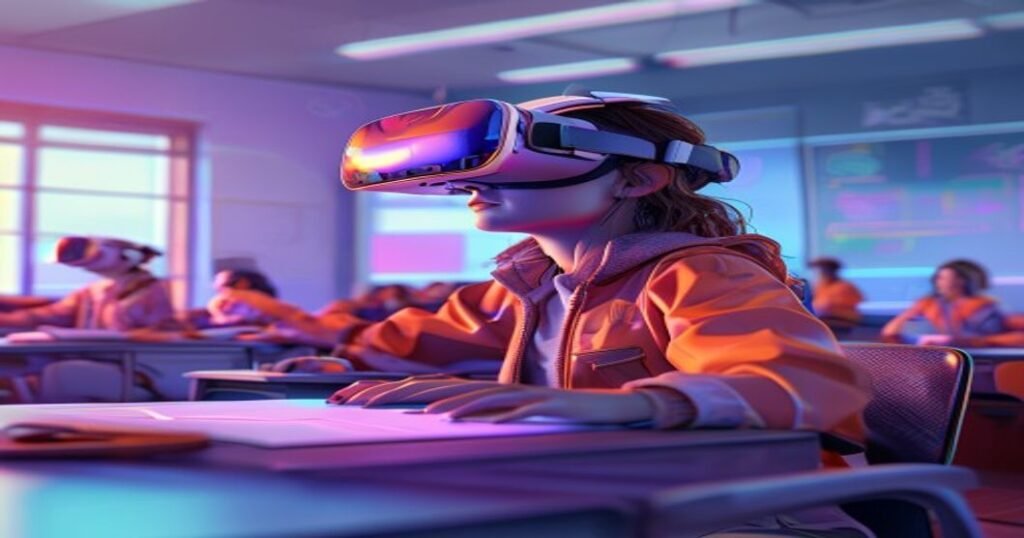

Remember sitting in a classroom, staring blankly at the blackboard, feeling like the lesson was meant for someone else? Perhaps the pace was too fast, or too slow. Maybe the topic didn’t quite click with your unique way of thinking, yet the class moved on. Sound familiar? It’s a universal experience, and frankly, it’s a relic of an industrial age system designed for standardization, not individual brilliance. For generations, education has largely operated on a ‘one-size-fits-all’ model, a factory line approach that, while efficient for its time, often leaves students feeling disengaged, overlooked, or simply not understood.
But what if I told you that the days of mass-produced education are rapidly becoming a quaint memory? We’re standing on the precipice of an educational revolution, powered by an invisible force that’s already reshaping industries from healthcare to finance: Artificial Intelligence. This isn’t just about integrating more screens into classrooms; it’s about fundamentally transforming how we learn, what we learn, and who benefits from truly tailored educational experiences. I believe this isn’t just a trend; it’s the inevitable evolution, and it promises to unlock human potential like never before.
The Cracks in the Old Foundation: Why Traditional Education Needs a Reboot
Let’s be honest: the traditional classroom, for all its nostalgic charm, struggles to meet the demands of a rapidly changing world. Each student is a unique universe of curiosity, learning styles, and aspirations. Yet, a single teacher managing a room full of diverse learners often has to teach to the middle, leaving both advanced students unchallenged and struggling students behind. The curriculum is often rigid, the feedback delayed, and the assessment methods standardized, failing to capture the full spectrum of a student’s understanding or growth.
- Lack of Personalization: Group instruction often means individual needs are unmet.
- Static Pacing: Everyone moves at the same speed, regardless of mastery.
- Limited Feedback: Teachers are stretched thin, making timely, specific feedback a luxury.
- Engagement Challenges: Disinterest can skyrocket when content isn’t relevant or engaging to the individual.
These challenges aren’t new, but the solutions available to educators have historically been limited. Until now.
Enter AI: The Algorithmic Alchemist of Learning
Artificial Intelligence isn’t just a fancy algorithm; it’s a powerful toolkit that can analyze, adapt, and predict, making it the perfect partner for educators seeking to revolutionize learning. Think of AI as the ultimate, tireless teaching assistant, capable of processing more information about a student’s learning journey than any human ever could. It’s a technological marvel that is truly Unleashing the Algorithmic Alchemist: How AI is Rewriting the Rules of Scientific Discovery and Shaping Our World, and education is next in line for its transformative touch.
1. Hyper-Personalized Learning Paths: Your Education, Your Way
This is where AI truly shines. Imagine a learning system that understands your strengths, weaknesses, preferred learning style (visual, auditory, kinesthetic), and even your current mood. AI-powered platforms can assess a student’s prior knowledge, identify gaps, and then dynamically adjust the curriculum, content delivery, and pace. If you excel at math, it might offer more challenging problems; if you struggle with a concept, it can provide alternative explanations, interactive simulations, or additional practice until mastery is achieved. This adaptive learning environment ensures that every student is challenged appropriately, remaining engaged and motivated.
Just as we increasingly expect our living spaces to be curated precisely to our tastes and needs – striving for Beyond Basic: How Hyper-Personalized Homes Are Redefining Modern Living – so too are students now demanding an educational experience that is uniquely theirs. AI makes this not just a dream, but a tangible reality.
2. Intelligent Tutors and Instant Feedback
One of the biggest bottlenecks in traditional education is the delay in feedback. You submit an essay, and you might wait days or weeks for graded comments. By then, the learning moment has often passed. AI can provide instant, constructive feedback on everything from grammar and syntax to problem-solving approaches in real-time. Intelligent tutoring systems, powered by AI, can engage students in conversational learning, answer questions, explain complex concepts, and guide them through challenges, much like a human tutor, but available 24/7.
3. Empowering Educators with Data-Driven Insights
AI isn’t here to replace teachers; it’s here to empower them. By analyzing student performance data – engagement levels, areas of struggle, progress over time – AI platforms can provide educators with invaluable insights. Teachers can then spend less time on administrative tasks and more time on what they do best: mentoring, inspiring, and fostering critical thinking. They can identify students who need extra help before they fall significantly behind, tailor their classroom strategies, and focus on developing the crucial ‘human’ skills that AI can’t replicate.
4. Breaking Down Barriers: Accessibility and Inclusivity
For students with diverse needs or those in remote areas, AI holds immense promise. AI-powered tools can provide real-time translation, text-to-speech, speech-to-text, and even personalized interfaces for students with learning disabilities. It can make quality education accessible to millions who might otherwise be left behind, fostering a truly inclusive learning environment. The idea of an educational experience that is Beyond the Pinterest Board: How to Create an Urban Sanctuary That’s Uniquely YOU directly translates to education needing to be as individual as our personal spaces. AI is the key to achieving this unique educational sanctuary for every student.
The Evolving Role of the Educator: Beyond the Textbook
With AI handling much of the rote instruction and personalized content delivery, the role of the teacher shifts dramatically. No longer the sole source of information, educators become facilitators, mentors, and guides. Their focus will be on cultivating:
- Critical Thinking and Problem Solving: Guiding students to ask the right questions and evaluate information effectively.
- Creativity and Innovation: Fostering original thought and imaginative solutions.
- Emotional Intelligence and Collaboration: Developing crucial interpersonal skills for a complex world.
- Ethical Reasoning: Navigating the moral implications of new technologies and societal challenges.
The human element in education becomes more vital than ever – the empathy, the encouragement, the ability to connect on a personal level. AI frees up teachers to focus on these uniquely human aspects of development.
Navigating the New Frontier: Challenges and Ethical Considerations
Of course, no revolution comes without its challenges. The integration of AI into education isn’t without its hurdles. We must be mindful of:
- Data Privacy and Security: Protecting sensitive student data is paramount. Robust ethical guidelines and secure systems are essential.
- Algorithmic Bias: AI systems are only as unbiased as the data they’re trained on. Ensuring fairness and equity in educational algorithms is a continuous effort.
- Digital Divide: Equitable access to technology and internet connectivity must be addressed to prevent widening existing disparities.
- Over-reliance on Technology: Balancing screen time with traditional learning methods and ensuring the development of fundamental skills.
These are not insurmountable obstacles, but rather important considerations that require ongoing dialogue and responsible development from educators, technologists, policymakers, and parents alike. It’s a conversation that, in many ways, Echoes of Eternity: How Ancient Minds Foresaw Our AI-Driven Destiny, reminding us that with great power comes great responsibility, a principle that applies as much to AI as to any human endeavor.
The Future is Now: Preparing for an AI-Powered Learning Ecosystem
The shift is already happening. Educational institutions worldwide are experimenting with AI-powered tools, from adaptive learning platforms to AI-driven administrative assistants. We’re moving towards an ecosystem where learning is continuous, personalized, and deeply integrated into daily life, preparing students not just for exams, but for a future where adaptability and lifelong learning are the ultimate currencies.
For parents, this means seeking out schools and programs that embrace these innovations. For students, it means cultivating curiosity, critical thinking, and the ability to leverage technology as a tool for growth. For educators, it’s an exciting opportunity to redefine their impact and truly connect with each learner.
The AI revolution in education isn’t a distant fantasy; it’s unfolding before our eyes. It promises to dismantle the limitations of the past and build a future where every child has the opportunity to learn in a way that resonates with their unique brilliance. And that, I believe, is a future worth investing in.


