

The AI Job Apocalypse is Canceled: How to Not Just Survive, But *Dominate* the New Work Era
Let’s be honest. Every time a new AI breakthrough hits the headlines – and lately, that’s practically every other week – a chill runs down a lot of people’s spines. The fear is palpable: robots taking our jobs, algorithms making us obsolete, the end of human endeavor as we know it. It’s a compelling narrative, one spun by sci-fi movies for decades. But as someone who lives and breathes the intersection of technology and careers, I’m here to tell you: while the landscape is changing, the ‘AI job apocalypse’ is largely a myth. What we’re actually witnessing is something far more nuanced, more exciting, and frankly, more empowering: The AI Job Revolution: Survive, Thrive, and Lead in the New Era of Work.
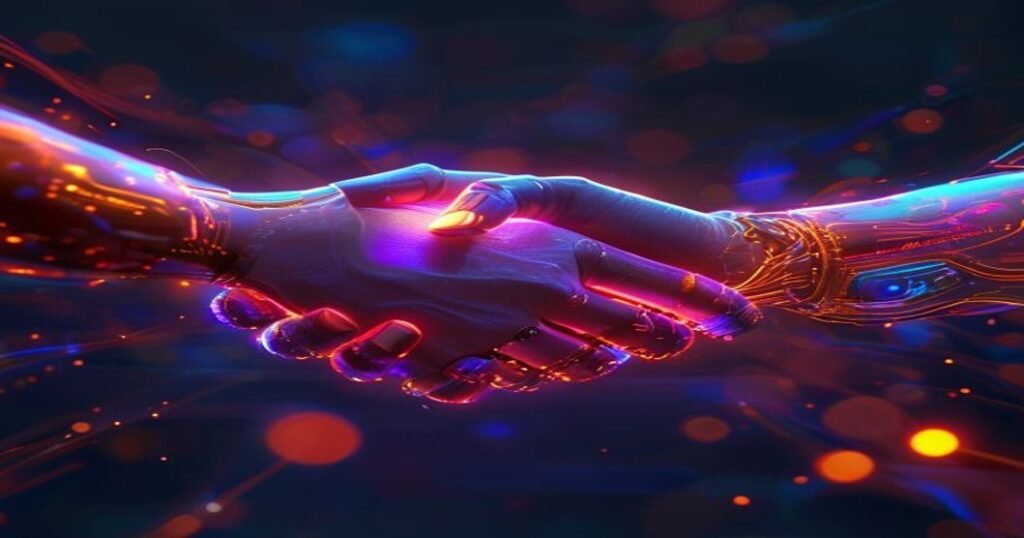
Think of it not as a wave coming to drown us, but as a rising tide that’s shifting the entire coastline. Some familiar landmarks might get submerged, sure, but new islands are emerging, new currents are forming, and those who learn to navigate them will be the pioneers of tomorrow. The real story isn’t about human vs. machine; it’s about humans *with* machines, forging a more productive, creative, and potentially more fulfilling future for work.
The Subtle Invasion: How AI is Already Rewiring Your World
Many people envision AI as some futuristic robot overlord, but the truth is, it’s already deeply embedded in our daily professional lives, often without us even realizing it. That smart email assistant suggesting replies? AI. The sophisticated algorithms powering your company’s CRM or HR software? AI. The predictive analytics guiding business decisions? You guessed it. AI isn’t a future threat; it’s a current reality. It’s the invisible hand, quietly optimizing, automating, and informing, often unnoticed until you pause to think about it. As we’ve explored previously, The Invisible Hand: How AI Quietly Rewired Your Entire World (And You Barely Noticed). This pervasive integration means that whether you’re a marketer, a developer, a doctor, or a designer, AI is already part of your toolkit, or it soon will be.
This isn’t to say there aren’t challenges. Jobs involving highly repetitive, predictable tasks – data entry, routine customer service inquiries, basic administrative work – are undeniably vulnerable to automation. But even in these areas, the goal isn’t always complete replacement. Often, AI takes over the mundane, allowing human workers to focus on more complex, creative, and emotionally intelligent aspects of their roles. It frees us up, if we’re willing to embrace the shift.
Beyond Automation: The Genesis of ‘AI-Native’ Roles
Here’s where the story gets really interesting. While some roles diminish, an entirely new class of ‘AI-native’ jobs is exploding. These aren’t just tech jobs for coders; they are roles that require a unique blend of technical understanding, critical thinking, and distinctly human skills. Think about:
-
Prompt Engineers: The AI Whisperers
Who knew ‘talking’ to a machine would become a high-demand skill? Prompt engineers are experts in crafting the precise language and context needed to get the best, most accurate, and most creative output from generative AI models. It’s less about coding and more about understanding nuances, logic, and human intent – a fascinating blend of linguistics, psychology, and technology.
-
AI Ethics and Governance Specialists: The Moral Compass
As AI becomes more powerful, ensuring it’s used responsibly and ethically is paramount. These professionals design frameworks, policies, and safeguards to prevent bias, ensure transparency, and protect user data. It’s a field demanding strong ethical reasoning, legal acumen, and a deep understanding of AI’s societal impact.
-
AI Trainers and Data Curators: The Teachers of the Machines
AI models learn from data, and that data needs to be meticulously collected, labeled, and validated. These roles are crucial for ensuring AI systems are accurate, fair, and effective. It’s about teaching the machines, often requiring domain-specific knowledge in areas like healthcare, finance, or even creative arts. This is particularly relevant when considering how Generative AI: The New Creator, The Old Fears – Are We Ready for Art Made by Algorithms? depends heavily on expertly curated datasets.
-
AI Product Managers and Strategists: The Visionaries
These individuals bridge the gap between technical AI capabilities and real-world business needs. They envision new AI-powered products and services, guide their development, and ensure they deliver tangible value. It requires foresight, business acumen, and a knack for understanding emerging technological possibilities.
These are just a few examples. Every sector, from healthcare to entertainment, is seeing the emergence of roles that didn’t exist a mere few years ago. The key is to recognize that businesses cannot afford to simply observe this shift; they must act, and so must their employees. The urgency for adaptation is clear: The AI Avalanche: Why Your Business Can’t Afford to Just Watch (And What to Do NOW) underscores this critical imperative.
The Underrated Superpowers: Skills That AI Can’t Replicate (Yet)
While AI excels at processing information and executing tasks, it still fundamentally lacks the nuanced human touch. This is where our true superpowers lie, and these are the skills that will make you indispensable in the new era of work:
- Creativity and Innovation: AI can generate variations, but true originality, the ability to conceive something entirely new and visionary, remains a human domain.
- Critical Thinking and Complex Problem Solving: AI can analyze data, but discerning the root cause of a novel, multifaceted problem and devising truly innovative solutions requires human insight and judgment.
- Emotional Intelligence and Empathy: Understanding human emotions, building rapport, motivating teams, and navigating complex social dynamics are uniquely human strengths that are invaluable in any client-facing, leadership, or team-based role.
- Adaptability and Lifelong Learning: The pace of change is accelerating. The ability to unlearn, learn new skills, and continuously adapt to new tools and methodologies is perhaps the most crucial skill of all.
- Ethical Reasoning: Deciding what should be done, rather than just what can be done, requires a moral compass that AI does not possess.
Your Career’s New Best Friend: Reskilling and Upskilling
So, how do you future-proof your career in this dynamic landscape? It boils down to a commitment to continuous learning. This isn’t about going back to university for another four-year degree (though that can be great!). It’s about:
- Embracing AI Tools: Don’t fear them; learn them. Experiment with ChatGPT, Midjourney, CoPilot, and other AI tools relevant to your field. Understand their capabilities and limitations.
- Online Courses and Certifications: Platforms like Coursera, edX, LinkedIn Learning, and specific vendor certifications (e.g., Google AI, Microsoft Azure AI) offer accessible ways to acquire new skills.
- Industry-Specific Learning: Stay updated on how AI is impacting your specific industry. What tools are gaining traction? What new methodologies are emerging?
- Networking and Community: Engage with professionals who are at the forefront of AI adoption in your field. Learn from their experiences and share your own.
The goal isn’t to become an AI expert overnight, but to become ‘AI-literate’ – to understand how AI works, how it can be applied, and how it will transform your role and industry. It’s about integrating these powerful new tools into your existing expertise to amplify your capabilities.
The Entrepreneurial Edge: AI as a Catalyst for Creation
Beyond traditional employment, AI is also a colossal enabler for entrepreneurship. Individuals can now launch businesses with unprecedented speed and efficiency. AI can handle mundane tasks, generate content, analyze markets, and even design initial product concepts. This lowers the barrier to entry for aspiring founders, creating a wave of innovation and new ventures. If you’ve ever dreamt of starting your own thing, AI just handed you a supercharged toolkit.
A Human Future: Empowered by Intelligence
The narrative of AI replacing humans is overly simplistic and misses the true potential of this era. What we are experiencing is a profound shift towards augmentation, where AI empowers us to be more productive, more creative, and more innovative than ever before. The jobs of tomorrow will demand a blend of technological proficiency and uniquely human attributes. Those who lean into learning, cultivate their distinctly human skills, and embrace change with an open mind will not just survive this revolution; they will lead it. So, let go of the fear, roll up your sleeves, and get ready to shape a future of work that’s more intelligent, more dynamic, and ultimately, more human than anything we’ve known before.


