
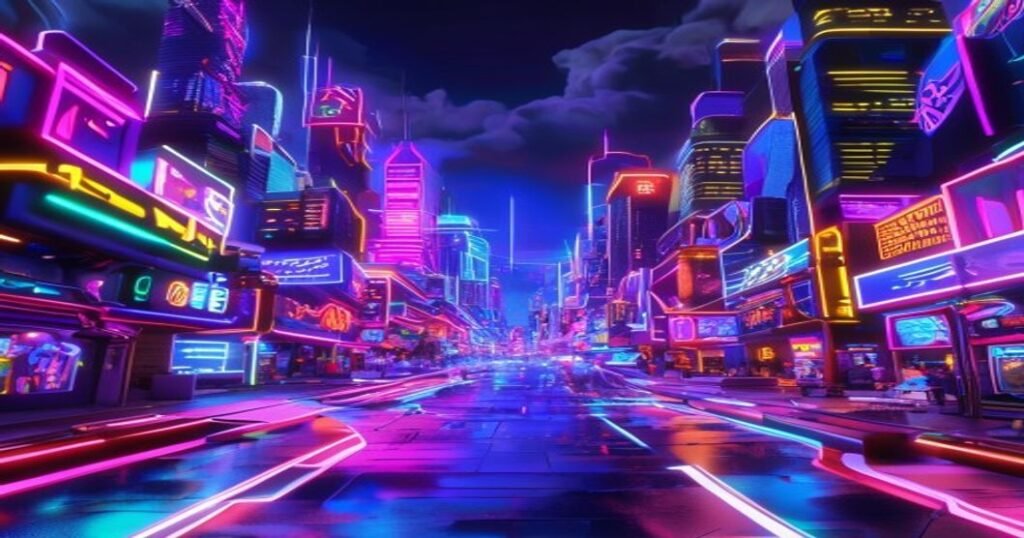

Alright, let’s talk about something truly monumental that’s happening right under our noses. Forget the flashy headlines and the hype cycles for a moment. I’m convinced that gaming isn’t just a pastime; it’s the undisputed architect of the metaverse. Yes, you heard me right. While tech giants are pouring billions into building the next iteration of the internet, gamers have been living, breathing, and building it for decades. We’re not just playing in the metaverse; we’re *creating* it, one pixel, one quest, one shared experience at a time.
Think about it. What is the metaverse, at its core? It’s a persistent, interconnected, immersive digital world where we can work, socialize, play, and create. Sound familiar? To any avid gamer, that’s just a Tuesday night. From the sprawling cities of Grand Theft Auto to the endless crafting possibilities in Minecraft, from the competitive arenas of Fortnite to the social hubs of VRChat, we’ve been exploring digital realities that mirror, and often transcend, our physical one.
Gaming: The Unsung Proving Ground for the Metaverse
The gaming world has been stress-testing the very concepts that underpin the metaverse long before the term became a boardroom buzzword. We’ve seen economies flourish and falter in virtual worlds, complex social structures emerge, and even real-world value transfer through digital assets. Developers have spent years perfecting low-latency multiplayer experiences, dynamic world-building, and avatar customization – all crucial pillars for a successful metaverse.
The Evolution of Immersion: From Pixels to Presence
Early games were simple. A few sprites, a text box, and your imagination did the heavy lifting. Now? We’re talking about photorealistic graphics, spatial audio that can tell you exactly where an enemy is lurking, and haptic feedback that lets you feel every impact. Virtual Reality (VR) and Augmented Reality (AR) aren’t just niche gadgets anymore; they’re becoming increasingly accessible, pulling us deeper into digital realms. When you strap on a VR headset and truly *feel* present in a fantastical world, the line between reality and simulation blurs. This isn’t just about looking at a screen; it’s about being *inside* the experience, a fundamental requirement for a truly immersive metaverse.
The advancements in rendering, networking, and user interfaces within gaming are directly paving the way for a more seamless and believable metaverse. We’re moving beyond simple escapism to genuine digital presence.
The New Digital Economy: Play-to-Earn and Ownership
Here’s where things get really interesting, especially for those looking to understand the economic backbone of the metaverse. The concept of digital ownership in games isn’t new; players have been trading virtual items for years. But with the advent of blockchain technology and Non-Fungible Tokens (NFTs), this has fundamentally shifted. Now, players can truly own their in-game assets, verify their scarcity, and trade them across different platforms – theoretically, at least. This move from ‘play-to-own’ to ‘play-and-earn’ is a game-changer.
Imagine earning cryptocurrency or NFTs by simply playing a game, and then being able to use those earnings to purchase items, fund other ventures, or even cash out into real-world currency. This isn’t just a fantasy; it’s already happening in many Web3 games. For startups chasing the future, this presents an unprecedented opportunity to innovate not just in gameplay, but in entirely new economic models within digital ecosystems.
This evolving economic model challenges traditional gaming paradigms where developers hold all the cards. In the metaverse, players become stakeholders, contributing to the value and economy of the world they inhabit. It’s a powerful shift towards user-generated wealth and distributed ownership, laying the groundwork for how financial interactions will function in a broader metaverse.
Social Hubs and Persistent Worlds: Gaming’s True Genius
Beyond the technical prowess and economic innovation, gaming has always excelled at one thing: connecting people. Multiplayer games are the ultimate social laboratories. We’ve forged friendships, rivalries, and even lifelong relationships in these digital spaces. The persistence of many online worlds means that our actions have lasting consequences, contributing to a shared history and culture within the game. From massive raids in MMORPGs to impromptu dance parties in social VR apps, these interactions are the very fabric of a living, breathing metaverse.
Games like Roblox and Fortnite have already demonstrated the power of user-generated content and social convergence, where millions gather not just to play, but to attend concerts, watch movies, and simply hang out. These are nascent metaverse experiences, proving that people are hungry for shared digital spaces that extend beyond simple communication.
The AI Element: Shaping Dynamic Worlds
Of course, no discussion of cutting-edge digital worlds is complete without talking about artificial intelligence. AI isn’t just for making smarter enemies anymore. In the context of the metaverse, AI is becoming a fundamental building block. It can create dynamic, responsive environments that react to player input in real-time, generate quests on the fly, and populate worlds with incredibly realistic and interactive NPCs. Imagine an AI that learns your preferences and subtly tailors your in-game experience, or one that helps you build complex structures with simple voice commands. This is where gaming’s embrace of AI truly shines.
The sophisticated algorithms behind game AI are increasingly becoming the very fabric of our digital world, pushing boundaries from simple automation to truly intelligent interaction. From adaptive difficulty to procedural content generation, AI makes metaverse gaming experiences richer and more personalized than ever before. This also impacts how developers create content, allowing for worlds that are vast and constantly evolving without requiring endless manual labor.
Challenges and the Path Forward
While the future looks bright, it’s not without its hurdles. Interoperability remains a significant challenge – how do we ensure that an item purchased in one metaverse game can be used in another? Who controls these vast digital spaces, and what are the ethical implications of such pervasive digital existence? Digital fatigue is a real concern; as our digital lives become more immersive, it becomes increasingly important to find a balance. The ability to escape the digital noise and reclaim focus will be crucial for maintaining mental well-being in an ever-connected world.
Furthermore, ensuring security, preventing scams, and establishing fair governance models for these decentralized, player-driven economies are massive undertakings. The technical infrastructure – network bandwidth, processing power, and energy consumption – also needs significant advancements to support truly seamless and expansive metaverse experiences for billions of users.
Your Role in the Emerging Metaverse
So, what does all this mean for you? If you’re a gamer, you’re already a pioneer. You’re part of the demographic that’s most comfortable navigating these digital frontiers. If you’re a developer, an entrepreneur, or just someone curious about the future, pay close attention to gaming. It’s not just entertainment; it’s the blueprint for the next evolution of human interaction, commerce, and creativity.
The metaverse isn’t some far-off sci-fi concept. It’s being built right now, brick by digital brick, by the innovations originating within the gaming industry. It’s an exciting, sometimes daunting, but undeniably transformative journey. The gaming world has shown us what’s possible, and it continues to push the boundaries of what we thought was imaginable. Get ready, because the lines between playing a game and living a digital life are blurring, and we’re all invited to participate in this grand adventure.


