
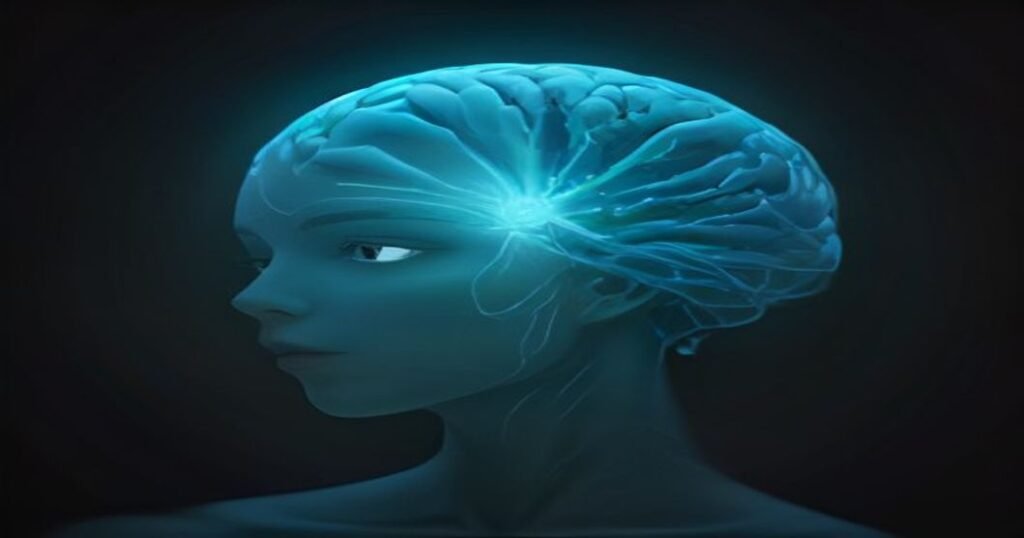

Your Mind, Unlocked: Why Brain-Computer Interfaces Are the Ultimate Frontier (And How AI is Making it Real)
Imagine a world where your thoughts aren’t confined to your skull. A world where a simple mental command can move a robotic arm, communicate with a computer, or even share a feeling with another human being, all without speaking a single word or lifting a finger. Sounds like something straight out of a sci-fi blockbuster, right? Well, buckle up, because that future isn’t just knocking on our door; it’s practically barging in, thanks to the incredible advancements in Brain-Computer Interfaces (BCIs).
For too long, our brains, the most complex supercomputers known, have been largely isolated. We’ve used clunky keyboards, touchscreens, and voice commands to interact with the digital world. But what if we could bypass all that? What if we could directly translate our intentions, emotions, and desires into actions in the physical and digital realms? This, my friends, is the promise of BCIs, and it’s arguably the most exciting, terrifying, and profoundly human technological frontier we’ve ever faced. And frankly, it’s one that will reshape what it means to be human.
What Exactly Are Brain-Computer Interfaces?
At its core, a Brain-Computer Interface is a direct communication pathway between an enhanced or wired brain and an external device. Think of it as a translator that deciphers the electrical signals produced by your brain and converts them into commands that a computer, a prosthetic limb, or even another person’s brain can understand. It’s not about reading your mind in the telepathic sense (yet!), but about interpreting specific neural patterns associated with intent.
Historically, BCIs have been a dream for scientists, but recent breakthroughs have catapulted them from the lab into the realm of practical, albeit experimental, application. We’re talking about everything from tiny implantable chips that sit on your brain to sleek, non-invasive headbands that can detect brain activity. The sophistication varies wildly, but the goal remains the same: to bridge the gap between thought and action, between mind and machine.
The Science Behind the Magic: How Our Brains Talk to Machines
Our brains are buzzing with electrical activity. Every thought, every movement, every sensation generates distinct neural patterns. BCIs work by detecting these electrical signals. There are two main types:
- Invasive BCIs: These involve surgically implanting electrodes directly into or onto the brain. This provides incredibly precise and high-fidelity signal capture, but, as you can imagine, it comes with surgical risks. Think of pioneering patients with paralysis who can now control robotic arms with their thoughts – these are often powered by invasive BCIs.
- Non-Invasive BCIs: These use external sensors, like an EEG (electroencephalogram) cap, placed on the scalp. They are safer and easier to use but offer less precise data. Still, they are powerful enough for applications like controlling a computer cursor, playing simple video games, or even managing stress levels.
Regardless of the method, the real ‘magic’ – or rather, the incredibly complex engineering – happens in the interpretation. Raw brain signals are noisy, chaotic, and unique to each individual. This is where Artificial Intelligence steps in, transforming what was once a pipe dream into tangible reality. AI algorithms are trained to recognize specific neural patterns associated with a user’s intent, filtering out noise and translating those patterns into actionable commands with astonishing speed and accuracy.
Current Breakthroughs and Mind-Blowing Applications
The applications for BCIs are already incredibly diverse and deeply impactful:
- Restoring Mobility: For individuals with severe paralysis, BCIs are nothing short of revolutionary. They can enable a person to control advanced prosthetic limbs as if they were their own, granting them unprecedented independence. Imagine moving a robotic hand to pick up a cup of coffee, purely by thinking about it.
- Communication for the Locked-In: Patients with conditions like ALS or ‘locked-in syndrome’ can use BCIs to communicate. By focusing on specific thoughts, they can spell out words on a screen, connect with loved ones, and express their inner world – a profound restoration of dignity and connection.
- Beyond Medical: Gaming and Productivity: While medical applications are leading the charge, the consumer market is bubbling with potential. Non-invasive BCIs are being explored for gaming, allowing players to control characters or actions with their minds. In the workplace, imagine navigating complex software or writing emails just by thinking them. The potential for boosting productivity and creating new forms of immersive entertainment is staggering.
The AI Engine: The Unsung Hero of BCIs
Let’s be clear: without AI, modern BCIs would largely be confined to theoretical discussions. The raw data captured from the brain is incredibly complex. It’s like trying to understand a symphony by listening to every individual instrument simultaneously, amplified and distorted. AI models, particularly machine learning and deep learning algorithms, are the conductors that make sense of this neural cacophony.
They learn to:
- Decode Intention: Identifying the subtle neural signatures of a user wanting to move an arm right versus left, or focusing on a specific letter.
- Adapt and Personalize: Every brain is unique. AI systems continuously learn from the user, adapting to individual brain patterns and improving accuracy over time.
- Filter Noise: Distinguishing genuine command signals from background brain activity or electrical interference.
It’s this synergistic relationship that makes BCIs so powerful now. We are truly experiencing The AI Tidal Wave: How Artificial Intelligence is Reshaping Everything You Know (And What You MUST Do Now), and nowhere is this more evident than in the rapid acceleration of BCI technology. AI isn’t just a tool; it’s the very foundation upon which the BCI revolution is being built.
Beyond Therapy: The Enhancement Frontier
While the immediate focus of BCIs is often on therapeutic applications, the long-term vision extends far beyond restoring function. This is where things get truly mind-bending and, for some, a little unsettling. The idea of ‘human enhancement’ through BCIs is no longer science fiction. Imagine:
- Cognitive Augmentation: Directly interfacing with external knowledge bases, enhancing memory, or even boosting processing speed. Could we download skills or languages directly into our brains?
- Sensory Expansion: Adding new senses, like the ability to ‘see’ infrared light or ‘hear’ radio waves, by feeding that data directly into our neural pathways.
- Telepathic Communication: While controversial and nascent, the idea of direct brain-to-brain communication, allowing the sharing of thoughts and even emotions, is being explored.
This is where BCIs could fundamentally alter human experience, creating new possibilities and profound ethical questions.
The Ethical Minefield and Societal Impact
With such immense power comes immense responsibility, and BCIs are a prime example of technology that demands careful consideration. The ethical dilemmas are plentiful:
- Privacy and Security: If our thoughts can be accessed, who owns that data? What if brain data is hacked? The very sanctity of our inner world is at stake.
- Autonomy and Control: What happens if a BCI system is compromised, or if it influences our thoughts or decisions without our conscious consent? Who is responsible for the actions driven by an interfaced brain?
- Equity and Access: Will advanced BCIs become a luxury reserved for the wealthy, creating a new form of digital divide and exacerbating existing social inequalities? This is a serious concern, as The AI Revolution Just Got Real: What This Means For Your Life, Work, and Wallet, and its advanced applications like BCIs, will inevitably impact everyone.
- Defining Humanity: As we merge with machines, where do we draw the line? What does it mean to be human when our brains are directly connected to the digital realm?
These aren’t hypothetical questions for a distant future; they are pressing issues that demand our attention and proactive policy-making now.
The Business and Investment Angle: A New Frontier for Entrepreneurs
It goes without saying that a technology with such transformative power is attracting massive investment. Companies are pouring billions into BCI research and development, seeing the potential for everything from next-generation medical devices to entirely new consumer electronics markets. From venture capital firms to tech giants, everyone is scrambling to get a piece of this emerging landscape. This isn’t just about restoring function; it’s about creating entirely new ways for humans to interact with technology and with each other. For entrepreneurs, innovators, and investors, this represents a monumental opportunity. Indeed, it’s becoming clear that this is a significant part of The AI Gold Rush: Why Every Business Needs to Dig In Now (Or Get Left Behind), with BCIs emerging as a particularly rich vein to explore.
The Road Ahead: Challenges and Hope
While the excitement is palpable, significant challenges remain. Improving signal fidelity, developing robust and long-lasting implants, addressing power consumption, and of course, navigating the complex ethical and regulatory landscape are all crucial hurdles. Public perception and acceptance will also play a massive role. The journey won’t be without its bumps, but the destination – a world where human potential is unlocked in ways we’ve only dreamed of – is a powerful motivator.
Ultimately, the BCI revolution, powered by relentless innovation in neuroscience and artificial intelligence, is not just about technology. It’s about redefining human capability, empathy, and perhaps, even our very existence. It’s a journey into the ultimate frontier: the human mind itself, now ready to merge with the digital universe. It’s a moment that truly feels like Echoes of Revolution: How Historys Grandest Shifts Predict Our AI-Driven Future, hinting at a profound transformation of society on par with the agricultural or industrial revolutions.


