

Alright, let’s get real for a moment. Our planet’s wildlife is in trouble. Big trouble. From the majestic elephants targeted by poachers to the tiny, vital insects losing their habitats, the headlines are grim. For decades, conservationists have been fighting a valiant, often uphill battle, armed with passion, dedication, and traditional methods that, frankly, are increasingly outmatched by the scale of the threats. But what if I told you there’s a new, powerful ally entering the fray, one that’s silent, tireless, and incredibly smart? We’re talking about Artificial Intelligence, and it’s not just revolutionizing tech companies; it’s quietly transforming how we protect the wild heart of our planet.
The Crisis is Real: Why We Needed a Game Changer
Think about it. Vast, remote landscapes, dwindling budgets, and adversaries who are often highly organized and ruthless. Traditional conservation relied heavily on human patrols, physical barriers, and reactive measures. While heroic, these efforts are often like trying to empty a swimming pool with a teacup. Poaching syndicates operate with surprising sophistication, climate change relentlessly reshapes ecosystems, and human encroachment carves away natural habitats at an alarming rate. It became clear that if we wanted to truly make a difference, we needed to move beyond conventional wisdom. We needed a game changer. We needed intelligence on a scale that human eyes and minds alone couldn’t provide.
Enter the Machines: AI as the Ultimate Wildlife Guardian
This is where AI steps in, not as a replacement for human endeavor, but as an incredible force multiplier. Imagine a world where every rustle in the bush, every faint signal from a remote sensor, every thermal signature in the dead of night, could be instantly analyzed, understood, and acted upon. That’s the promise AI is starting to deliver. It’s not science fiction anymore; it’s the operational reality for a growing number of forward-thinking conservation projects.
Predicting Peril: AI’s Proactive Approach to Anti-Poaching
One of the most immediate and impactful applications of AI in conservation is in the fight against poaching. Historically, patrols were often reactive or based on limited intelligence. Now, AI algorithms are gobbling up vast amounts of data – everything from historical poaching incidents, weather patterns, moon phases, animal movement data, and even social media chatter – to predict where and when poachers are most likely to strike. This isn’t just about identifying a threat after it happens; it’s about anticipating it.
- SMART Patrols: Systems like PAWS (Protection Assistant for Wildlife Security) use predictive modeling to optimize patrol routes, ensuring rangers are deployed to the highest-risk areas at the most critical times. This isn’t random guessing; it’s data-driven strategy.
- Acoustic Monitoring: AI-powered acoustic sensors placed in forests can distinguish between animal sounds and human sounds – like gunshots, vehicle engines, or chainsaws – instantly alerting rangers to potential threats.
- Facial Recognition (for animals!): Yes, really! AI is being trained to identify individual animals based on unique markings, helping track endangered species, monitor populations, and even identify specific poacher targets if they’ve been observed before.
These advanced analytical capabilities are a testament to The Generative AI Explosion: Why the World Will Never Be the Same, and How YOU Can Thrive, demonstrating how these powerful algorithms aren’t just for creating art or text, but for solving real-world, life-or-death problems. The ability to process and synthesize complex information on such a massive scale means we’re no longer just reacting; we’re staying several steps ahead.
Monitoring Ecosystem Health: Seeing the Unseen
Beyond direct protection, AI is proving invaluable in understanding and monitoring the health of entire ecosystems. Imagine tracking changes in forest density, water quality, or animal migration patterns across millions of acres, almost in real-time. Satellite imagery, drone footage, and ground sensors are producing a deluge of data that would overwhelm human analysis. AI, however, thrives on it.
- Biodiversity Mapping: AI can analyze satellite and drone imagery to identify and classify different species of plants and animals, track habitat loss, and even map changes in biodiversity over time.
- Climate Impact Analysis: By correlating vast environmental datasets, AI helps us understand how climate change is affecting specific species and ecosystems, guiding targeted conservation interventions.
- Disease Surveillance: AI can identify patterns in animal behavior or health data that might indicate the spread of disease, allowing for early intervention and preventing wider outbreaks.
This comprehensive, almost omnipresent monitoring represents The Unseen Revolution: How Conversational AI is Rewriting the Rules of Human-Computer Interaction (and Everything Else), but applied to the natural world. It’s about AI interpreting the silent conversations of nature – the subtle shifts, the hidden patterns – and translating them into actionable insights for us.
From the Air and Ground: Autonomous Tech on Patrol
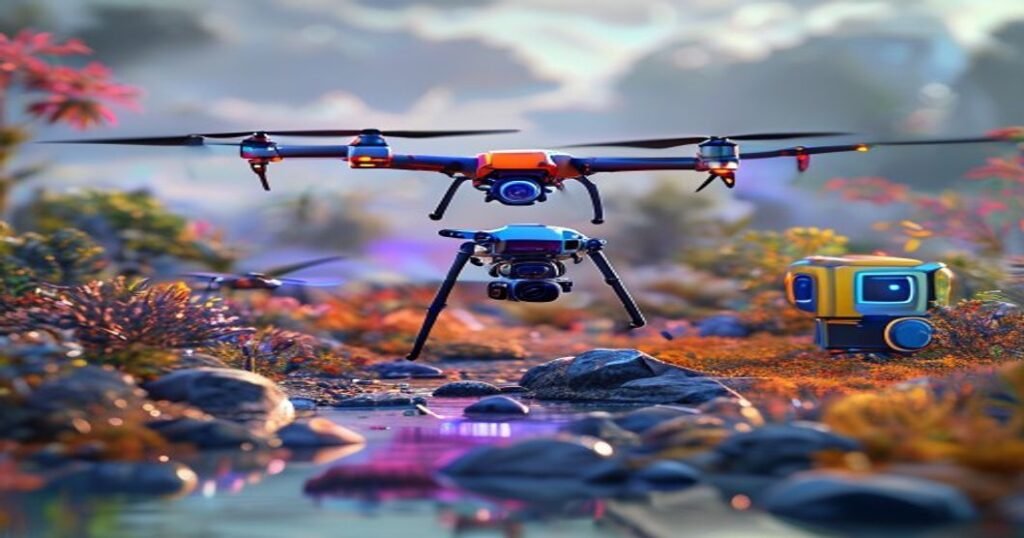
The synergy between AI and robotics is particularly exciting. Autonomous drones equipped with AI vision systems can patrol vast areas, identify threats, and even chase off intruders without human intervention. Imagine a swarm of robotic eyes and ears, tirelessly watching over a protected reserve, day and night. On the ground, AI-powered camera traps don’t just snap photos; they analyze them in real-time, filtering out false positives and instantly flagging anything suspicious. These aren’t just gadgets; they’re becoming integral members of the conservation team.
Much like how The Brains Behind the Wheel: How AI is Revolutionizing Every Inch of the Automotive World, with autonomous vehicles and smart systems, AI is similarly becoming the ‘brain’ behind these conservation machines. It’s allowing for unprecedented levels of automation and intelligent decision-making in the most challenging and remote environments imaginable.
The Human Element: Still Irreplaceable, But Better Equipped
Now, let’s be clear: AI isn’t replacing the boots-on-the-ground heroes. Far from it. What AI does is empower them. It gives rangers better intelligence, more efficient patrol routes, earlier warnings, and a vastly improved understanding of the environments they protect. It frees them from mundane tasks, allowing them to focus on what humans do best: critical thinking, complex problem-solving, and direct intervention. It’s about leveraging technology to make human efforts more effective, more strategic, and ultimately, safer.
Furthermore, AI plays a crucial role in educating the next generation of conservationists and the public at large. Interactive simulations, data visualizations, and AI-powered educational platforms can bring the complexities of ecosystem dynamics and the urgency of conservation directly to students and enthusiasts. It’s rapidly becoming a vital tool in The AI Classroom: Is This the End of Traditional Learning, or a New Dawn?, proving that technology can not only protect but also teach us how to better coexist with the natural world.
Challenges and the Road Ahead
Of course, it’s not all smooth sailing. Implementing AI in remote wilderness areas comes with its own set of challenges: reliable power, connectivity, initial setup costs, and the need for skilled personnel to manage these sophisticated systems. There are also ethical considerations – ensuring the data collected is used responsibly, avoiding over-surveillance that might disturb wildlife, and preventing mission creep where technology becomes a goal in itself rather than a tool for conservation.
Despite these hurdles, the trajectory is clear. As AI becomes more accessible, more robust, and more affordable, its role in conservation will only grow. We’re on the cusp of a new era where technology doesn’t just enable our convenience but actively helps us heal and protect our planet. It’s an exciting, hopeful future, one where the wild places and the incredible creatures that inhabit them might just stand a fighting chance, thanks to the silent sentinels of AI.
Our Wild Future: Smart, Sustainable, and Secure
The story of AI in wildlife conservation is still being written, but the early chapters are incredibly promising. It’s a powerful narrative of innovation meeting urgency, of human ingenuity creating tools that safeguard our most precious natural heritage. As we look ahead, imagine national parks where every tree, every animal, every stream is part of an intelligent network, constantly monitored, understood, and protected. It’s a vision of a truly smart planet, where technology serves not just humanity, but all life on Earth.
This isn’t just about saving endangered species; it’s about preserving the delicate balance of ecosystems that sustain us all. It’s about recognizing that our future is inextricably linked to the health of the natural world. And with AI as our ally, that future looks a little brighter, a little wilder, and a whole lot smarter.


