
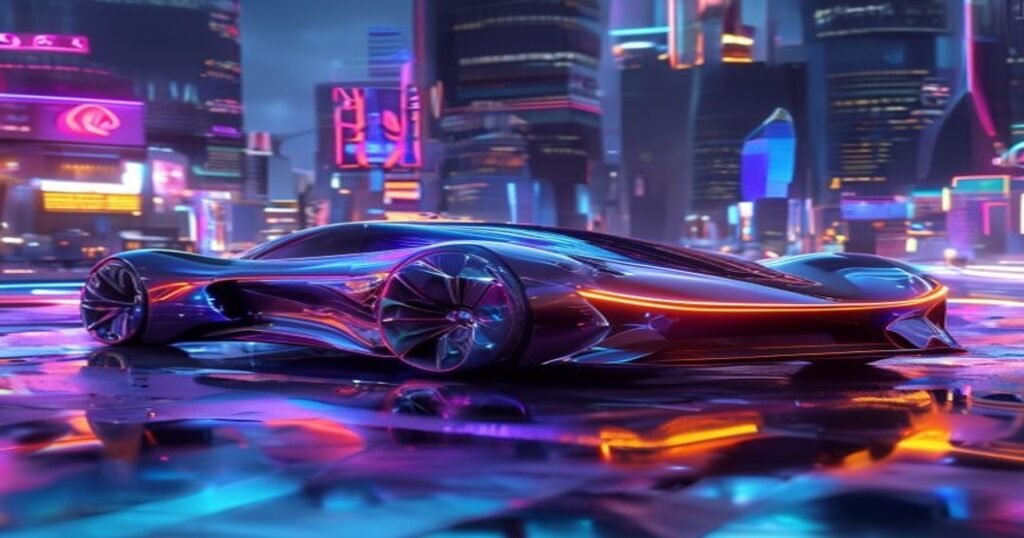

Remember when cars were just, well, cars? A steering wheel, four wheels, an engine, and maybe a CD player if you were fancy. My, how times have changed! We’re not just witnessing an evolution in the automotive industry; we’re in the midst of a full-blown revolution, and the quiet powerhouse orchestrating it all is Artificial Intelligence. It’s no longer a futuristic concept from sci-fi movies; AI is now the invisible hand shaping how vehicles are designed, manufactured, driven, and even how they interact with us and the world around them.
For me, it’s exhilarating to watch. It’s like upgrading from a flip phone to a supercomputer in a matter of years, but for something as foundational as personal transport. This isn’t just about making cars smarter; it’s about fundamentally rethinking what a car can be and what it can do for us. Let’s buckle up and take a deep dive into how AI is utterly transforming the automotive landscape.
Beyond the Sketchbook: AI in Automotive Design and Manufacturing
When you think of AI in cars, your mind probably jumps straight to self-driving features. But the truth is, AI’s influence begins long before a single wheel touches the asphalt. It starts in the very genesis of a vehicle: design and manufacturing. Imagine designers sketching out new concepts, and AI, acting as a hyper-intelligent co-pilot, analyzes millions of existing designs, material properties, and aerodynamic principles in milliseconds. This isn’t just about tweaking existing ideas; it’s about generative design, where AI creates entirely novel forms that are lighter, stronger, and more efficient than anything a human might conceive alone. This The Generative AI Explosion: Why the World Will Never Be the Same, and How YOU Can Thrive is transforming industries, and automotive is certainly at the forefront.
On the factory floor, AI is a game-changer for efficiency and quality control. Robotic arms, once programmed for singular tasks, are now equipped with AI vision and learning capabilities, allowing them to adapt to variations, perform complex assembly tasks, and even predict potential equipment failures before they happen. This predictive maintenance drastically reduces downtime and slashes operational costs. It’s a precision dance of automation and intelligence, ensuring every component is perfect, every weld is flawless, and every vehicle rolling off the line meets the highest standards.
The Intelligent Co-Pilot: Enhancing the Driving Experience
Now, let’s talk about the part everyone sees and experiences: driving. Modern cars are already brimming with AI-powered features that make our journeys safer, more comfortable, and genuinely smarter. Think about adaptive cruise control that maintains a safe distance, lane-keeping assist that gently nudges you back into your lane, or automated parking systems that take the stress out of tight spots. These aren’t just fancy gadgets; they’re AI algorithms constantly processing data from sensors, cameras, and radar to make real-time decisions, assisting the driver in ways we only dreamed of a decade ago.
But it goes deeper than that. AI is personalizing the driving experience like never before. From infotainment systems that learn your music preferences and suggest routes based on traffic and your calendar, to climate control that adjusts to individual passenger preferences, your car is becoming an intuitive extension of your lifestyle. Voice assistants, powered by natural language processing AI, allow for seamless control of various functions, minimizing distractions and keeping your hands on the wheel and eyes on the road. It’s truly amazing how intelligent tech is redefining our day-to-day interactions.
The Holy Grail: Self-Driving Cars and Redefining Mobility
Of course, the pinnacle of automotive AI is the pursuit of truly autonomous vehicles. The dream of a car that drives itself, allowing us to work, relax, or simply enjoy the scenery, is tantalizingly close. From Level 2 systems (like advanced driver assistance) to the aspirational Level 5 (full autonomy in all conditions), AI is the absolute core of this ambition. It’s what allows a car to ‘see’ its environment through an array of sensors – cameras, lidar, radar, ultrasonics – and then, crucially, to understand and react to that environment.
Think about the sheer complexity: identifying pedestrians, distinguishing traffic lights, predicting the movements of other vehicles, navigating construction zones, and making instantaneous decisions, all while adhering to traffic laws and ensuring passenger safety. This isn’t just a technical challenge; it’s a profound shift in how we perceive and interact with reality. As AI redefines reality itself, our concept of mobility will be irrevocably altered. Will we trust these machines implicitly? That’s the ultimate question, and the answer will shape our urban landscapes, commuter habits, and even our leisure time for generations to come. My opinion? The transition will be gradual, fraught with ethical debates and regulatory hurdles, but the destination—safer, more efficient, and more accessible transportation—is worth the journey.
AI and the Electric Revolution: A Symbiotic Relationship
The rise of electric vehicles (EVs) isn’t just about ditching fossil fuels; it’s intrinsically linked with AI advancements. AI is crucial for optimizing battery performance, extending range, and managing charging infrastructure. Intelligent battery management systems (BMS) use AI to monitor cell health, predict degradation, and ensure optimal charging and discharging cycles, maximizing the lifespan and efficiency of the battery pack. Furthermore, AI-powered route planning considers not just traffic, but also charging station availability, elevation changes, and even weather conditions to provide the most efficient and range-conscious routes.
Beyond individual vehicles, AI is poised to orchestrate entire fleets of EVs, dynamically balancing energy grids, managing demand-response charging, and even integrating vehicles into smart city ecosystems as mobile energy storage units. The potential for a cleaner, more sustainable future of transport hinges heavily on the ongoing developments in AI within the EV space.
The Connected Car: AI as the Ultimate Communicator
Today’s vehicles aren’t isolated entities; they’re increasingly connected, forming a vast network of data. This ‘connected car’ paradigm is amplified by AI. Vehicle-to-Everything (V2X) communication – meaning vehicle-to-vehicle (V2V), vehicle-to-infrastructure (V2I), and vehicle-to-pedestrian (V2P) – is underpinned by AI algorithms that process and interpret this constant stream of information. Imagine your car communicating with traffic lights to optimize your flow through intersections, receiving real-time alerts about road hazards from other vehicles, or even identifying vulnerable road users like cyclists and pedestrians long before a human might.
This network of intelligence promises to drastically reduce congestion, prevent accidents, and even improve air quality by optimizing traffic flow. However, it also brings up critical questions about data privacy and cybersecurity. Who owns all this data? How is it protected? These are challenges that the AI revolution is forcing us to confront across all sectors, and automotive is no exception.
The Human Element: Trust, Responsibility, and Our Evolving Relationship
As cars become more intelligent, our relationship with them inevitably changes. The thrill of pure driving, the tactile feedback of the road, the satisfaction of perfectly executing a turn – will these become relics of the past? For enthusiasts like myself, it’s a valid concern. However, AI isn’t just about replacing the driver; it’s also about making driving safer and more accessible. Driver monitoring systems, for instance, use AI to detect fatigue or distraction, potentially preventing countless accidents. Some even incorporate advanced biometrics to monitor the driver’s health, a step towards a future where your car could genuinely be an extension of the AI doctor in your pocket.
The biggest hurdle, I believe, isn’t technological; it’s psychological. Trust. Trusting a machine to make life-or-death decisions on the road is a monumental leap for many. Building that trust requires flawless safety records, transparent accountability, and a clear understanding of AI’s limitations. It’s not just about what the AI can do, but what it should do, and how we, as a society, define those parameters.
The Road Ahead: What’s Next for AI in Auto
Looking ahead, the integration of AI into the automotive world will only deepen. We’ll see even more seamless human-machine interfaces, proactive safety systems that anticipate danger before it manifests, and hyper-personalized mobility solutions tailored to individual needs – whether it’s optimizing your commute, enabling independent mobility for the elderly or disabled, or creating entirely new forms of shared transportation. The convergence of AI, electric powertrains, and connected infrastructure is paving the way for a future where vehicles are no longer just modes of transport, but intelligent, adaptive partners in our daily lives.
Conclusion
The automotive industry stands at an inflection point, driven by the relentless innovation of Artificial Intelligence. From the earliest design phases to the fully autonomous vehicles of tomorrow, AI is infusing every facet of a car’s lifecycle with intelligence, efficiency, and safety. While challenges remain – ethical dilemmas, regulatory frameworks, and the ongoing quest for perfect reliability – one thing is crystal clear: the car of the future won’t just be a mode of transport; it will be a mobile supercomputer, a connected node in a smart ecosystem, and an intelligent companion. We’re on a fascinating journey, and AI is undoubtedly in the driver’s seat, steering us towards a future of mobility that’s more exciting, safer, and more revolutionary than we could have ever imagined.


