
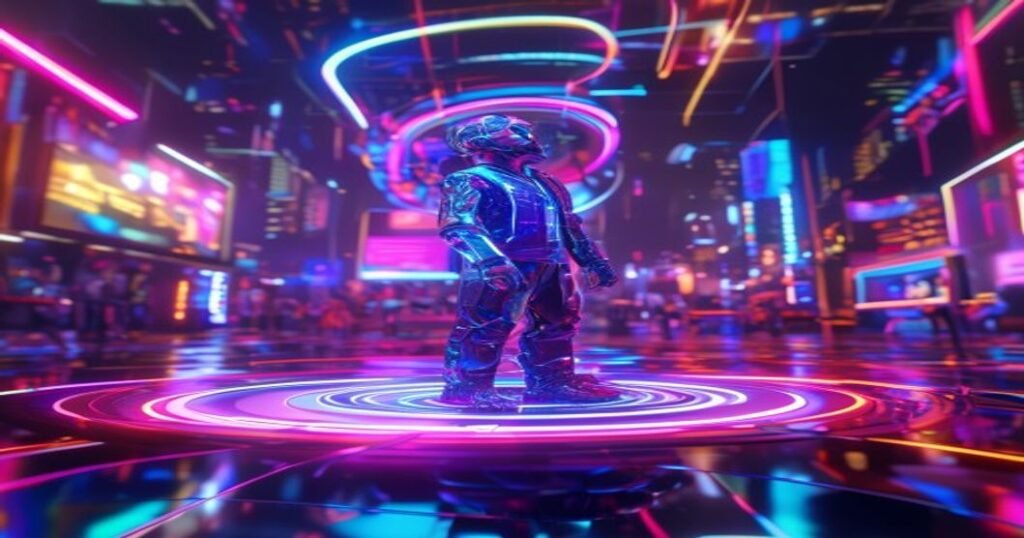

Alright, let’s talk about something truly mind-bending: the quiet, yet utterly seismic shift happening across the entire entertainment landscape. From the silver screen to your headphones, and deep within the immersive worlds of video games, Artificial Intelligence isn’t just knocking on the door – it’s already got its feet up on the coffee table, dictating the next scene, composing the next hit, and designing your next digital adversary. And let me tell you, as someone who’s been watching tech trends for ages, this isn’t just another passing fad; this is a fundamental rewrite of how we create, consume, and even perceive entertainment.
For a long time, AI felt like a distant sci-fi concept, something reserved for robot overlords and dystopian futures. But now? It’s here, it’s integrated, and it’s profoundly shaping our present. We’re not talking about a distant future where AI might change things. No, the AI Avalanche: Why Intelligent Machines Aren’t Coming, They’ve Already Changed Everything for Startups!, and the entertainment industry, perhaps more than any other, is feeling the ground shake.
Lights, Camera, AI: The Cinematic Revolution
Think about your favorite blockbuster. The stunning visual effects, the sprawling sets, the perfectly choreographed action sequences. While human creativity remains at the core, AI is increasingly becoming the invisible hand guiding the magic. It’s not just about rendering CGI faster anymore; it’s about AI assisting in script analysis to predict audience reception, identifying potential plot holes, or even suggesting character arcs based on millions of data points from past successful narratives.
Consider the pre-production phase. AI tools are helping filmmakers scout locations, create realistic digital doubles, and even de-age actors with unsettling precision. During post-production, AI-powered software can automate tedious tasks like color grading, sound mixing, and even facial tracking, freeing up human artists to focus on more complex, creative challenges. And then there’s the truly mind-bending stuff: AI generating entire scenes, characters, or even short films from text prompts. We’re seeing deepfakes evolve from a niche curiosity to a powerful, albeit ethically complex, tool for recreating historical figures or bringing back beloved characters without the original actors.
But it’s not all about the big studios. Indie filmmakers are leveraging accessible AI tools to elevate their productions, creating visual effects that once required Hollywood budgets. The playing field is leveling, allowing more diverse voices to tell their stories, powered by intelligent algorithms that streamline the technical hurdles.
The AI Maestro: Harmonizing Music’s Future
Walk into any major music studio today, and you’ll find AI isn’t just a gimmick; it’s an integral part of the creative process. From helping artists overcome writer’s block by suggesting melody lines or lyrical ideas, to mastering tracks with unparalleled precision, AI is truly revolutionizing how music is made and consumed.
-
Algorithmic Composition:
AI can now compose original pieces in the style of renowned artists or generate entirely new genres. While some argue this diminishes human artistry, I see it as a powerful new instrument in a musician’s toolkit, allowing for experimentation and pushing creative boundaries never before imagined.
-
Personalized Playlists & Discovery:
This is where AI truly shines for the listener. Streaming platforms use sophisticated AI algorithms to curate playlists tailored to your mood, activity, and even time of day. This isn’t just about suggesting artists similar to what you already like; it’s about predicting what you’ll love before you even know it, helping you discover new sounds you might otherwise miss. It’s a game-changer for emerging artists too, offering a pathway to reach niche audiences globally.
-
Production & Mastering:
AI tools can analyze raw audio and automatically enhance it, removing background noise, correcting pitch, or even replicating specific vocal styles. This democratizes high-quality production, allowing bedroom producers to achieve a professional sound without expensive studios or engineers.
The conversation around AI in music often sparks fear: will human artists become obsolete? My take is no. Instead, AI serves as an incredible collaborator, amplifying human talent and enabling creatives to explore avenues previously inaccessible. It’s about leveraging technology to push the limits of sound, not replace the soul behind it.
Gaming’s Intelligent Frontier: More Immersive Than Ever
If there’s one area where AI’s impact feels most immediate and personal, it’s gaming. From the behavior of NPCs (Non-Player Characters) to procedural content generation, AI is making game worlds richer, more challenging, and endlessly replayable.
-
Smarter NPCs:
Gone are the days of predictable, robotic enemies. Modern AI in games allows NPCs to learn from player actions, adapt their strategies, and even develop unique personalities. This makes every encounter feel dynamic and unpredictable, significantly enhancing the immersion.
-
Procedural Content Generation:
Imagine a game world that’s infinite and always new. AI can procedurally generate vast landscapes, intricate dungeons, unique quests, and even entire narratives on the fly. This not only expands replayability but also allows developers to create massive, detailed worlds with greater efficiency.
-
Personalized Gaming Experiences:
AI is now tailoring game difficulty, storylines, and even character interactions based on your individual playstyle and preferences. This creates a deeply personalized experience, making each playthrough feel unique to you. It’s like having a game master who knows you better than you know yourself!
-
AI Companions & Storytellers:
We’re seeing games where AI companions offer dynamic dialogue, react intelligently to situations, and even influence the plot based on your choices. And the idea of AI generating entire, evolving storylines in real-time is no longer a pipe dream, promising infinite narrative possibilities.
The Human Element: Fear, Future, and Opportunity
With all this talk of AI’s capabilities, it’s natural for many to feel a pang of anxiety. Will AI take over creative jobs? Will the unique spark of human ingenuity be lost in a sea of algorithms? This concern is valid, and it echoes larger societal shifts we’re seeing. The AI Earthquake: Why Your Job, Your Future, and Your Kids’ Education Will Never Be the Same, and the entertainment industry, like many others, will see roles evolve. Some jobs may diminish, but new ones will undoubtedly emerge.
However, I firmly believe that AI, in its current and foreseeable forms, is a tool. A supremely powerful, intelligent tool, yes, but a tool nonetheless. It excels at automation, data analysis, and generating variations, but the core essence of storytelling, the raw emotional impact, the unexpected flash of genius – that still belongs to us. AI can mimic emotion, but it doesn’t *feel* it. It can analyze trends, but it doesn’t *dream* new ones into existence.
The real opportunity lies in collaboration. Artists who embrace AI as a co-creator, a muse, or a highly efficient assistant will be the ones who thrive. Those who learn to wield these new digital brushes and synthesizers will unlock new levels of creativity. For startups in the entertainment sector, understanding this dynamic isn’t just an advantage; it’s a necessity. The AI Tsunami: Why Startups That Don’t Ride This Wave Will Drown (And How Yours Can Thrive!) is real, and the entertainment industry is right in its path. Innovators who integrate AI smartly will redefine what’s possible, while those who cling to old methods might find themselves left behind.
Looking Ahead: An Entertainment Renaissance
The integration of AI into entertainment isn’t just about efficiency or novelty; it’s about pushing the boundaries of what’s creatively possible. Imagine films where every viewing experience is unique, with dynamically generated scenes or character dialogue based on your emotional responses. Picture music that adapts in real-time to your heartbeat or mood. Envision games that evolve infinitely, presenting fresh challenges and narratives every time you play.
The current trajectory suggests an entertainment renaissance, where AI empowers creators to realize visions previously constrained by time, budget, or technological limitations. It democratizes access to high-end production tools, fostering a new generation of diverse talent. Of course, ethical considerations around data privacy, deepfake misuse, and copyright will continue to be crucial discussions. But these are challenges we must navigate as we embrace the immense potential.
In conclusion, AI isn’t here to steal the show; it’s here to make the show bigger, bolder, and more personal than ever before. It’s a transformative force that promises to make entertainment an even more captivating, immersive, and astonishing experience for us all. The future of entertainment isn’t just about what humans can create; it’s about what humans and intelligent machines can dream up, together.


