

The Self-Driving Dream: Why Our Autonomous Future Is Hitting More Potholes Than Pavement (And Why That’s Okay)
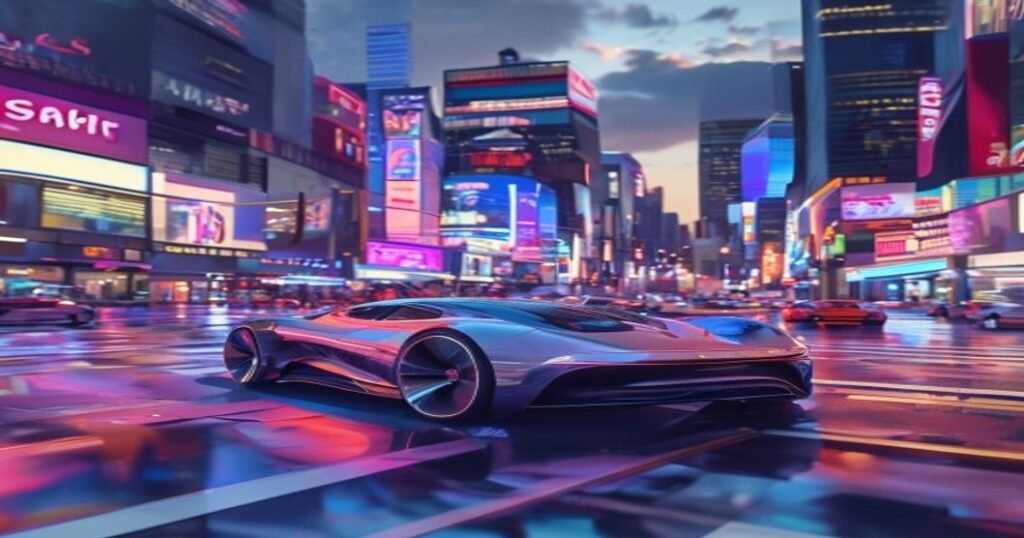
Remember those sci-fi movies where everyone glides around in sleek, driverless pods, reading a book or taking a nap while their car effortlessly navigates the urban jungle? For years, that vision felt tantalizingly close, a mere blink away from becoming our everyday reality. We were promised a world of zero traffic jams, accident-free roads, and commutes that transformed from soul-crushing drudgery into productive or relaxing personal time. And honestly, who wouldn’t want that?
Yet, here we are, in a time when cutting-edge AI can compose symphonies and paint masterpieces, and our self-driving cars… well, they’re still largely in testing, grappling with everything from rogue squirrels to unexpected road construction. It’s a bumpy road, literally and figuratively, and it’s time we had an honest conversation about why the autonomous future is proving harder to unlock than we initially thought. But don’t despair! This isn’t a eulogy for self-driving cars; it’s a deep dive into the fascinating, complex journey of an innovation that promises to redefine how we interact with the world.
The Irresistible Allure of Autonomy: What’s the Big Deal?
Let’s be clear: the motivation behind autonomous vehicles isn’t just about laziness or a desire for novelty. The potential benefits are monumental. Imagine:
- Safety First: Human error accounts for over 90% of all road accidents. Remove the human element, and theoretically, we could drastically reduce fatalities and injuries.
- Traffic Liberation: AI-driven vehicles communicating with each other could optimize traffic flow, eliminating bottlenecks and reclaiming hours of our lives currently spent idling in congestion.
- Productivity Boost: Commute time transforms from dead time into an opportunity to work, learn, or simply relax.
- Enhanced Accessibility: For the elderly, disabled, or those without licenses, self-driving cars offer unprecedented freedom and mobility.
- Environmental Gains: Optimized driving patterns and shared autonomous fleets could lead to reduced emissions and fewer cars on the road.
It’s a utopian vision, no doubt. But like any utopia, the path to get there is fraught with challenges that are far more intricate than simply slapping a sensor array on a car and calling it a day.
The AI at the Wheel: Beyond Just Wires and Code
At the heart of every self-driving car is a sophisticated artificial intelligence, a digital brain that’s constantly perceiving, predicting, and planning. It’s a marvel of modern engineering, integrating data from an array of sensors—cameras, lidar, radar, ultrasonic—to create a real-time, 360-degree understanding of its environment. This AI then makes split-second decisions, attempting to mimic and even surpass the complex cognitive processes of a human driver. It’s an incredible testament to how Generative AI is reshaping industries far beyond just art and content creation, fundamentally altering the very mechanics of transportation.
But here’s the rub: the real world isn’t a perfectly simulated environment. It’s chaotic, unpredictable, and often illogical. A human driver relies on intuition, context, and the ability to interpret subtle social cues from other drivers and pedestrians. An AI, no matter how advanced, operates on algorithms and data. It can be trained on millions of miles of driving data, but a sudden flash mob, a child chasing a ball into the street, or an illegally parked truck can throw a wrench into its meticulously programmed logic.
The Unseen Hurdles: Why the Slow Rollout?
So, if the tech is so good, why aren’t we all being chauffeured by our cars yet? The answer lies in a complex interplay of technological, regulatory, ethical, and sociological challenges:
1. The Perception Problem: Trust vs. Skepticism
We’ve all heard the headlines about autonomous vehicle incidents, even if they’re rare compared to human-caused accidents. These stories stick. There’s an inherent human skepticism about relinquishing control to a machine, especially when lives are at stake. Building public trust requires not just flawless technology, but also transparent communication and a clear understanding of limitations. The transition from driver to supervisor (in Level 3 autonomy) is particularly tricky, as it demands the human to be constantly alert for a sudden takeover, a task our brains are ill-equipped for over long periods.
2. The Regulatory Labyrinth: A Patchwork of Laws
Imagine trying to implement a revolutionary technology across thousands of different jurisdictions, each with its own laws, road signage, and cultural driving norms. That’s the challenge for autonomous vehicles. Who is liable in an accident? What are the standards for testing and deployment? Without a unified, clear regulatory framework, mass adoption remains a slow, fragmented process. This complexity is one of the many reasons why the AI Gold Rush requires smart money’s playbook, looking beyond mere hype to the foundational, often mundane, challenges that slow progress.
3. Ethical Quagmires: The ‘Trolley Problem’ on Wheels
This is where things get philosophical. In an unavoidable accident scenario, how should an autonomous car be programmed to react? Should it prioritize the safety of its occupants, or minimize harm to pedestrians, even if it means sacrificing its passengers? These ‘trolley problem’ scenarios are not just theoretical; they represent real ethical dilemmas that engineers and policymakers must grapple with. Who decides the moral compass of a machine? There are no easy answers, and societal consensus is still a long way off.
4. Infrastructure: The Missing Link
Autonomous vehicles thrive in environments with clear lane markings, reliable GPS, and robust digital mapping. Many of our roads, particularly outside major urban centers, are far from this ideal. Furthermore, the true potential of autonomous fleets may only be realized with V2X (vehicle-to-everything) communication, where cars talk to each other, to traffic lights, and to roadside infrastructure. This requires a massive overhaul and investment in smart city technologies that are still in their infancy.
The Human Drive for Innovation: Acknowledging the ‘Ghost in the Machine’
Despite these monumental hurdles, the human spirit, our ancient, insatiable drive for innovation, persists. We see it in the countless engineers, scientists, and entrepreneurs pouring their lives into solving these problems. From developing more robust AI algorithms that can handle ‘edge cases’ (unusual, rare scenarios) to creating redundant systems that ensure safety even if one component fails, the pursuit is relentless. It’s this very spirit, this ghost in the machine, that pushes humanity to constantly redefine what’s possible, even in the face of daunting complexity.
The journey isn’t just about building a car that can drive itself; it’s about building an entire ecosystem of trust, safety, and societal acceptance. It’s about figuring out how humans and machines can collaborate seamlessly, where the machine enhances our lives without overwhelming our agency or introducing unforeseen risks.
The Road Ahead: A Gradual Evolution, Not a Revolution
So, when can we expect our driverless future? Probably not all at once, and not everywhere. The consensus among industry experts now leans towards a more gradual, evolutionary adoption:
- Geofenced Zones: Autonomous vehicles will likely first flourish in controlled environments like dedicated robotaxi services in specific cities or last-mile delivery operations within warehouses.
- Trucking and Logistics: Long-haul trucking on highways, where driving conditions are more predictable, presents a significant early opportunity for automation.
- Advanced Driver-Assistance Systems (ADAS): Continuously improving features like adaptive cruise control, lane-keeping assist, and automatic emergency braking are paving the way, slowly habituating drivers to increasing levels of automation. These are the stepping stones.
- Shared Mobility: The economic model for self-driving cars might be less about individual ownership and more about shared, on-demand fleets, maximizing utilization and reducing urban congestion.
The self-driving dream isn’t dead; it’s maturing. It’s moving from the realm of boundless techno-optimism to a more grounded, realistic understanding of the intricate challenges involved. And that’s okay. Because true innovation isn’t about instant gratification; it’s about persistent problem-solving, meticulous engineering, and a patient, iterative approach. We might not have flying cars or fully autonomous vehicles in every driveway right now, but the relentless pursuit of that future is still driving some of the most profound technological advancements of our time. And honestly, watching that journey unfold, one pothole and one breakthrough at a time, is just as exciting as the destination itself.


