
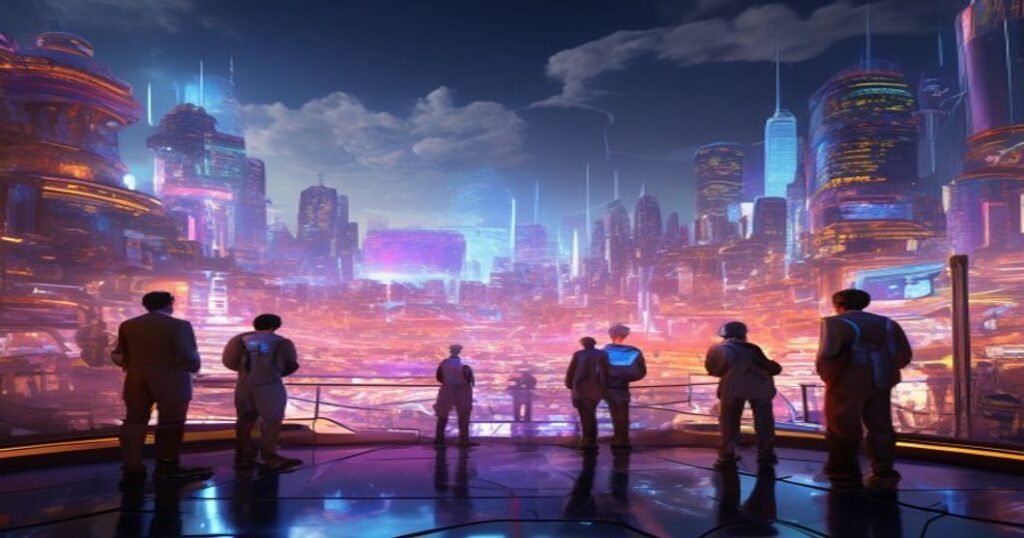

Alright, let’s talk history. But not the dusty, textbook kind. We’re talking about the thrilling, relentless, and sometimes terrifying story of human innovation – a narrative that stretches back further than any written record and continues to unfold with breathtaking speed even today. It’s my firm belief that to truly understand the bewildering pace of technological change we’re experiencing, from the algorithms quietly shaping our daily lives to the grand pronouncements of AI’s future, we absolutely *must* look to the past. Because what we’re witnessing isn’t new; it’s merely the latest, most potent iteration of a very, very old human impulse.
The Blueprint of Progress: From Stone Tools to Smart Systems
Think about it. What drives us? That insatiable itch to solve a problem, to make life a little easier, a little more predictable, or a little more powerful. It started with a sharpened stone, then the wheel, then controlling fire. Each invention, no matter how humble, was a monumental leap, fundamentally altering how humans lived, interacted, and saw their world. It wasn’t just about survival; it was about optimization, about pushing the boundaries of what was possible.
Consider the ancient Egyptians, meticulously planning and building the pyramids. A feat of engineering that still baffles and inspires us today. Or the Romans, whose aqueducts and road networks laid the literal groundwork for empires, connecting distant lands and enabling trade and communication on an unprecedented scale. These weren’t just construction projects; they were manifestations of complex problem-solving, resource management, and a deep understanding of physics and logistics – a kind of ‘ancient big data’ if you will, but carved in stone and powered by muscle. Their methods, refined over generations, were their algorithms for progress. They sought efficiency, durability, and a way to exert control over their environment. Does that sound familiar?
Echoes in the Printing Press: The First Information Revolution
Fast forward a few millennia to the 15th century and the arrival of the printing press. Before Gutenberg, knowledge was largely confined to scribes and the elite. Books were rare, precious commodities. The printing press wasn’t just a machine; it was an information superhighway that pulverized the bottlenecks of knowledge dissemination. It democratized ideas, fueled the Renaissance and the Reformation, and laid the groundwork for modern science and education. Suddenly, revolutionary concepts could spread like wildfire, challenging old dogmas and empowering individuals with access to learning previously unimaginable.
This was an ‘information revolution’ of its time, fundamentally altering human society, economics, and power structures. The parallels to our current digital age are striking, aren’t they? The way information flows, the challenges to traditional authorities, the explosion of new ideas – it’s all part of the same historical arc. We’re just dealing with terabytes instead of treatises.
The Industrial Revolutions: Redefining Work and Society
Then came the Industrial Revolutions. Steam power, then electricity. Each wave brought unprecedented changes, sparking new industries, creating unimaginable wealth (and, admittedly, new forms of inequality), and transforming the very fabric of daily life. Villages became cities, agricultural societies became industrial powerhouses, and the nature of ‘work’ was redefined again and again. People feared the ‘iron horses’ and the ‘spinning jennies’ would steal jobs, destroy communities, and lead to moral decay. Sound familiar? Every major technological shift has been met with both utopian visions and dystopian fears.
These eras taught us profound lessons about adaptation, about the incredible resilience of human enterprise, and about the sometimes-painful process of social and economic restructuring. The ‘invisible hand’ of market forces, driven by these innovations, reshaped nations. And much like those times, we see powerful economic shifts now, as new technologies create new opportunities, demanding a fresh look at where value is created and how wealth is distributed. Indeed, if you’re tracking where the real seismic shifts are happening in the global economy, you’re likely watching The AI Gold Rush: Smart Money’s Playbook for Investing Beyond the Hype. It’s a mirror image of past revolutions, where those who understood the new ‘means of production’ – be it steam engines or data – reaped the greatest rewards.
From the Telegraph to the Cloud: Connecting the World
The 20th century accelerated this trend with astounding inventions like radio, television, and the early computers. We went from sending messages across continents in days via ship to nearly instantaneous communication via telegraph, then radio waves, and eventually the internet. The drive was always the same: to overcome distance, accelerate information exchange, and enhance human capability. These were not just gadgets; they were extensions of our senses and our intellect.
Each step laid the foundation for the next, creating a denser, more interconnected web of human activity. The principles of logic and problem-solving that went into building the first mechanical calculators are the direct ancestors of the complex algorithms running our world today. The human desire to model, predict, and ultimately, control aspects of reality has never waned.
Our Present Moment: The Latest Chapter in an Ancient Story
And so, we arrive at now. The age of Artificial Intelligence. Machine learning, deep learning, generative models – these aren’t just buzzwords. They represent a qualitative leap in humanity’s ongoing quest for augmentation and optimization. We’re not just building tools anymore; we’re building tools that learn, adapt, and even create. And frankly, it’s exhilarating and, yes, a little unsettling. The anxieties and excitements surrounding AI today are direct echoes of those that accompanied every major technological shift in history.
From predicting weather patterns to personalizing our entertainment, AI is no longer a futuristic concept but an integral, often unseen, force in our daily existence. Its presence is so pervasive that many don’t even realize its influence. It’s truly becoming The Invisible Hand: How AI is Quietly Reshaping Every Choice You Make (And Why That’s a Big Deal). This isn’t just about convenience; it’s about a fundamental shift in how decisions are made, how information is filtered, and how our preferences are understood and, perhaps, even nudged.
Moreover, as AI delves into creative domains, generating art, music, and text, it forces us to confront profound questions about our own unique human spark. What does it mean to be creative when machines can compose symphonies or paint masterpieces? This isn’t just a technical debate; it’s a philosophical one that touches the very core of our identity. Indeed, we’re right in the middle of The Creativity Conundrum: How Generative AI Is Forcing Us To Redefine Art, Work, and Even Ourselves. This redefinition isn’t necessarily a threat, but an invitation to explore what truly makes us human beyond mere output.
And let’s not forget the grand ambition of human scientific inquiry, which doesn’t stop at information or automation. Consider developments like genetic editing. Just as ancient humans learned to cultivate crops or domesticate animals, fundamentally altering natural ecosystems for their benefit, we are now learning to edit the very blueprint of life itself. The ethical and societal implications are immense, but the underlying drive—to understand, control, and optimize—is an ancient one. This journey from simple selective breeding to sophisticated genomic tools like CRISPR Unlocked: The Unstoppable Science Editing Our Future (And Our Very Selves) is another testament to humanity’s relentless pursuit of mastery over its environment, albeit now at the molecular level.
Learning from the Past to Navigate the Future
So, what does this grand historical sweep tell us? It tells us that change is the only constant. It tells us that every era has faced its own ‘new normal’ created by radical inventions. It tells us that the fear and excitement we feel today about AI and other cutting-edge technologies are not unique; they are part of a continuous human experience.
Understanding this history isn’t just an academic exercise. It’s a vital tool for navigating our present and shaping our future. By seeing the patterns of innovation, disruption, adaptation, and societal restructuring that have played out over millennia, we can approach our current technological revolution with greater foresight, empathy, and perhaps, a touch less panic. We can anticipate challenges, plan for equitable transitions, and remember that ultimately, technology is a reflection of human aspirations. The ghost in the machine, it turns out, is simply the enduring spirit of human ingenuity, whispering through the ages.
This isn’t just history news; it’s the news of ourselves, constantly evolving, constantly building, constantly reaching for what’s next.


