
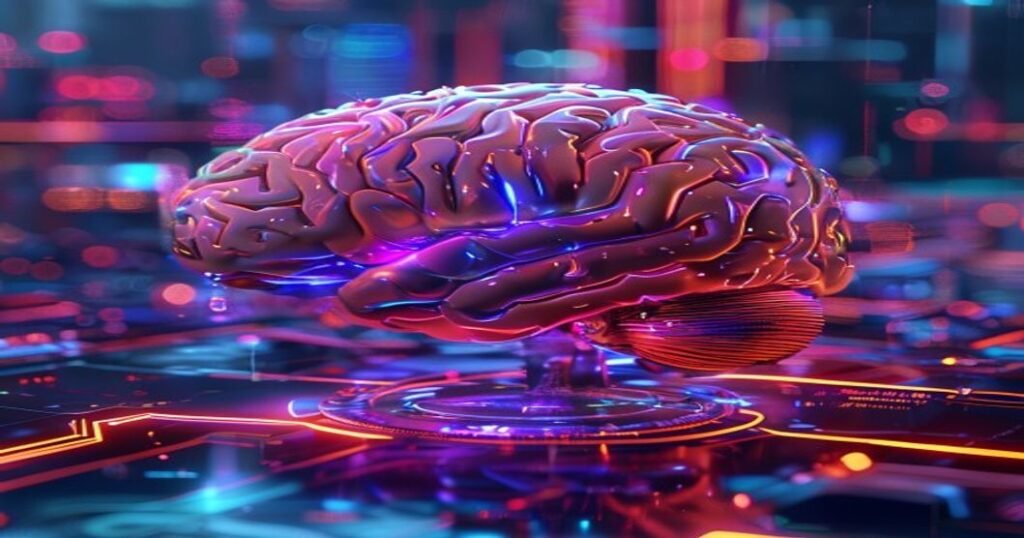

Ever dreamt of controlling technology with just a thought? Of communicating without words, or perhaps even enhancing your cognitive abilities beyond what nature intended? For decades, this was the stuff of science fiction, confined to the pages of cyberpunk novels and blockbuster movies. But here’s the mind-boggling truth: we are no longer just dreaming. We are actively building this future, right now, through the revolutionary field of Brain-Computer Interfaces (BCIs).
As a seasoned observer of the tech landscape, I can tell you that the buzz around BCIs isn’t just hype. It’s a genuine seismic shift on the horizon, one that promises to redefine our relationship with technology, our bodies, and perhaps even our very sense of self. It’s a journey from healing the broken to augmenting the able, and it’s happening at an astonishing pace.
Decoding the Mind: What Exactly Are BCIs?
At its core, a Brain-Computer Interface is exactly what it sounds like: a direct communication pathway between a wired brain and an external device. It bypasses the traditional neural pathways of the peripheral nervous system (muscles, nerves) and instead translates brain signals directly into commands or receives input directly into the brain.
Think about that for a moment. No more fumbling with a keyboard, no more struggling with a joystick, no more shouting commands at a smart speaker. Your intention, your thought, becomes the interface. It’s the ultimate control mechanism, the most intuitive interaction imaginable. While the concept might sound intimidating, the technology typically falls into two main categories:
Invasive BCIs: Diving Deep
These involve surgically implanting electrodes directly into the brain tissue. While this sounds extreme (and it is, currently), invasive BCIs offer the highest resolution and most precise signal detection. They’re primarily used in medical applications where the benefits dramatically outweigh the risks. Think about individuals with severe paralysis gaining the ability to control a robotic arm or a computer cursor with their thoughts – a truly life-changing intervention.
Non-Invasive BCIs: The Accessible Frontier
These BCIs don’t require surgery. Instead, they use external sensors, often in the form of headbands or caps, to detect brain activity. Electroencephalography (EEG) is the most common method here, measuring electrical activity on the scalp. While less precise than invasive methods, non-invasive BCIs are far more accessible and are already finding applications in areas like gaming, meditation, and even basic cognitive training.
The Dawn of a New Era: Current Breakthroughs
The progress in BCI technology in recent times has been nothing short of miraculous. We’re moving beyond theoretical discussions and into tangible, impactful applications.
Restoring Hope: Medical Miracles
- Movement Restoration: Perhaps the most profound impact of BCIs has been in empowering individuals with locked-in syndrome or severe paralysis. Patients who couldn’t move a muscle are now controlling advanced prosthetic limbs with fluid, natural thought. They’re typing messages, browsing the internet, and even manipulating objects – all through pure mental intent.
- Communication Breakthroughs: For those unable to speak, BCIs offer a new voice. By decoding brain signals associated with imagined speech or even letter selection, researchers are enabling communication for individuals who were once trapped within their own minds.
- Sensory Perception: Imagine restoring the sense of touch to a prosthetic hand or even a rudimentary form of sight. Research is actively exploring how BCIs can not only send commands out but also receive sensory information back into the brain, blurring the lines between natural and artificial senses.
Beyond Healing: The Augmentation Frontier
While the medical applications are undoubtedly transformative, the potential for BCI goes far beyond simply restoring lost function. This is where the future gets truly wild – and wonderfully terrifying.
Imagine a world where your intentions alone can sculpt reality around you. It’s not just a sci-fi dream; it’s the trajectory of Brain-Computer Interfaces (BCIs). We’ve seen how AI is secretly rewiring your smartphone experience, making those devices feel like an extension of yourself. Now, picture an interface that bypasses the tap, the swipe, the voice command entirely. That’s the promise of BCI – a direct neural bridge, making even the most advanced smartphone interactions seem clunky and archaic. Your phone wouldn’t be in your pocket; it would be an extension of your mind.
Cognitive Enhancement: Leveling Up Your Brain
What if you could boost your memory, improve your focus, or even learn complex skills at an accelerated rate? Future BCIs might offer cognitive enhancement, directly stimulating areas of the brain to improve performance. This could revolutionize education, professional training, and even our capacity for creativity. We’re talking about unlocking latent potential, pushing the boundaries of human intellect.
Direct Neural Communication: Telepathy is Real?
The idea of ‘thought-to-thought’ communication sounds like pure fantasy, but research is already exploring rudimentary forms of direct brain-to-brain interfaces. While true telepathy is still a distant dream, the ability to share complex ideas, emotions, or even sensory experiences directly could fundamentally alter human interaction and collaboration.
The ‘Matrix’ Fantasy: Uploading Consciousness?
This is the furthest reaches of BCI speculation, venturing into philosophical territory. Could BCI eventually lead to the ability to ‘upload’ or ‘download’ consciousness? While the technical and ethical hurdles are monumental, the very possibility challenges our understanding of life, death, and identity. It forces us to ask: what is the essence of being human in a world where our minds can interface directly with machines?
The Ethical Maze and Societal Impact
But as with any technology that touches the very core of what it means to be human, the ethical landscape of BCIs is a minefield. The implications extend far beyond individual health and well-being, touching upon privacy, equity, and even the fundamental definition of humanity itself. This isn’t just a niche medical field; it’s a force poised to reshape civilizations, much like the AI tsunami that’s already reshaping every corner of our globalized world. We need robust conversations, now, to guide this powerful technology.
Privacy and Security: Your Thoughts for Sale?
If technology can read your brain signals, what prevents it from accessing your innermost thoughts, memories, or even subconscious desires? Who owns your neural data? How can we protect against malicious actors hacking into your mind? These aren’t hypothetical questions; they are critical challenges that need proactive solutions.
Equity and Access: The Augmented Divide
If BCIs offer significant enhancements, who gets access to them? Will it create a new class divide between the ‘augmented’ and the ‘natural’? How do we ensure that these life-changing technologies are available equitably, and not just to a privileged few?
Defining Humanity: Where Do We Draw the Line?
When does human augmentation cross into something else entirely? As we seamlessly integrate technology into our very biology, our understanding of what it means to be human will inevitably shift. These are profound philosophical questions we must grapple with, individually and collectively.
The Unsung Hero: Artificial Intelligence
It’s crucial to understand that without artificial intelligence, much of the BCI revolution simply wouldn’t be possible. AI is the silent, sophisticated interpreter, turning the cacophony of neural signals into actionable commands and decipherable intentions. Our brains generate incredibly complex, noisy, and highly individualistic data. AI, particularly machine learning, is the key to making sense of it all.
- Signal Processing: AI algorithms are essential for filtering out noise, identifying patterns, and extracting meaningful information from raw brainwave data.
- Decoding Intent: Machine learning models are trained to correlate specific brain patterns with desired actions or thoughts, allowing the BCI to accurately predict a user’s intent.
- Adaptation and Learning: Both the BCI system and the user’s brain learn to adapt to each other. AI facilitates this adaptive process, making the interface more intuitive and efficient over time.
This symbiosis is why many of the leading companies in the neurotech space aren’t just *using* AI; they *are* AI-first companies, embodying the AI-first revolution that sees startups not just leveraging AI, but building their very core around it. From neural networks that identify minute signal changes to advanced algorithms that personalize the interface to each user’s unique brain activity, AI is the engine driving BCI forward.
The Road Ahead: Challenges and Opportunities
While the future of BCIs is undeniably bright, the path isn’t without its obstacles. Significant technological, ethical, and regulatory challenges remain.
Technological Hurdles
- Resolution and Bandwidth: Improving the fidelity of brain signal recording and the speed at which data can be processed is crucial for more sophisticated applications.
- Miniaturization and Power: Making invasive devices smaller, more durable, and less power-intensive is vital for long-term implantation.
- Non-Invasive Precision: Enhancing the accuracy and depth of signal detection for non-invasive BCIs will open up countless new consumer applications.
Regulatory and Ethical Frameworks
Governments and international bodies need to establish clear guidelines for the development, testing, and deployment of BCI technologies, ensuring safety, privacy, and equitable access. Public discourse is essential to navigate these complex waters.
Public Acceptance
Overcoming skepticism and fear is paramount. Clear communication about the benefits, risks, and ethical safeguards will be crucial for widespread adoption and public trust.
Conclusion: A Future Imagined, A Future Built
The journey into the world of Brain-Computer Interfaces is one of the most exciting and profound scientific endeavors of our time. It’s a testament to human ingenuity, pushing the very boundaries of what we thought possible. From restoring dignity and autonomy to those with debilitating conditions to potentially augmenting our very intellect, BCIs represent a frontier that promises to rewrite our understanding of connection, capability, and consciousness.
I genuinely believe that we are standing on the precipice of a new era. An era where the distinction between thought and action, human and machine, becomes increasingly blurred. It won’t be without its challenges or its moments of unease, but the potential rewards – for medicine, for communication, for human potential itself – are simply too vast to ignore. So, prepare yourselves. The future isn’t just arriving; it’s getting wired, directly into our minds. And frankly, I can’t wait to see what we think up next.


