
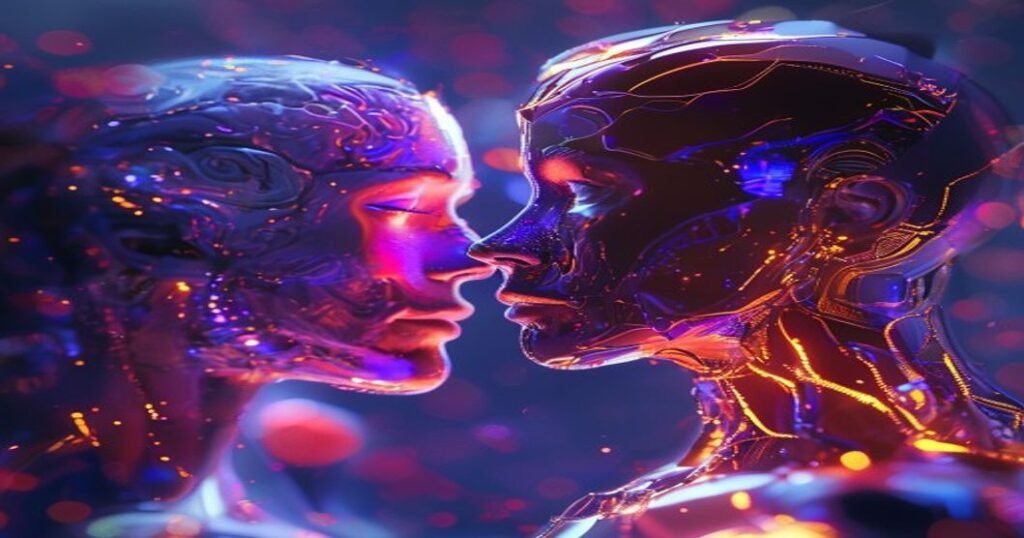

Remember when Artificial Intelligence felt like something out of a sci-fi blockbuster, a distant futuristic concept? Well, hold onto your hats, because that future isn’t just knocking on our door – it’s already walked in, made itself a cup of tea, and started composing symphonies. We’re talking about Generative AI, a technological marvel that’s not just processing information, but creating it. From crafting breathtaking digital art to writing entire novels, designing new molecules, and even composing complex music, Generative AI has exploded onto the scene, fundamentally challenging our understanding of creativity, labor, and what it truly means to be human.
It’s an exhilarating, often bewildering, moment in history. The digital landscape is buzzing with breakthroughs almost daily, and it feels like we’re standing at the precipice of a new renaissance, driven not just by human ingenuity, but by our silicon-based counterparts. But what does this mean for us? For our jobs, our art, our very sense of self? Let’s dive deep into this fascinating, sometimes terrifying, new frontier.
The Unveiling of a New Creative Force
For decades, AI was largely about analysis, prediction, and automation. It could beat chess grandmasters, recognize faces, and recommend your next binge-watch. But the ability to *create* original, plausible, and often stunning content was considered the exclusive domain of human consciousness. Generative AI shatters that assumption. Tools like DALL-E, Midjourney, ChatGPT, and countless others have shown us that algorithms can learn the patterns and structures of human expression and then generate novel outputs that are indistinguishable from, or even surpass, human-made creations in certain contexts.
This isn’t just about mimicry; it’s about emergent creativity. These models don’t just copy; they synthesize, blend, and invent based on the vast oceans of data they’ve been trained on. Think about it: a piece of software can conjure an image of ‘a pug dog in a tuxedo playing poker in space’ in seconds, or write a poem in the style of Shakespeare about quantum physics. It’s mind-boggling, isn’t it?
The "Creativity Conundrum": Redefining Art and Authenticity
Perhaps the most immediate and visceral impact of Generative AI has been on the creative industries. Artists, writers, musicians, designers – everyone is grappling with the implications. Is a piece of art created by an AI truly "art"? Who owns the copyright? Does the human prompt engineer deserve the credit, the AI itself, or the developers who built the model? These aren’t just academic questions; they are seismic shifts challenging the very foundations of creative merit and value.
Many see these tools as powerful co-pilots, expanding human potential and democratizing creation. Aspiring artists can now visualize complex scenes, writers can overcome creative blocks, and musicians can experiment with new sounds without needing extensive technical skills. It’s a fantastic accelerator for individual expression. However, there’s also a palpable fear – a worry that these algorithms might devalue human skill, flood the market with cheap, AI-generated content, or even erase entire professions. This push and pull between augmentation and automation is at the heart of The Creativity Conundrum: How Generative AI Is Forcing Us To Redefine Art, Work, and Even Ourselves. It forces us to ask: what is the essence of human creativity when machines can also generate?
The Great Workforce Reimagination: From Automation to Augmentation
Beyond the artistic realm, Generative AI is poised to revolutionize almost every sector of the global economy. Customer service, coding, marketing, education, scientific research – no industry seems immune. Tasks that were once tedious and time-consuming can now be outsourced to algorithms, freeing up human workers for more complex, strategic, or uniquely human endeavors. Imagine a marketing team effortlessly generating dozens of ad copy variations, or a coding team having AI write boilerplate code, allowing them to focus on innovative architectural design.
This isn’t just about replacing jobs; it’s about transforming them. New roles are emerging – "prompt engineers" who specialize in communicating effectively with AI, AI ethicists, and specialists in human-AI collaboration. The demand for skills like critical thinking, emotional intelligence, and complex problem-solving (qualities that AI currently struggles with) will likely surge. This shift, however, isn’t without its challenges. The pace of change is rapid, and societies need to adapt quickly through retraining, upskilling, and rethinking education systems to prepare a workforce for a future where intelligent machines are our colleagues, not just our tools.
Navigating the "AI Gold Rush": Investment and Ethical Responsibility
Naturally, with such transformative potential comes a massive influx of capital and entrepreneurial energy. We’re in the midst of an "AI gold rush," with startups emerging daily, venture capitalists pouring billions into new ventures, and tech giants battling for supremacy. Everyone wants a piece of the pie, hoping to identify the next killer application or foundational model that will redefine an industry. This intense competition is fueling rapid innovation, bringing these powerful tools to the masses at an astonishing pace.
However, as The AI Gold Rush: Smart Money’s Playbook for Investing Beyond the Hype illustrates, it’s also a volatile landscape. Identifying real value beyond the hype is crucial, and the ethical implications cannot be ignored. The vast datasets these AIs are trained on often contain biases, which can lead to discriminatory outputs. Concerns about misinformation, deepfakes, copyright infringement, and the concentration of power in a few tech behemoths are very real. Developing these technologies responsibly, with robust ethical frameworks and regulatory oversight, is paramount to ensuring they benefit all of humanity.
Humanity’s Enduring Drive: Innovation in a New Era
Looking back at history, humanity has always been driven by an insatiable urge to innovate, to build tools that extend our capabilities. From the invention of the wheel to the printing press, electricity, and the internet, each major technological leap has fundamentally altered society, reshaping work, culture, and our understanding of the world. Each time, there were fears of disruption, but ultimately, these innovations opened up new avenues for human endeavor and flourishing.
This journey of tool-making and intellectual expansion is eloquently captured in The Ghost in the Machine: How Humanity’s Ancient Drive for Innovation Echoes in Our AI Age. Generative AI, in many ways, is simply the latest, most sophisticated iteration of this ancient drive. It’s a tool that amplifies our minds, allowing us to experiment, explore, and create at scales previously unimaginable. The question isn’t whether it will change us – it already has. The question is how we will adapt, integrate, and guide this transformation to enhance human flourishing rather than diminish it.
Beyond Generation: The Path to Human-Machine Symbiosis
As Generative AI continues its breathtaking ascent, we also need to consider where this trajectory ultimately leads. It’s not just about AI generating content *for* us, but potentially integrating *with* us in profound ways. Imagine a future where the line between thought and digital output blurs, where creative ideas can be translated into tangible forms almost instantaneously, or where communication barriers dissolve through real-time, context-aware translation. This is where technologies like Brain-Computer Interfaces (BCIs) enter the picture, offering a tantalizing glimpse into a world where our very thoughts could directly interface with AI systems.
This vision, explored in articles like Mind Over Machine: How Brain-Computer Interfaces Are Redefining Humanity’s Next Chapter, suggests a future not just of AI *tools* but of true human-machine symbiosis. Generative AI might become the language through which our innermost ideas take digital form, a conduit for expressing creativity in ways we can barely conceive of now. It’s about leveraging AI not just to automate, but to augment our cognitive and creative abilities, expanding the very definition of human potential.
The Unwritten Chapter: Our Role in Shaping the Future
The rise of Generative AI is more than a technological shift; it’s a cultural, economic, and philosophical earthquake. It forces us to confront fundamental questions about originality, value, labor, and what makes us uniquely human. While the immediate future will undoubtedly be marked by both astonishing innovation and significant disruption, it’s crucial to remember that we, as humans, are still holding the pen.
We have the power to shape how these technologies evolve, how they are regulated, and how they integrate into our lives. This means investing in ethical AI research, fostering education that prepares people for new types of work, creating social safety nets, and engaging in open, honest dialogue about the challenges and opportunities. The era of Generative AI isn’t just about what machines can create; it’s about what we, in collaboration with these powerful tools, choose to create for our collective future. And that, my friends, is a story we are only just beginning to write.


