
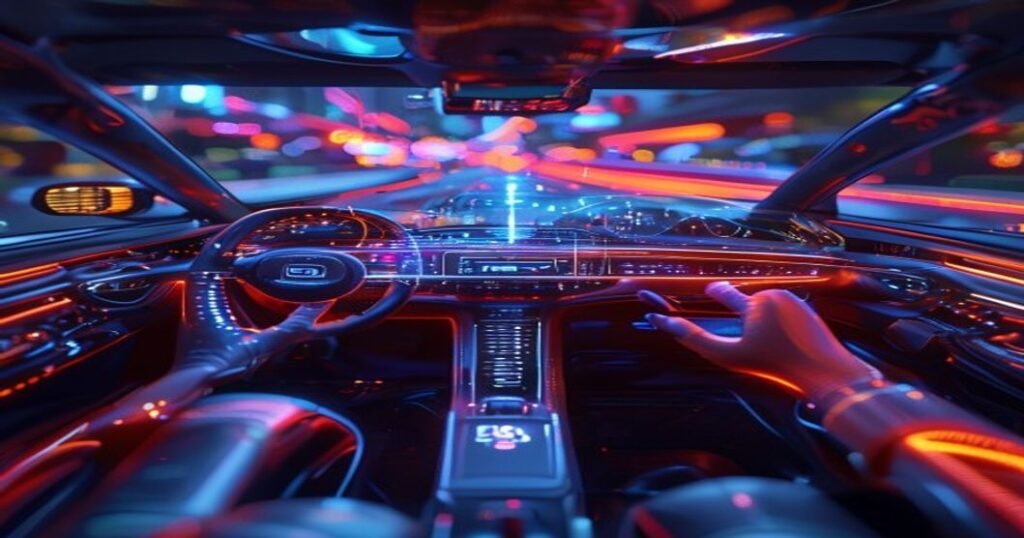

Your Car Isn’t Just a Car Anymore: How AI is Rewiring Our Rides, From the Dashboard to the Driveway
Remember that feeling? The pure, unadulterated joy of getting behind the wheel, the hum of the engine, the open road stretching ahead. For generations, the car has been more than just transportation; it’s been a symbol of freedom, adventure, and personal expression. But what if I told you that the very essence of that experience is being fundamentally rewritten, not by bigger engines or sleeker designs, but by lines of code and intelligent algorithms?
It’s true. Our beloved automobiles are transforming at a breakneck pace, evolving from mechanical marvels into sophisticated, rolling supercomputers. This isn’t just about self-driving cars (though we’ll certainly get to that); it’s about a pervasive, intelligent revolution that’s reshaping every facet of our interaction with vehicles. From how they keep us safe to how they entertain us, AI is orchestrating a paradigm shift so profound, you might just find yourself saying, “Wait, my car can do that now?”
The AI-Powered Highway: More Than Just a Gimmick
Let’s be honest, for a long time, the idea of AI in cars felt like something straight out of a sci-fi movie – KITT from Knight Rider, perhaps. But the reality is far more subtle, and frankly, far more impactful than a talking Pontiac. Today’s automotive AI isn’t about sentient cars; it’s about sophisticated systems that enhance safety, improve efficiency, and make our commutes genuinely more enjoyable. It’s about a future where your car anticipates your needs, protects you from dangers you haven’t even seen, and seamlessly integrates into your digital life. This is the very core of what we’re calling The AI-Powered Highway: How Intelligent Tech is Redefining Our Ride (And Why You’ll Never Drive The Same Again), and trust me, it’s not just hype.
The immediate benefits are already tangible. Think about the myriad of Advanced Driver-Assistance Systems (ADAS) that are standard features in most new vehicles. Lane-keeping assist that gently nudges you back into your lane, adaptive cruise control that maintains a safe distance from the car ahead, and automatic emergency braking that can prevent a collision before you even react. These aren’t futuristic concepts; they’re present-day safeguards, all powered by AI that processes data from cameras, radar, and lidar sensors in real-time, making instantaneous decisions to keep you out of harm’s way.
Beyond the Steering Wheel: The Rise of the Smart Co-Pilot
But AI in cars goes far beyond just preventing accidents. It’s about creating an intuitive, personalized driving experience. Imagine a car that learns your preferences for music, adjusts the climate before you even ask, and even suggests alternative routes based on your calendar appointments. This level of personalization is becoming increasingly common, thanks to AI-driven infotainment systems and voice assistants.
Our cars are rapidly becoming extensions of our digital lives, blurring the lines between our personal devices and our vehicles. Just as AI is secretly rewriting your smartphone’s entire DNA, it’s doing the same for your car’s operating system. Voice commands aren’t just for making calls anymore; they control navigation, media playback, and even in-car settings with remarkable accuracy. This seamless integration means less fumbling with buttons and screens, allowing drivers to keep their eyes on the road and their hands on the wheel – or even off it, in some scenarios.
The Connected Car: An Extension of Your Smart Home
And it doesn’t stop there. The convergence of automotive AI with other smart technologies is truly fascinating. Your car isn’t just a smart device; it’s a connected hub. Picture this: you’re leaving work, and your car, knowing your routine, automatically sends a signal to your smart home to adjust the thermostat, turn on the lights, and even brew your coffee. This isn’t a fantasy; it’s the logical progression of what happens when the intelligence embedded in our vehicles starts to communicate with the intelligence within our living spaces. We’re already seeing how The Smart Home Revolution: How AI is Crafting Our Dream Interiors, and the car is becoming an integral part of that ecosystem, acting as a mobile node in your personal network.
The data collected by these connected cars—from traffic patterns to driving habits—feeds back into the AI systems, making them smarter, safer, and more efficient for everyone. This data loop is crucial for the continuous improvement of autonomous capabilities and for developing new services that will further enhance our driving and passenger experiences.
The Road to Autonomy: Hype vs. Reality
Now, let’s talk about the big one: self-driving cars. While full, Level 5 autonomy (where the car handles all driving in all conditions) is still a significant challenge with complex ethical, legal, and technological hurdles, we’re seeing rapid advancements in partial autonomy. Features like highway pilot systems, which can handle accelerating, braking, and steering on specific roads, are becoming more refined and available.
The shift isn’t a sudden leap but a gradual progression. Each new ADAS feature, each improvement in sensor technology and AI processing power, brings us closer to a future where our involvement in the act of driving becomes optional, rather than mandatory. It’s a future that promises reduced accidents, less traffic congestion, and a newfound productivity or relaxation during commutes that were once stressful.
However, the human element remains paramount. Trust in these systems is built on flawless performance and transparent operation. The transition won’t just be about technological readiness; it will be about societal acceptance and regulatory frameworks catching up to the pace of innovation. My opinion? The fully autonomous future is inevitable, but it will arrive in stages, with humans and AI collaborating on the road for a considerable time to come.
The AI Imperative: Why Ignoring This Shift Is Not an Option
For automakers, embracing this AI revolution isn’t just about staying competitive; it’s about survival. Companies that fail to integrate intelligent technologies into their vehicles will find themselves rapidly losing ground in a market that increasingly values connectivity, safety, and smart features. The auto industry is undergoing a digital transformation as profound as any other sector, and manufacturers must invest heavily in software development, data science, and AI expertise to thrive.
But it’s not just for the industry giants. For us, the drivers and passengers, understanding these advancements means being prepared for a different kind of automotive future. It means recognizing the benefits of AI-powered safety features, appreciating the convenience of connected services, and engaging with the evolving landscape of mobility. The AI Imperative: Why Ignoring Intelligent Automation Means Falling Behind (And What You Can Do About It Now) applies to everyone, from the boardroom to the driver’s seat.
The Open Road Ahead: A New Era of Driving
The transformation of the automobile by AI is nothing short of revolutionary. It’s about more than just getting from point A to point B; it’s about making that journey safer, more efficient, more comfortable, and perhaps, even more enjoyable in ways we’re only just beginning to imagine. The romantic ideal of the open road might change, but the freedom and possibilities our vehicles offer are only expanding.
So, the next time you step into your car, take a moment to appreciate the silent, intelligent co-pilot working tirelessly under the hood. It’s not just a machine anymore; it’s a living, learning extension of our increasingly digital world. And honestly? I can’t wait to see where it takes us next.


