
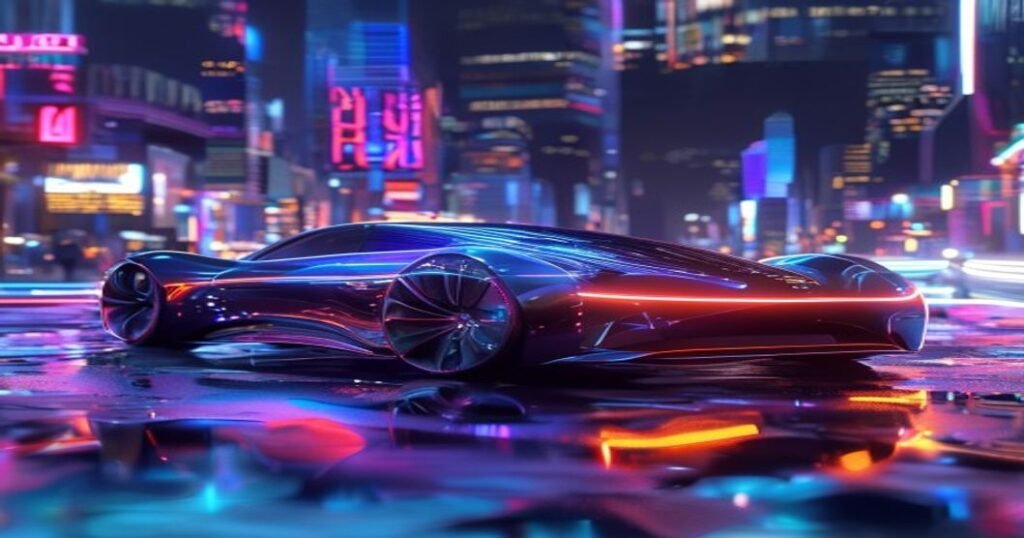

Alright, let’s talk about cars. Not just the gleaming metal and roaring engines we’re used to, but something far more profound brewing beneath the surface. For decades, our relationship with automobiles has been fairly straightforward: get in, turn the key (or push a button), and drive. But if you haven’t noticed, that script is being rewritten, not by humans alone, but by a silent, powerful partner: Artificial Intelligence. We’re not just talking about self-parking features anymore; we’re on the cusp of a total automotive metamorphosis, and frankly, it’s exhilarating, a little intimidating, and utterly unavoidable.
The Brain Behind the Wheel: Autonomous Driving Takes Center Stage
When most people think of AI in cars, the first thing that springs to mind is autonomous driving. And rightly so! This is where AI truly flexes its muscles, turning our vehicles into sophisticated, self-navigating machines. Imagine this: you hop into your car, tell it your destination, and then… you just relax. No traffic jams to curse at, no parking spot struggles, just a serene journey while you catch up on emails, read a book, or even take a quick nap. Sounds like science fiction, doesn’t it? Yet, we’re inching closer to this reality with every passing day.
From Level 2 systems, where your car can largely drive itself on highways but still requires driver attention (think adaptive cruise control and lane-keeping assistance), to the elusive Level 5 — full autonomy under all conditions, without human intervention — AI is the engine powering this revolution. These systems are incredibly complex, relying on an intricate dance of sensors, cameras, radar, lidar, and super-fast processors. AI algorithms analyze this massive influx of data in real-time, making split-second decisions that would overwhelm even the most experienced human driver. It’s about predicting pedestrian movements, understanding traffic patterns, reacting to sudden obstacles, and doing it all more consistently and safely than we ever could. This isn’t just about convenience; it’s about vastly reducing human error, which, let’s be honest, is the cause of most accidents.
Beyond Driving: Your Car as a Smart, Responsive Companion
But AI’s influence extends far beyond simply taking over the steering wheel. Think about the inside of your car. It’s no longer just seats, a dashboard, and a stereo. Our vehicles are becoming extensions of our digital lives, highly personalized and incredibly intelligent spaces. Voice assistants, powered by natural language processing AI, are getting smarter, capable of understanding complex commands and even predicting your needs. Want to find the nearest coffee shop? Adjust the cabin temperature? Call your mom? A simple voice command, and your car responds. This seamless interaction minimizes distractions, keeping your focus where it needs to be – on the road, for now.
We’re seeing infotainment systems evolve from clunky interfaces to intuitive, adaptive platforms that learn your preferences. They remember your favorite routes, your go-to music genres, even your preferred seat position. It’s akin to The Smart Home Revolution: How AI is Crafting Our Dream Interiors (And Why You’re Already Living In It), but instead of your living room, it’s your personal mobile sanctuary. Cars are becoming connected hubs, communicating with your smart devices at home, traffic infrastructure, and even other vehicles. This interconnectedness promises a future where traffic flows smoother, journeys are more efficient, and perhaps, even less stressful.
The AI Imperative in Automotive Manufacturing and Beyond
The magic doesn’t just happen on the road; it starts long before the car even leaves the factory. AI is transforming automotive manufacturing at every stage, from design and prototyping to production and quality control. Generative design tools, powered by AI, can explore thousands of design variations to optimize for aerodynamics, weight, or structural integrity in a fraction of the time a human designer could. Robotic arms, guided by sophisticated AI vision systems, perform intricate assembly tasks with unparalleled precision, reducing errors and increasing efficiency.
Supply chain management, a historically complex beast, is also getting an AI overhaul. Predictive analytics help manufacturers anticipate demand, optimize logistics, and identify potential bottlenecks before they become costly problems. For any industry looking to stay competitive, embracing The AI Imperative: Why Ignoring Intelligent Automation Means Falling Behind (And What You Can Do About It Now) is no longer optional; it’s a matter of survival. The automotive sector, with its massive scale and intricate processes, is a prime example of this.
Safety, Efficiency, and the Algorithmic Guardian Angel
Beyond the glamour of self-driving and smart cockpits, AI is quietly working wonders in making our vehicles safer and more efficient. Advanced Driver-Assistance Systems (ADAS) are increasingly common, leveraging AI to provide features like automatic emergency braking, blind-spot monitoring, and lane departure warnings. These systems are constantly monitoring your surroundings, acting as a vigilant co-pilot, ready to intervene when human attention wavers.
Predictive maintenance, another AI marvel, means your car can tell you it needs a service *before* something catastrophic happens. AI algorithms analyze data from hundreds of sensors within the vehicle, identifying subtle patterns that indicate potential failures in components like the engine, transmission, or battery (especially crucial for EVs). This proactive approach saves drivers money, reduces breakdowns, and extends the lifespan of vehicles.
The investment in these technologies is staggering, reflecting a profound shift in priorities within the industry. Companies pour billions into R&D, sensing a massive future market. This reminds me of The Algorithmic Gold Rush: How AI is Reshaping Your Investment Future (Are You Ready To Ride The Wave?), as investors flock to the automotive AI sector, seeing its potential for exponential growth and disruption across multiple industries.
The Road Ahead: Challenges and Ethical Crossroads
Of course, this dazzling future isn’t without its speed bumps. Data privacy is a huge concern; these highly connected vehicles collect vast amounts of personal and environmental data. Who owns it? How is it secured? These are questions that demand robust answers. Ethical dilemmas also loom large, particularly in autonomous driving. In an unavoidable accident scenario, how should an AI-driven car be programmed to prioritize outcomes? These philosophical debates are as crucial as the technological advancements themselves.
Then there’s the job market. While AI creates new roles, it also displaces others, particularly in sectors relying on manual labor or routine tasks. Society needs to prepare for this transition, ensuring retraining and new opportunities are available. Regulation also struggles to keep pace with innovation, creating a complex patchwork of laws that vary from region to region, slowing down widespread adoption.
My Take: Embracing the Inevitable, Shaping the Future
So, where does that leave us? As a staunch believer in progress, I see the AI-powered highway not just as an inevitability but as a tremendous opportunity. Yes, there are challenges, and yes, we need thoughtful conversations around ethics, safety, and societal impact. But the potential for safer roads, reduced congestion, increased efficiency, and unparalleled convenience is simply too great to ignore.
I believe that soon, the idea of owning a car you *always* have to drive yourself will feel as quaint as cranking a car to start it. Our vehicles will become partners, companions, and an extension of our digital selves, adapting to our needs and making our lives genuinely easier. This isn’t just about driving; it’s about reclaiming time, reducing stress, and fundamentally changing how we interact with the world around us. It’s a brave new world on four wheels, and honestly, I can’t wait to buckle up and see where it takes us.
From the bustling streets of global metropolises to the burgeoning tech hubs in emerging economies, the adoption and development of AI in the auto sector is a global phenomenon. Countries like Pakistan, for instance, are actively investing in technological infrastructure and talent, recognizing that embracing Pakistan’s AI Revolution: Riding the Tech Wave Towards a Smarter, More Prosperous Future is key to future economic prosperity, including in cutting-edge automotive applications. The future of mobility is collaborative, intelligent, and truly worldwide.
Are You Ready to Ride the Wave?
The transformation is happening now, right before our eyes. The question isn’t whether AI will reshape the automotive industry, but how quickly, and how effectively we adapt to it. So, next time you’re stuck in traffic, ponder this: the intelligence that will one day navigate you out of that jam is already being engineered, refined, and deployed. Are you ready for the drive of your life?


