
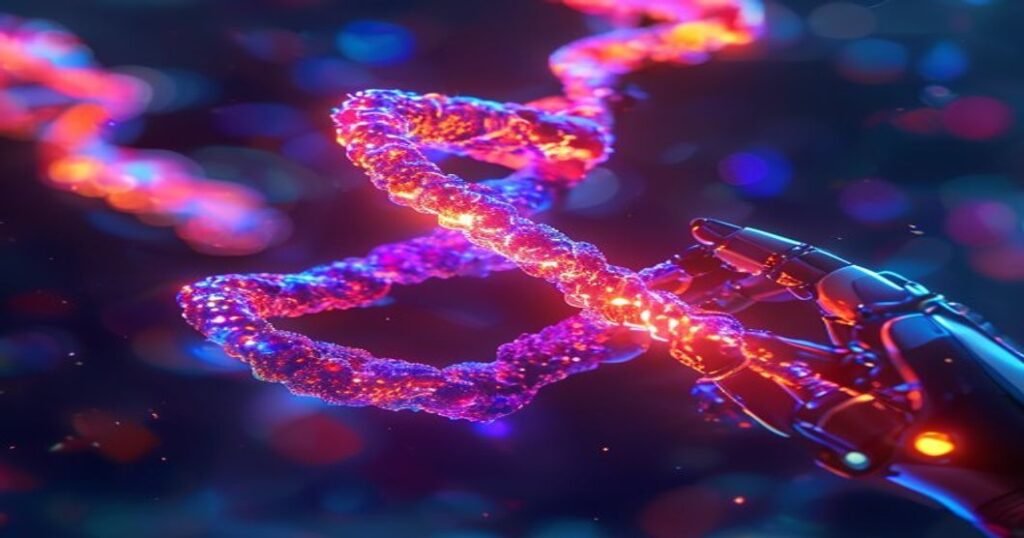

Imagine holding the blueprint of life in your hands, not just to read it, but to edit it, tweak it, correct its mistakes. Sounds like something out of a sci-fi blockbuster, right? Well, friends, welcome to the ‘now’ of science. We’re talking about CRISPR – a technology so revolutionary it’s not just making waves, it’s creating a tsunami in biology, medicine, and potentially, our very definition of what it means to be human.
As a tech journalist obsessed with the bleeding edge of innovation, I’ve seen my fair share of ‘game-changers.’ But CRISPR? This isn’t just a game-changer; it’s a universe-changer. It promises to cure diseases once thought untreatable, reshape agriculture, and even redefine evolution itself. And while the excitement is palpable, it also brings a hefty dose of ethical dilemmas that we, as a society, need to grapple with – and fast.
What Exactly Is CRISPR? Your Life’s Personal Word Processor
At its heart, CRISPR (Clustered Regularly Interspaced Short Palindromic Repeats, but let’s just stick with CRISPR, shall we?) is a molecular scissor. Think of it like a sophisticated find-and-replace function for DNA. Our DNA is the instruction manual for our bodies, a vast library of genes dictating everything from eye color to susceptibility to certain diseases.
Before CRISPR, editing these instructions was incredibly difficult, imprecise, and often like trying to fix a typo in a massive book by throwing darts at it. CRISPR, however, allows scientists to precisely target a specific section of DNA, cut it out, and even insert new genetic material. It’s remarkably accurate, relatively inexpensive, and surprisingly easy to use – a combination that has sent the scientific world into an absolute frenzy.
From Bacterial Defense to Human Cures
Fascinatingly, this revolutionary tool wasn’t designed by humans for medical breakthroughs. It was discovered as a natural defense mechanism in bacteria, which use it to chop up the DNA of invading viruses. Scientists realized they could harness this ancient bacterial superpower for our own purposes. It’s a testament to the wonders hidden in plain sight within the natural world.
The Promise: A World Without Genetic Disease?
This is where the excitement truly ignites. The potential applications of CRISPR are nothing short of breathtaking:
-
Curing Inherited Diseases
Imagine a future where devastating genetic disorders like sickle cell anemia, cystic fibrosis, Huntington’s disease, and even some forms of cancer could be corrected at their genetic root. Clinical trials are already showing promising results for conditions like sickle cell and beta-thalassemia, with patients seeing life-changing improvements. The idea that we could potentially eradicate suffering caused by these conditions, not just manage symptoms, is a monumental leap forward for humanity.
-
Fighting Cancer and Viruses
CRISPR is being explored to reprogram immune cells to more effectively target and destroy cancer cells. It could also be used to make cells resistant to viral infections like HIV, offering a new frontier in antiviral therapies.
-
Supercharging Agriculture
Beyond human health, CRISPR is already being used to create more resilient crops that can withstand drought, pests, and disease, potentially feeding a growing global population more sustainably. Think about rice that’s more nutritious or wheat that can grow in harsher climates – a quiet revolution happening in our fields.
The Peril: Navigating the Ethical Minefield
But with great power comes, well, you know the rest. CRISPR isn’t just a scientific tool; it’s a profound ethical challenge. The ability to edit the human genome opens up a Pandora’s Box of considerations:
-
‘Designer Babies’ and Germline Editing
Perhaps the most contentious area is ‘germline editing,’ which involves making changes to sperm, egg, or early embryos. These changes would be heritable, meaning they would be passed down through generations. While this could potentially eliminate genetic diseases from family lines forever, it also raises fears about ‘designer babies’ – selecting traits like intelligence, athletic ability, or appearance. Who decides what’s ‘better’? What happens to genetic diversity? And who would even have access to such technology?
-
Unintended Consequences
Even with its precision, CRISPR isn’t perfect. Off-target edits – changes made to unintended parts of the genome – are a concern. We’re still learning about the incredibly complex interplay of genes, and altering one part could have unforeseen ripple effects down the line.
-
Equity and Access
If CRISPR therapies become commonplace, who will benefit? Will it only be available to the wealthy, exacerbating health inequalities between nations and within societies? This isn’t just a scientific question; it’s a societal one that demands our attention, especially as nations like Pakistan increasingly look to leverage advanced technologies for their future. The concept of Pakistan’s Digital Destiny: How a Young Nation, Fueled by AI, is Rewriting its Economic Future! must include equitable access to groundbreaking scientific advancements like gene editing, not just digital infrastructure.
The AI Catalyst: Accelerating the Gene Revolution
It would be remiss to talk about CRISPR without mentioning its indispensable partner: Artificial Intelligence. The sheer volume of genomic data, the intricate patterns within DNA, and the complex design of optimal CRISPR guide RNAs are tasks perfectly suited for AI. AI algorithms can:
-
Identify Targets: Sifting through vast genomic databases to find the exact genetic mutations responsible for diseases.
-
Design Precision Tools: Optimizing the CRISPR ‘guide RNA’ molecules to ensure they target only the intended DNA sequence, minimizing off-target effects.
-
Predict Outcomes: Modeling the potential effects of a gene edit before it’s even performed, accelerating research and development.
This symbiosis between biology and computation is a powerful engine of discovery. AI isn’t just analyzing data; it’s actively driving the design and refinement of these biological tools. It’s part of a broader trend where AI is supercharging creative problem-solving across disciplines. For scientists, this isn’t about AI suppressing imagination, but rather the AI Creative Revolution: Is Your Imagination About to Be Supercharged or Suppressed? – clearly, in biotech, it’s being supercharged. This integration of AI and cutting-edge biotech is a significant driver in what some call The Pakistani Digital Tsunami: How AI and a Young Nation are Forging a New Economic Destiny, showcasing how advanced scientific fields can be propelled forward by digital innovation, influencing national progress on multiple fronts, from health to economic growth.
My Take: Hope, Responsibility, and the Future We Choose
As I reflect on CRISPR, I find myself oscillating between profound excitement and a healthy dose of trepidation. On one hand, the thought of ending the suffering caused by debilitating genetic diseases fills me with immense hope. Imagine a world where children born with cystic fibrosis could live full, healthy lives, or where neurodegenerative diseases could be halted in their tracks. This is not just a dream; it’s becoming a tangible possibility.
On the other hand, the ethical quandaries are undeniable and demand immediate, thoughtful global dialogue. We are at a critical juncture where the power to reshape life itself is no longer theoretical. It’s real, and it’s here. The decisions we make now – about regulation, accessibility, and the very boundaries of human intervention – will define the kind of future we build, not just for ourselves, but for generations to come.
CRISPR isn’t just a scientific tool; it’s a mirror reflecting our values, our fears, and our aspirations. It challenges us to think deeply about what it means to be human, what we consider ‘natural,’ and how we wield immense power responsibly. The revolution is here, and it’s up to all of us to ensure its story is one of progress, compassion, and shared benefit, rather than unintended consequences and widening divides. The conversation has only just begun.


