
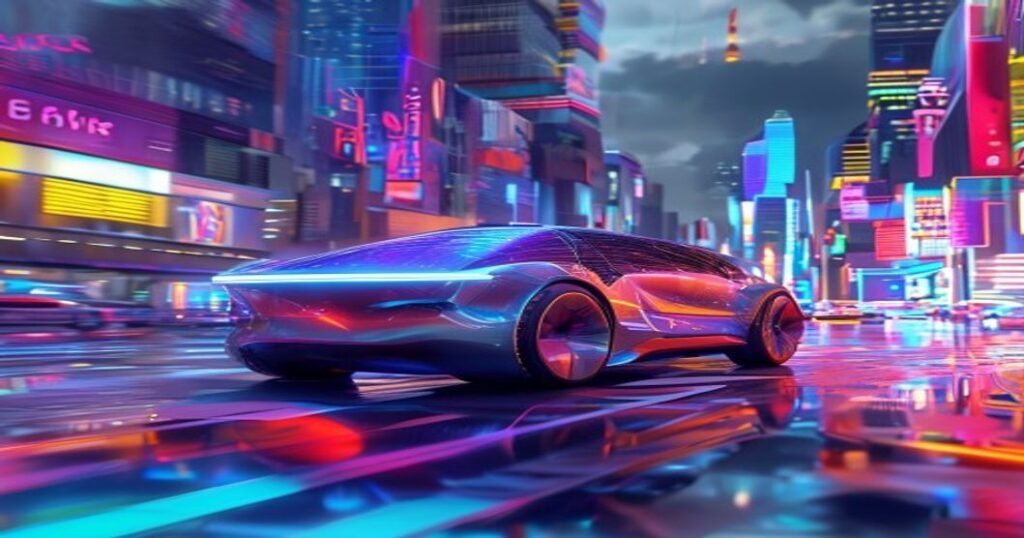

The Road Ahead: Why Self-Driving Cars Aren’t Just Coming, They’re Already Rewriting Our World
Let’s be honest: for decades, self-driving cars felt like something straight out of a Hollywood sci-fi flick. Flying cars? Maybe. Robots serving us dinner? Possibly. But a vehicle that pilots itself through rush hour traffic, parks perfectly, and drops you off right at your destination without a human hand on the wheel? That felt like pure fantasy. Yet, here we are, at a crossroads where that fantasy is not just knocking on our door, but actively parallel parking in our driveway.
My take? This isn’t just another incremental upgrade in automotive technology. We’re talking about a fundamental shift, a true revolution that will redefine not just how we travel, but our cities, our economies, and even our relationship with the concept of ‘driving’ itself. It’s easy to get caught up in the hype, or conversely, dismiss it as perpetually ‘five years away.’ But the reality on the ground, with countless companies pouring billions into R&D and pilot programs, tells a different story. Autonomous driving isn’t a distant dream; it’s a rapidly evolving present, and it’s already rewriting the rules.
Beyond the Wheel: What Makes a Car ‘Self-Driving’?
When we talk about self-driving, we’re not just talking about advanced cruise control. We’re talking about an intricate dance of hardware and software, a symphony of sensors and artificial intelligence. At its core, an autonomous vehicle needs to do three things exceptionally well: perceive, predict, and plan.
- Perception: This is where the eyes and ears of the car come in. We’re talking about an array of Lidar (light detection and ranging) sensors that create 3D maps of the environment, radar for detecting speed and distance, ultrasonic sensors for close-range detection, and high-resolution cameras that act as the car’s ‘vision.’ These sensors constantly feed a staggering amount of data to the vehicle’s central nervous system.
- Prediction: Once the car ‘sees’ its environment, it needs to understand it. What are those objects? Are they pedestrians, other cars, bicycles, or a stray plastic bag? And crucially, what are they likely to do next? This requires sophisticated AI models trained on millions of real-world scenarios to anticipate human (and machine) behavior.
- Planning: With perception and prediction in hand, the AI needs to make real-time decisions. How to navigate the intersection? When to change lanes? How to react to a sudden obstacle? This is where complex algorithms plot the safest, most efficient path, often considering multiple possibilities simultaneously.
It’s not just automation; it’s intelligence at work, learning and adapting faster than any human ever could.
The Data Deluge: Fueling the Autonomous Revolution
To enable this perception, prediction, and planning, autonomous vehicles generate an unthinkable amount of data. Every sensor, every millisecond, contributes to a massive stream of information about the environment, the car’s performance, and even passenger behavior. This isn’t just big data; it’s colossal data. Imagine petabytes of information collected every day, fed into algorithms that learn, refine, and improve the driving experience with every mile.
The beauty and the beast of this system is the continuous learning loop. As these vehicles operate, they encounter new situations, gather more data, and that data is then used to train and improve the AI models. It’s a virtuous cycle of improvement. This intense focus on data collection and analysis isn’t unique to the automotive world; we’ve seen how it’s completely transformed other industries, turning raw information into strategic advantage. Just look at how The Game Has Changed: How AI and Data are Rewriting the Rules of Modern Sports, providing athletes and teams with unprecedented insights into performance, strategy, and even injury prevention. The parallels in how data revolutionizes decision-making are striking.
The Connected Car: A New Ecosystem Emerges
Self-driving cars aren’t isolated entities; they are integral nodes in a burgeoning connected ecosystem. This is where Vehicle-to-Vehicle (V2V) and Vehicle-to-Infrastructure (V2I) communication comes into play. Imagine cars talking to each other, sharing real-time information about road conditions, hazards, and traffic flow. Picture traffic lights intelligently adjusting their timing based on the actual flow of autonomous vehicles, reducing congestion and improving efficiency.
This connectivity promises to transform urban planning, logistics, and emergency response. Smart cities become a tangible reality, with traffic management becoming a dynamic, self-optimizing system rather than a static set of rules. For businesses, this means more efficient supply chains, optimized delivery routes, and a drastic reduction in idle time. It’s a vision of urban mobility that is smoother, safer, and significantly more sustainable.
Personalization at Hyperspeed: Your Car Knows You Better Than You Think
Beyond navigation, the AI in these vehicles is also learning about you. It can quickly learn your preferred routes, your typical driving style (even if you’re not driving!), your favorite climate settings, and even your go-to podcasts or playlists. This isn’t just about convenience; it’s about crafting a hyper-personalized mobility experience.
But here’s the kicker: all this data about preferences, habits, and routes isn’t just for making your ride smoother. It’s a goldmine for services and businesses looking to connect with you in new ways. The insights derived from our travel patterns and in-car behaviors are already revolutionizing how companies understand and target consumers. Indeed, this level of data-driven insight is akin to how Marketing’s New Brain: How AI is Rewriting Every Digital Strategy Imagined (And Why You Can’t Ignore It). From predicting what you might want to buy to offering real-time recommendations for nearby services, the autonomous car becomes a highly intelligent, personalized portal to the world.
The Elephant in the Room: Safety, Ethics, and Public Trust
Of course, no discussion of self-driving cars would be complete without addressing the very real challenges and concerns. Accidents, while rare, do happen, and the question of liability—who is at fault when a machine is driving?—is a complex legal and ethical minefield. The infamous ‘trolley problem,’ where an AI might have to choose between two undesirable outcomes, is no longer a philosophical thought experiment but a potential programming dilemma.
Public trust remains a significant hurdle. Many people are understandably hesitant to hand over control to a computer, even if statistics show that human error causes the vast majority of accidents. Regulators are struggling to keep pace with technological advancements, leading to a patchwork of laws and guidelines across different regions. Transparency in how these AI systems make decisions, especially in critical situations, is paramount to building that trust.
Beyond the Commute: Rethinking Our Relationship with Cars
Once the driving task is fully automated, what does that mean for the occupants? The car transforms from a mere means of transportation into a truly mobile ‘third space’ – an extension of your home or office. Imagine commuting while catching up on emails, having a video conference, enjoying a movie, or simply taking a nap. The time previously lost to navigating traffic suddenly becomes productive or leisurely time.
This shift opens up entirely new possibilities for in-car experiences. AI won’t just drive you; it will curate your journey. It could suggest destinations based on your mood, play music tailored to the passing scenery, or even transform your vehicle into an immersive entertainment hub. This evolution aligns perfectly with how The Algorithm’s Muse: How AI is Not Just Changing, But *Becoming* Entertainment, personalizing content and experiences to an unprecedented degree. Our vehicles might become dynamic, digital cocoons, offering a seamless blend of productivity and pleasure.
Furthermore, as vehicles become more autonomous and connected, they also become platforms for richer digital experiences. Envision virtual test drives where you can ‘experience’ a car before it’s even manufactured, or augmented reality overlays that enhance your journey with contextual information about landmarks or potential destinations. The convergence of physical automobiles with the burgeoning digital realms of extended reality is fascinating. Indeed, it’s not a stretch to imagine how The Matrix is Calling: How AI is Building Your Next Digital Reality – The Metaverse Unleashed, and our cars could well become a key access point to these immersive worlds, blurring the lines between the ride and the digital experience.
The Uncharted Territory: What’s Next?
While the technology is undeniably impressive, the path to mass adoption of fully autonomous vehicles still presents challenges. Infrastructure needs to adapt, regulatory frameworks must mature, and public acceptance needs to solidify. But what’s clear is that the trajectory is set. We’re already seeing the rise of mobility-as-a-service models, where you might subscribe to a fleet of autonomous vehicles rather than owning one. This could drastically reduce personal car ownership, lower urban congestion, and free up vast swathes of parking space for other uses.
My optimistic, yet cautious, outlook is that the shift will be gradual but inexorable. It will start in controlled environments, expand to specific urban areas, and eventually become the norm. The world will look different, feel different, and move different.
Conclusion: An Unstoppable Force
The self-driving car revolution is more than just a technological marvel; it’s a societal transformation in progress. It promises a future of safer roads, reduced traffic, more efficient logistics, and newfound personal freedom within our vehicles. Yes, there are significant hurdles to overcome—ethical quandaries, regulatory complexities, and the fundamental challenge of building unbreakable trust in machines. But the sheer momentum, the relentless innovation, and the profound benefits suggest that this is an unstoppable force.
Are we ready for a world where driving is an optional activity, where our cars are intelligent companions, and where our commutes become moments of leisure or productivity? Whether you’re excited or apprehensive, one thing is certain: the road ahead is being paved by AI, and it’s leading us towards a future that’s more connected, more autonomous, and undeniably, absolutely fascinating.


