
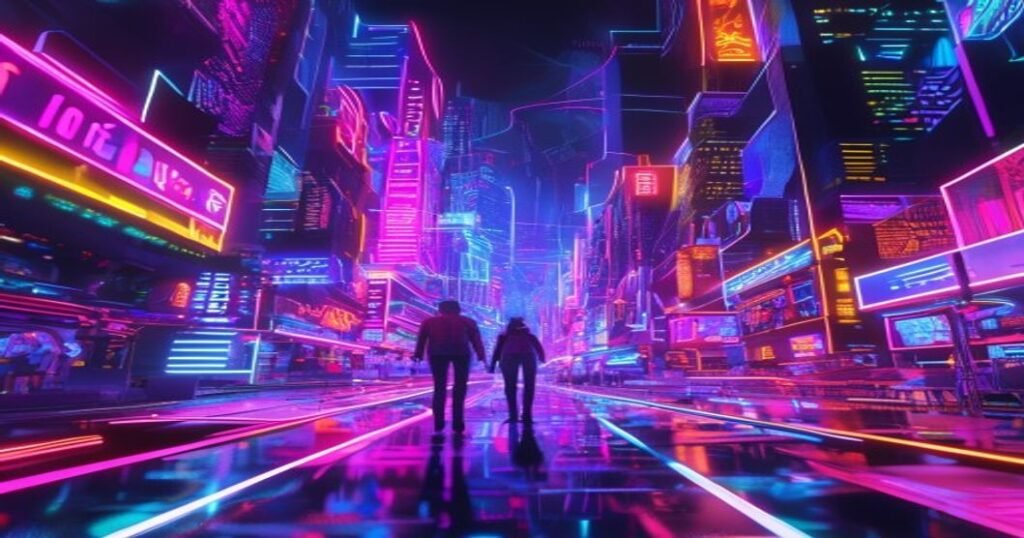

Alright, let’s be honest. For years, the ‘metaverse’ felt like a buzzword thrown around by tech billionaires, a concept largely confined to sci-fi novels and overhyped presentations. But something profound is happening under the surface, something that’s rapidly transforming this futuristic vision from a hazy dream into a tangible, digital reality. And at the heart of this metamorphosis? You guessed it: Artificial Intelligence.
As a seasoned observer of the tech landscape, I’ve seen countless trends come and go. Yet, the convergence of AI and the metaverse isn’t just a trend; it’s a foundational shift. It’s like the internet meeting smartphones, but with an extra dose of synthetic sentience steering the ship. This isn’t just about strapping on a VR headset and playing games (though that’s certainly part of it). This is about building entire digital universes that are dynamic, responsive, and, most importantly, deeply personal. It’s about how The AI Quake: How One Tech Revolution Is Reshaping Everything, From Your Brain to Your Bank Account, laying the very groundwork for this new frontier.
What is the Metaverse (Really)? Breaking Down the Hype
Before we dive into AI’s role, let’s clear up what we mean by the metaverse. It’s not just a single app or a virtual world like Decentraland or Roblox. Think of it as a persistent, interconnected network of 3D virtual worlds where users can interact with each other, digital objects, and AI-powered agents in real-time. It’s a place where your digital identity, assets, and experiences seamlessly travel from one environment to another. It’s about presence, immersion, and ownership, often underpinned by blockchain technology for digital scarcity and verifiable identity.
It’s a place where digital boundaries blur, where your virtual avatar might attend a concert one minute, a business meeting the next, and then design a new fashion line – all within a unified, persistent digital layer over our physical existence. The promise is nothing short of creating a parallel digital civilization, but one that needs an incredible amount of computational power and intelligence to truly come alive.
The AI Engine: Breathing Life into Digital Worlds
Here’s where AI steps in, transforming static virtual spaces into vibrant, living ecosystems. Without AI, the metaverse would be a beautiful but empty shell, lacking the intelligence to truly engage users. AI isn’t just an add-on; it’s the operating system, the neural network, the very consciousness of the metaverse.
1. Hyper-Personalization and Dynamic Avatars
- Evolving Identities: Forget static avatars. AI is enabling digital identities that learn, adapt, and even reflect your mood or preferences. Imagine an avatar that not only looks like you but mimics your mannerisms, anticipates your needs, and even dresses you based on your digital activities.
- Adaptive Environments: AI can dynamically alter virtual spaces based on user presence, preferences, or real-world events. A concert hall could change its aesthetic based on the genre of music or the audience’s collective vibe, all orchestrated by intelligent algorithms.
- Personalized Experiences: From tailored advertising to bespoke entertainment recommendations, AI will ensure that every interaction feels custom-made for you.
2. Intelligent NPCs and Conversational AI
If you’ve played any open-world game, you know NPCs (Non-Player Characters) can often feel robotic and repetitive. In the metaverse, AI-powered NPCs are set to become much more than background filler. They will be:
- Dynamic Guides and Companions: Imagine virtual assistants that can give you directions, explain complex concepts, or simply engage in meaningful conversation, learning from your interactions and becoming more sophisticated over time.
- Living Storytellers: AI can generate dynamic storylines and quests, ensuring that every user’s journey through the metaverse is unique. These intelligent agents can adapt narratives based on your choices, creating truly emergent storytelling.
- Service Bots and Shopkeepers: AI will staff virtual stores, provide customer service, and even act as teachers or therapists within dedicated metaverse spaces.
3. AI-Powered Content Generation: Building Worlds at Scale
The sheer scale of the metaverse demands content generation methods that go beyond human labor alone. This is where generative AI truly shines:
- Procedural World Building: AI algorithms can create vast, detailed landscapes, cities, and environments with minimal human input, populating them with unique textures, objects, and architectural styles.
- Asset Creation: From clothing and furniture to complex machinery, AI can rapidly design and render digital assets, accelerating the growth of the virtual economy.
- Music and Soundscapes: AI can compose dynamic soundtracks and ambient soundscapes that adapt to your location, activity, and emotional state within the metaverse, enhancing immersion dramatically.
4. Economic Systems and Security
A thriving metaverse needs a robust economy and ironclad security, both of which AI can facilitate:
- Fraud Detection and Trust: AI can monitor transactions and interactions for suspicious activity, protecting users from scams and ensuring a safe trading environment for digital assets.
- Algorithmic Marketplaces: AI can optimize pricing, match buyers and sellers, and predict trends within the metaverse’s economy, making it more efficient and fair.
- Resource Management: For large-scale, persistent worlds, AI can manage server load, optimize data flow, and ensure seamless experiences for millions of simultaneous users.
5. Enhancing User Experience and Accessibility
AI is crucial for making the metaverse accessible and enjoyable for everyone:
- Natural Language Processing (NLP): Voice commands, real-time translation, and sophisticated chatbots will make interacting with the metaverse intuitive, breaking down language barriers and simplifying navigation.
- Gesture Recognition: AI-powered systems can interpret complex gestures, allowing for more natural and immersive control without relying solely on traditional controllers.
- Adaptive Interfaces: The metaverse can adjust its interface and functionality based on a user’s physical abilities or preferences, ensuring inclusivity.
Beyond Gaming: Real-World Applications in the Metaverse
While gaming will undoubtedly be a massive driver, the true potential of the AI-powered metaverse lies in its ability to transform nearly every aspect of our lives.
Work and Collaboration
Imagine virtual offices where remote teams can interact as if they’re in the same room, complete with AI-powered whiteboards that transcribe ideas and translate languages in real-time. Training simulations become incredibly realistic, allowing professionals to practice complex procedures in a safe, immersive environment, guided by intelligent tutors.
Education
From exploring ancient Rome with a virtual guide to conducting complex science experiments that are too dangerous or expensive in the real world, AI-driven metaverse classrooms can offer personalized, interactive learning experiences that adapt to each student’s pace and style.
Healthcare
The metaverse is poised to revolutionize health. Patients could receive therapy in virtual environments, practicing social interactions or overcoming phobias in a controlled setting. AI-powered digital twins could model patient responses to treatments, while virtual consultations could offer a more immersive and diagnostic experience than a standard video call. Indeed, it’s part of Your Digital Health Revolution: How AI is Crafting a Hyper-Personalized Future of Wellness.
Entertainment and Socializing
Forget passive viewing. AI in the metaverse will create interactive stories, dynamic concerts where you can truly feel the crowd, and social spaces that evolve with your interests. Imagine a virtual concert where the stage design and light show adapt in real-time to the audience’s energy, or a digital club where the DJ is an AI crafting personalized sets based on the attendees’ preferences. This is precisely how Your Brain on AI: Why Entertainment is Getting Smarter, Deeper, and More Personal, offering unprecedented levels of engagement.
Challenges and Ethical Considerations
Of course, this dazzling future isn’t without its caveats. The ethical implications of a deeply interconnected, AI-driven metaverse are profound:
- Data Privacy: The sheer volume of personal data collected (biometrics, preferences, interactions) will be immense. Ensuring privacy and preventing misuse will be paramount.
- Algorithmic Bias: If the AI models are trained on biased data, those biases will inevitably manifest in the metaverse, potentially reinforcing societal inequalities.
- Digital Divide: Access to the metaverse will likely require significant hardware and robust internet connectivity, risking the exclusion of those without such resources.
- Mental Health and Addiction: The immersive nature of the metaverse could lead to issues with digital addiction, blurring the lines between reality and simulation, and impacting mental well-being.
- Governance and Ownership: Who sets the rules in the metaverse? Who owns digital assets, and how are disputes resolved across different platforms and jurisdictions?
These are not trivial concerns, and they demand careful consideration and proactive solutions from developers, policymakers, and users alike as the metaverse continues to unfold.
The Human Element: Still at the Core
Despite the incredible capabilities of AI, it’s crucial to remember that the metaverse, at its heart, is for humans. AI is a tool, an engine, a creative partner. It amplifies human creativity, enables new forms of expression, and facilitates connections that might not otherwise be possible. It doesn’t replace the human spirit, but rather provides an unprecedented canvas for it.
The ultimate success of the metaverse won’t be measured by its technological prowess alone, but by its ability to enrich human lives, foster genuine connections, and empower individuals in ways we can only just begin to imagine.
The Future is Now: Stepping into a New Digital Epoch
We are standing at the precipice of a new digital epoch. The combination of AI, virtual reality, augmented reality, blockchain, and high-speed connectivity is creating a perfect storm, accelerating the development of the metaverse beyond what many thought possible just a few years ago. It’s no longer a question of ‘if’ but ‘when’ – and ‘when’ is rapidly becoming ‘now’.
As we watch these digital realms take shape, powered by increasingly sophisticated AI, we have a unique opportunity to help define what this future looks like. Will it be a truly open, empowering space, or one controlled by a few monolithic entities? The choices we make in design, governance, and ethical frameworks today will profoundly impact the digital lives of generations to come. So, buckle up. The metaverse, supercharged by AI, isn’t just coming; it’s already here, inviting you to step inside and shape its evolution.

