
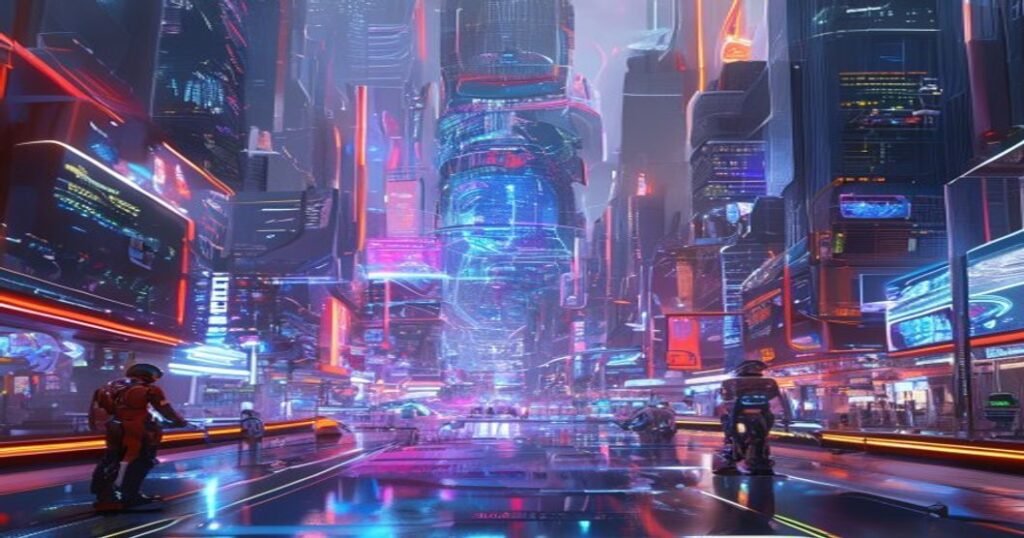

Alright, let’s talk about something truly electrifying, something that’s not just a buzzword but a seismic shift happening right beneath our digital feet. We’re not just witnessing technological evolution; we’re in the midst of a creative big bang, powered by none other than Generative AI. Forget what you think you know about AI being purely analytical, about algorithms just crunching numbers or predicting patterns. That’s old news. The new frontier? AI that creates. AI that dreams up entirely new images, writes compelling stories, composes music, designs products, and even crafts code from a simple text prompt. It’s a game-changer, folks, and frankly, it’s exhilarating – and a little terrifying – all at once.
What Exactly Is Generative AI, Anyway?
For a while, AI was largely about understanding and classifying. Think facial recognition, spam filters, or recommendation engines. They analyze existing data to make decisions or predictions. Generative AI, however, turns that concept on its head. Instead of just analyzing, it generates novel content. It learns patterns, styles, and structures from massive datasets and then uses that knowledge to produce something entirely new, something that didn’t exist before. Imagine feeding a machine every piece of classical music ever composed, and then asking it to write a brand-new symphony in the style of Beethoven. That’s Generative AI in action.
It’s not just stitching together existing pieces; it’s genuinely creating. Whether it’s crafting a photorealistic image of an astronaut riding a horse on Mars, writing a marketing email that sounds exactly like you, or designing a complex architectural blueprint, Generative AI is the ultimate digital muse, capable of producing an endless stream of original output. It’s the difference between a student summarizing a book and a published author writing one. This distinction is crucial because it propels AI from being a tool for efficiency to a co-creator, a partner in the artistic and innovative process.
The Creative Unbound: Demystifying the Digital Muse
Where Generative AI truly shines is in its ability to democratize and supercharge creativity. Suddenly, you don’t need years of art school to create stunning visuals, nor do you need to be a seasoned copywriter to craft engaging prose. With a few well-chosen words, or ‘prompts,’ anyone can become a digital artist, a published author, or a hit music producer. This has profound implications for every creative industry.
-
Art & Design:
Artists are using tools to explore new aesthetics, create concept art in minutes, and even generate entire animated sequences. Graphic designers can iterate on ideas at lightning speed, producing countless logo variations or UI elements with unprecedented efficiency. It’s not about replacing the artist; it’s about giving them superpowers, expanding their palette beyond anything previously imaginable. We’re seeing the silent revolution: how AI is rewriting our future, one intelligent pixel at a time, transforming our visual world.
-
Writing & Content Creation:
From blog posts and marketing copy to intricate fictional narratives and poetry, Generative AI models are assisting writers, overcoming writer’s block, and generating drafts faster than ever. For businesses, this means content strategies can scale dramatically, personalized marketing messages can be tailored to individual customers, and multilingual content creation becomes almost instantaneous.
-
Music & Sound:
Composers are experimenting with AI to generate unique melodies, orchestral arrangements, or even entire soundtracks. Podcasters can generate custom background music or use AI voices for narration. The soundscapes of our future are being composed by algorithms that understand harmony, rhythm, and emotion.
Reshaping Industries, Redefining Roles
The ripple effect of Generative AI extends far beyond the creative arts. Its transformative power is permeating nearly every sector, fundamentally altering how we work, innovate, and interact with the world.
Marketing & Advertising: The Hyper-Personalized Frontier
Imagine campaigns that don’t just segment audiences but create unique ads, copy, and even product recommendations for individual consumers. Generative AI makes this hyper-personalization a reality, leading to engagement rates that were previously unthinkable. Brands can now speak to millions of people as if they’re having a one-on-one conversation, creating experiences that feel deeply tailored and relevant.
Software Development: Code at the Speed of Thought
Developers are leveraging Generative AI to write boilerplate code, suggest functions, debug errors, and even translate code between different programming languages. This isn’t just about speed; it’s about freeing up developers to focus on higher-level problem-solving and innovation, accelerating the pace of software creation like never before. The grunt work is being automated, leaving more room for genuine ingenuity.
Product Design & Engineering: From Concept to Prototype in a Blink
In fields from automotive to architecture, Generative AI is being used to design optimal structures, create ergonomic product interfaces, and even simulate performance under various conditions. Engineers can explore thousands of design variations in moments, leading to more efficient, sustainable, and aesthetically pleasing products. This iterative speed dramatically compresses development cycles and unlocks previously inaccessible design possibilities.
Beyond the Obvious: Unexpected Impacts
Even areas you might not immediately associate with ‘creation’ are feeling the immense pull of Generative AI. Consider how data analysis in sports is evolving. It’s no longer just about tracking statistics; AI can generate predictive models for player performance, strategize game plays, and even create personalized training regimens. It’s a testament to how from data dribbles to digital dominance: how AI is radically reshaping the world of sports, showing its reach into every data-rich domain. This underscores the sheer breadth of its potential, indicating that few, if any, industries will remain untouched by this tidal wave of innovation.
Indeed, the digital deluge: how AI’s tidal wave is reshaping industries, jobs, and reality itself – are you ready? It’s not just a technological shift; it’s a societal one, demanding our attention and adaptation.
The Human-AI Collaboration: A New Frontier
Here’s where it gets really interesting: the narrative isn’t about AI replacing humans, but about augmentation. It’s about a profound shift towards human-AI collaboration. Imagine a writer working with an AI to generate diverse plot outlines, then picking the most compelling one to develop. Or a designer using AI to create hundreds of initial concepts, then refining the best ones with their unique artistic vision. The human element – our creativity, our intuition, our judgment, our ability to inject soul and meaning – remains irreplaceable.
This partnership elevates both sides. Humans provide the vision, the ethical framework, and the final touch, while AI handles the heavy lifting of generation, iteration, and optimization. It allows us to produce more, faster, and at a higher quality than ever before, pushing the boundaries of what’s possible in every domain.
Navigating the Ethical Minefield and Challenges
Of course, with great power comes great responsibility. Generative AI presents a complex array of ethical and practical challenges we absolutely must confront head-on.
-
Deepfakes & Misinformation:
The ability to generate incredibly realistic images, audio, and video content also opens the door to misuse, from creating convincing fake news to impersonating individuals with malicious intent. Developing robust detection methods and fostering media literacy are paramount.
-
Copyright & Ownership:
If an AI generates a piece of art or music, who owns the copyright? The user who prompted it? The company that developed the AI? The artists whose work was used to train the model? These are legal and philosophical questions that are only just beginning to be debated.
-
Bias & Fairness:
Generative AI models learn from the data they’re fed. If that data contains biases (and most real-world data does), the AI will perpetuate and even amplify those biases in its creations. Ensuring fairness and preventing discrimination in AI-generated content is an ongoing challenge.
-
Job Displacement & Reskilling:
While Generative AI creates new roles and augments existing ones, it will undoubtedly automate certain tasks, potentially impacting jobs that rely heavily on repetitive content creation. We need robust strategies for education and reskilling to prepare the workforce for this evolving landscape.
The Future is Prompt-Powered: Are You Ready?
In this brave new world, a new skill is emerging as incredibly valuable: prompt engineering. The ability to craft precise, effective prompts that guide Generative AI to produce the desired output is becoming an art form in itself. It requires a blend of creativity, logical thinking, and a deep understanding of how these models ‘think’ and respond. It’s about learning to speak the language of creation with the machines.
So, what does this mean for you, for your business, for your career? It means embracing curiosity, fostering adaptability, and committing to lifelong learning. It means understanding that this isn’t a passing fad; it’s a foundational shift. To truly thrive, we must stop viewing AI as a competitor and start seeing it as an incredibly powerful partner, a tool waiting for our command, our vision, and our ethical guidance.
We are truly standing at the precipice of something extraordinary. The AI Tsunami: Riding the Wave of Intelligent Transformation – Are You Prepared for What Comes Next? It’s not about being afraid of the machine; it’s about learning to ride the wave it’s creating. The ability to generate, to create, to innovate at this unprecedented scale is a superpower now accessible to so many. The question is, how will you wield it?
Conclusion: A World Reimagined
Generative AI is not merely an incremental improvement in technology; it’s a fundamental shift in how we conceive of creativity, productivity, and intelligence itself. It’s a Genesis Machine, actively participating in the ongoing creation of our digital and physical worlds. From personalized marketing to accelerated scientific discovery, from boundless artistic expression to more efficient engineering, its impact is only just beginning to unfold. We have a collective responsibility to guide its development ethically and harness its power wisely. The future is being written, painted, composed, and designed by an incredible new partnership: human ingenuity collaborating with artificial creation. Get ready, because the world we’re stepping into is going to be spectacularly different, one pixel and prompt at a time.


