
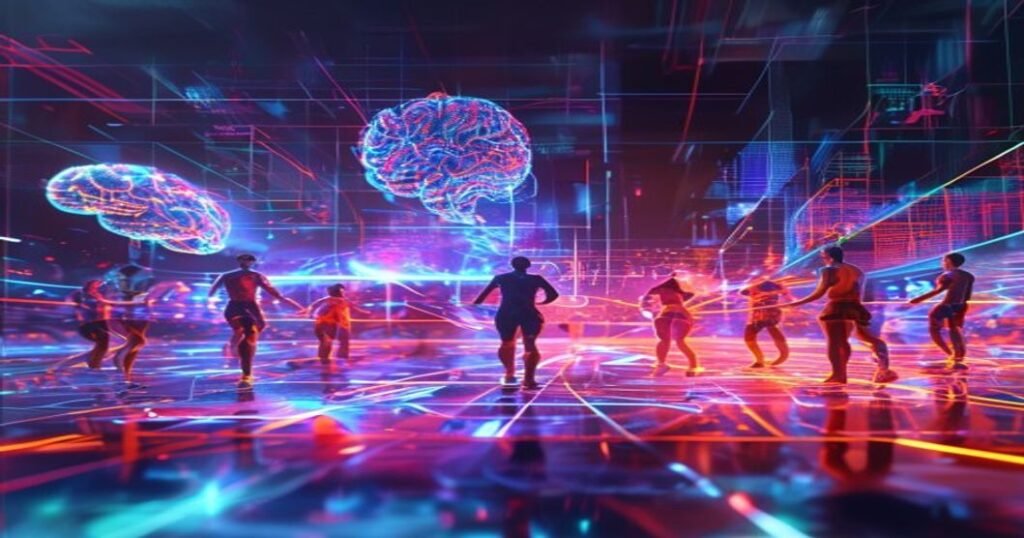

From Data Dribbles to Digital Dominance: How AI is Radically Reshaping the World of Sports
Remember when sports were simply about raw talent, grueling training, and the sheer unpredictability of human endeavor? The roar of the crowd, the sweat on the brow, the gut-wrenching near misses – these were the ingredients. Well, pull up a seat, because while those elements are still thankfully central, a silent, powerful revolution is underway, fundamentally altering everything from how athletes train to how fans consume their favorite games. We’re talking about Artificial Intelligence, and its impact on sports isn’t just significant; it’s an unstoppable force radically reshaping our world, right now, and the world of sports is right in its crosshairs.
As someone who’s always been fascinated by the intersection of technology and human potential, I’ve watched this evolution with a mixture of awe and, admittedly, a touch of trepidation. On one hand, AI offers unprecedented insights, pushing the boundaries of human achievement. On the other, it raises questions about the very ‘soul’ of sports. But one thing is clear: ignoring its presence is no longer an option. Let’s dive deep into how AI is making its mark, well beyond just crunching numbers on a scoreboard.
Beyond the Traditional Training Ground: The AI-Powered Athlete
Gone are the days when a coach’s ‘gut feeling’ was the primary determinant of a player’s regimen. While intuition still holds its place, it’s now heavily augmented by data. AI is transforming athlete performance in ways that would have seemed like science fiction just a decade ago. Every swing, every stride, every jump is meticulously captured and analyzed. Wearable tech, smart sensors embedded in equipment, and high-speed cameras are feeding vast oceans of data into sophisticated AI algorithms.
Precision Performance Analytics and Injury Prevention
- Personalized Training Regimens: AI analyzes an athlete’s unique biomechanics, strengths, weaknesses, and even recovery rates to craft hyper-personalized training programs. It’s like having a dozen world-class coaches and sports scientists dedicated solely to you. This isn’t just about getting stronger; it’s about optimizing every single aspect of performance to achieve peak condition without overtraining.
- Predictive Injury Management: Perhaps one of AI’s most impactful contributions is in injury prevention. By analyzing movement patterns, training load, historical injury data, and even sleep quality, AI can identify subtle anomalies or stress points that indicate a heightened risk of injury. This allows coaches and medical staff to intervene proactively, adjusting training or providing targeted recovery, potentially extending careers and saving teams millions.
- Real-time Feedback: Imagine a golfer getting instant, precise feedback on their swing angle, club head speed, and body rotation, all compared to optimal models in real-time. Or a sprinter receiving immediate analysis on their gait and foot strike. AI coaches are becoming omnipresent, offering immediate, actionable insights that accelerate skill development.
Scouting and Talent Identification: Finding the Next Superstar
The traditional scout, notepad in hand, traversing dusty fields, still exists – and their human eye for talent is invaluable. But now, AI acts as an incredible force multiplier. AI models can sift through thousands of hours of game footage, analyzing young players across vast geographical areas, identifying patterns of play, physical attributes, and potential that might be missed by human observers. It democratizes access to talent pools, looking beyond the obvious stars to unearth hidden gems who might thrive in a specific system. It’s helping teams make smarter, data-driven decisions about recruitment, truly a testament to the silent revolution of AI rewriting our future, one intelligent pixel at a time.
The Fan Experience Transformed: Beyond the Stadium Seat
For decades, watching sports meant tuning into a broadcast or physically being at the stadium. Now, AI is shattering those confines, creating an immersive, personalized, and deeply engaging experience for fans, no matter where they are.
Personalized Content and Immersive Viewing
- Customized Highlights: Tired of sifting through hours of game footage to find your favorite player’s best moments? AI-powered algorithms can learn your preferences and deliver personalized highlight reels, statistics, and analysis directly to your device.
- Enhanced Broadcasts: Live broadcasts are richer than ever. AI generates real-time statistics, probability predictions (like the likelihood of a goal or a successful pass), and even visual overlays that offer unprecedented insight into the game’s flow. Imagine seeing a player’s ‘heat map’ of activity or a probability model for their next move.
- Virtual and Augmented Reality: While still nascent, AI is the engine behind future immersive experiences. Soon, you might ‘attend’ a game in VR, choosing your viewpoint from the sidelines, behind the goal, or even from a player’s perspective, all powered by AI stitching together disparate data streams into a cohesive, interactive experience.
Fantasy Sports, Betting, and Engagement
AI’s analytical prowess is a game-changer for fantasy sports enthusiasts and sports bettors. Sophisticated models analyze player statistics, team form, historical data, weather conditions, and even social media sentiment to generate highly accurate predictions, giving users an edge. Beyond prediction, AI-driven platforms are enhancing fan engagement through interactive polls, personalized quizzes, and even AI-powered chatbots that can answer real-time questions about the game.
Strategic Play and Game Management: The Algorithmic Advantage
Coaches are no longer just relying on their experience to make critical in-game decisions. AI is becoming a powerful strategic advisor, operating at speeds and with an analytical depth impossible for the human mind alone.
Real-time Decision Support
During a game, AI can analyze opponent formations, identify weaknesses, predict likely plays, and suggest optimal strategies in real-time. This can inform substitutions, tactical adjustments, and even play calls. Think of a basketball coach getting instant analytics on which five-player combination has the highest win probability against the current opponent lineup, or a soccer manager receiving data on which opposition player is fatiguing fastest.
Officiating and Fair Play
From Hawk-Eye in tennis and cricket to VAR (Video Assistant Referee) in soccer, AI is playing an increasingly critical role in ensuring fairness and accuracy in officiating. While controversial at times, these systems provide objective, data-driven evidence for close calls, reducing human error and striving for a more equitable playing field. It’s an example of the invisible revolution of AI quietly reshaping our world, one smart device at a time, often without us even consciously realizing the extent of its influence.
The Ethical Considerations and the Human Heart of the Game
Now, let’s talk about the elephant in the room. With all these advancements, we must ask: at what point does AI enhance, and at what point does it detract from the fundamental human drama of sports? My opinion? We’re still far from AI robots playing soccer or machines fully replacing human athletes. The magic of sport lies in the unexpected, the heroic failure, the improbable comeback – moments driven by human emotion and imperfection.
Concerns around data privacy, especially concerning sensitive athlete biometric data, are paramount. There’s also the risk of over-reliance on algorithms, potentially stifling creativity or encouraging a ‘play-it-safe’ mentality. We need robust ethical frameworks and clear regulations to ensure AI serves the sport, rather than dictating it. The beauty of sports is its human element – the grit, the passion, the unexpected brilliance, the raw emotion. AI should be a tool to amplify these, not dilute them. It is part of the digital deluge and AI’s tidal wave reshaping industries, jobs, and reality itself, and sports is no exception.
The Business of Sports, Reimagined
Beyond the field, AI is a powerhouse for the business operations of sports organizations. From optimizing ticket pricing based on demand, opponent, and weather forecasts, to personalizing marketing campaigns for different fan segments, AI is driving efficiency and revenue. Sponsorship deals are becoming more sophisticated, with AI analyzing brand exposure and audience engagement to ensure maximum value. Even stadium management, from crowd flow to concession stand inventory, is benefiting from AI-driven insights.
The Scoreboard of the Future: An AI-Augmented Reality
The integration of AI into sports is no longer a futuristic fantasy; it’s a current reality and an accelerating trend. It’s optimizing human potential, enriching the fan experience, and refining the strategic nuances of competition. The future of sports will undoubtedly be an AI-augmented reality, where the precision of machines elevates the passion of humans.
As enthusiasts and stakeholders, our role is to embrace these advancements intelligently, ensuring that technology serves the spirit of the game – enhancing performance, deepening engagement, and maintaining the exhilarating, unpredictable magic that makes us fall in love with sports in the first place. The human heart of the athlete and the collective roar of the crowd will always be irreplaceable, but with AI as a co-pilot, the journey promises to be more thrilling and insightful than ever before.


