
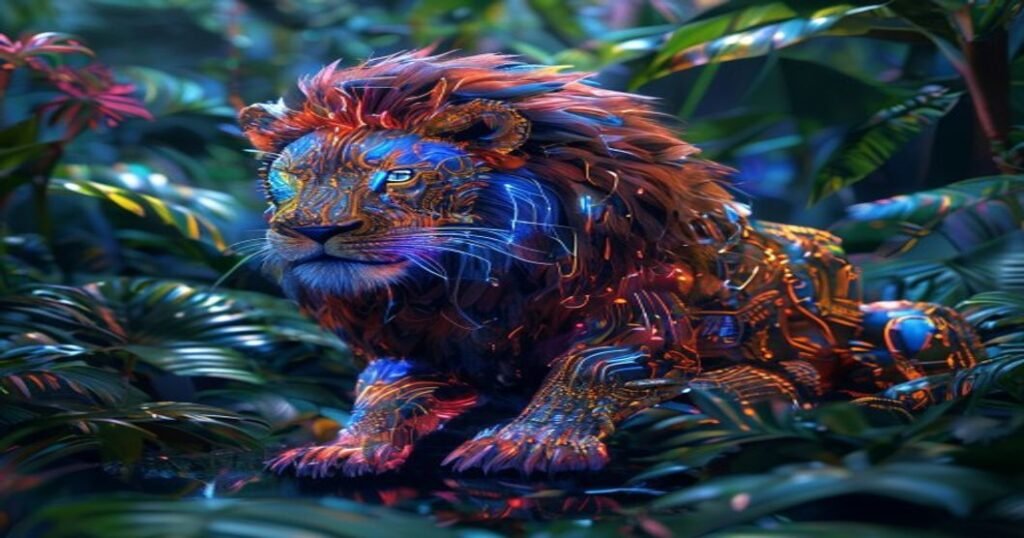

The Digital Roar: How AI & Tech Are Revolutionizing Animal Care and Wildlife Conservation
Let’s face it: our relationship with the animal kingdom has always been profound. From the loyal companions sharing our homes to the majestic creatures roaming wild landscapes, animals enrich our lives in countless ways. But something truly transformative is happening right now, something that’s rapidly reshaping how we interact with, care for, and protect every corner of the animal world. We’re talking about the relentless march of technology, specifically the incredible capabilities of Artificial Intelligence (AI), and how it’s unleashing a digital roar across animal care and conservation. This isn’t just a trend; it’s a revolution, and frankly, it’s one of the most exciting shifts I’ve witnessed.
Remember when ‘pet tech’ meant, well, just a better leash or a more ergonomic food bowl? My, how quaint that seems now! We are living in an era where technology isn’t just a convenience for our pets; it’s a profound enhancement to their well-being, their safety, and our understanding of their unique needs. It’s a paradigm shift that’s making us better pet parents and more effective stewards of our planet’s biodiversity.
The Smart Home, Smart Pet Revolution: Elevating Companion Animal Well-being
For those of us sharing our lives with pets, the immediate impact of this tech boom is incredibly tangible. We’re talking about smart feeders that dispense personalized meals based on activity levels detected by wearables, ensuring optimal nutrition and preventing obesity. GPS trackers offer peace of mind if Fido decides to explore beyond the garden, providing real-time location data directly to your smartphone. And then there are the two-way cameras that let you ‘talk’ to your pet from miles away, toss them a treat, and monitor for separation anxiety – a game-changer for many working pet owners.
But it goes deeper than convenience. This evolution is fundamentally about creating an environment where our pets don’t just exist, but truly thrive. We’re applying principles of thoughtful design and integrated technology to our homes, not just for ourselves, but extending these benefits to our animal companions. This mirrors our collective aspiration to design The Soulful Sanctuary: Designing Your Home for Ultimate Well-being in a Digital Age for human occupants. Now, similar philosophies are being tailored for pets, creating spaces that reduce stress, stimulate engagement, and support their physical health.
Imagine automated climate control that adjusts based on your pet’s presence and breed-specific comfort zones, or intelligent lighting systems that mimic natural daylight cycles. Think about interactive toys powered by AI that adapt their play patterns to your pet’s energy levels and preferences, preventing boredom and encouraging mental stimulation. These aren’t just gadgets; they’re integral components of a holistic approach to pet care, transforming our living spaces into true bastions of comfort and enrichment for our beloved animals. It’s about building a better, healthier, and happier world, one paw print at a time.
AI’s Diagnostic Eye: Unveiling Animal Health and Behavior Secrets
Beyond comfort and basic monitoring, AI is becoming an invaluable tool in proactive animal health. Imagine a wearable device on your dog that doesn’t just count steps, but monitors heart rate variability, sleep patterns, and even subtle changes in gait that could signal the onset of arthritis *before* you even notice a limp. This isn’t some distant future; it’s happening right now, offering unprecedented insights into the subtle cues our animals provide.
AI algorithms are sifting through massive amounts of data – from extensive veterinary records and genetic profiles to real-time biometric readings – to predict disease susceptibility, recommend optimal nutrition, and even help diagnose complex conditions more rapidly and accurately than ever before. It’s like having a super-powered diagnostician on call, one that never sleeps and can process information at a speed and scale impossible for any human. For animals who can’t articulate their pain or discomfort, this is an absolute game-changer. We’re transitioning from reactive treatment to preventative, personalized care, ensuring longer, healthier, and happier lives for our beloved companions.
And it’s not just physical health. AI is also shedding profound light on animal behavior. Advanced tools are emerging that can analyze vocalizations (think barks, meows, chirps) to identify stress, pain, or even specific emotional states, allowing for earlier intervention. Others track movement patterns in animal shelters to assess an animal’s comfort level, social interactions, or potential behavioral issues, helping staff match them with the right adoptive families and ensuring successful transitions. This deep dive into animal psychology, powered by AI, promises to deepen our understanding and strengthen the human-animal bond in ways we could only dream of before. The ability to truly ‘hear’ and understand our animals is finally within reach.
Guardians of the Wild: AI and Tech in Conservation’s New Arsenal
But the digital revolution isn’t confined to our living rooms and veterinary clinics. Far out in the wilderness, in the deepest oceans, and across the vast savannas, AI and cutting-edge technology are fundamentally altering the landscape of wildlife conservation. This is where the stakes are highest, where the very survival of countless species hangs in the balance, threatened by climate change, habitat loss, and poaching.
Drones equipped with high-resolution thermal imaging and AI-powered recognition software are patrolling vast, remote tracts of land, identifying poachers in real-time, monitoring elusive animal populations, and even detecting early signs of forest fires. Acoustic sensors, coupled with sophisticated AI algorithms, are listening for the distinct sounds of chainsaws in remote forests or gunshots, alerting rangers to illegal activities with unprecedented speed and accuracy. Imagine the sheer scale of ground covered and the invaluable data gathered – far beyond what traditional human patrols could ever achieve alone.
Furthermore, AI is crucial in analyzing massive datasets from satellite imagery, camera traps, and individual animal tracking devices. It identifies critical migration corridors, predicts human-wildlife conflict hotspots, and even models the long-term impact of environmental changes on specific species. In essence, AI acts as an invisible network, ‘driving’ conservation efforts by providing unprecedented insights into complex ecosystems and enabling proactive interventions.
Much like how Beyond the Wheel: How EVs & AI Are Redefining What It Means To Drive in our urban landscapes, AI in conservation is redefining what it means to ‘navigate’ the wild. It’s not about physical driving, but about intelligently processing and reacting to the immense data streams from dynamic environments. It’s about data-driven navigation, guiding our understanding and interventions with incredible precision across immense and often inaccessible terrains. From tracking endangered pangolins to monitoring marine life with autonomous underwater vehicles that map coral reefs, the reach of this technology is staggering. It allows conservationists to be everywhere at once, virtually, making smarter, faster decisions that can literally save species from the brink of extinction.
New Horizons and Ethical Labyrinths: The Human Element in a Tech-Driven World
Of course, with such powerful tools come profound responsibilities and intriguing ethical dilemmas. While the benefits of AI and advanced tech in animal welfare are abundantly clear, we must tread carefully and thoughtfully. How much data is too much? Are we reducing the ‘wildness’ of wild animals by constantly monitoring and intervening? What about the potential for algorithmic bias, and ensuring equitable access to these life-saving technologies globally?
These aren’t easy questions, and they highlight the vital need for a thoughtful, multidisciplinary approach that brings together technologists, ethicists, veterinarians, and conservationists. Crucially, this burgeoning field is also creating entirely new career paths. We’re seeing the rapid rise of ‘vet tech’ specialists who understand AI diagnostics, conservation data scientists who build predictive models, ethical AI developers focused specifically on animal welfare, and even bio-acousticians leveraging machine learning to decipher animal communication. It’s a testament to how The Great Job Reinvention: How AI is Forging New Careers and What You Need to Know Now, transforming traditional roles and demanding entirely new skill sets from a dedicated workforce.
The human element – our ethical compass, our empathy, and our creative problem-solving – remains paramount, even as AI takes on more analytical heavy lifting. The discussions around data privacy for wildlife, the long-term impacts of continuous monitoring, and the potential for technological overreach are vital and ongoing. We need to ensure that our pursuit of better animal care and conservation doesn’t inadvertently lead to new forms of control or exploitation. The ultimate goal must always be to enhance welfare and ensure survival, not just to collect data for data’s sake.
The Future is Now: A Collaborative Symphony for All Life
The truth is, we are living through an unprecedented era where technology, especially Artificial Intelligence, is not just changing how we live, but profoundly impacting how all living beings on this planet can potentially thrive. From the smallest pet curling up on our sofa to the grandest creatures roaming the wildest, most remote corners of the Earth, AI is offering us tools to understand, protect, and enhance their lives in ways we once thought impossible. It’s a remarkable convergence of innovation and compassion.
This isn’t merely about gadgets and algorithms; it’s about fostering a deeper connection, enabling more informed stewardship, and building a hopeful future where humanity and the animal kingdom can coexist in greater harmony. The revolution is undeniably here, and it’s roaring – a powerful testament to our ingenuity and our enduring love for the incredible diversity of life that shares our planet. What an exciting, pivotal time to be alive, witnessing this profound transformation firsthand, and having the opportunity to shape it for the better!

