

Remember when cars were just, well, cars? A metal box with an engine, four wheels, and a steering wheel. You’d turn a key, press a pedal, and off you went. Simple, right? But if you’ve been paying attention even for a minute, you know that era is rapidly fading into the rearview mirror. Today, the automotive world is undergoing a seismic shift, one so profound it’s hard to wrap your head around. And the primary architect of this revolution? Artificial Intelligence (AI).
Let’s be honest, for a long time, the car industry was, dare I say, a little… traditional. Innovations happened, sure, but they were often incremental. Then AI burst onto the scene, not with a gentle hum, but with the roar of a supercar engine. Suddenly, our vehicles are transforming from mere modes of transport into sophisticated, sentient machines. It’s not just about getting from A to B anymore; it’s about an entirely new relationship with our vehicles, powered by the invisible hand of AI that’s quietly rewriting every aspect of our digital lives, and now, our physical journeys too.
The Dawn of the Software-Defined Vehicle: More Computer, Less Machine
The most fundamental change isn’t visible on the showroom floor; it’s in the lines of code. Your car isn’t just hardware anymore; it’s a massive, rolling computer. We’re talking about software-defined vehicles (SDVs), where features, performance, and even safety are increasingly dictated by algorithms rather than purely mechanical components. Think of it like a smartphone, but instead of apps for social media, you have software that controls your braking, suspension, and even how your engine optimizes its fuel consumption.
This paradigm shift means your car can get ‘smarter’ over time, receiving over-the-air (OTA) updates that enhance capabilities, fix bugs, or even unlock new features. It’s a radical departure from the old model where your car was effectively ‘finished’ the moment it left the factory. This constant evolution, driven by AI, is making our vehicles dynamic platforms, constantly adapting to our needs and the ever-changing road conditions.
Autonomous Driving: Beyond the Wheel, Towards a New Horizon
Of course, when most people think of AI in cars, autonomous driving immediately springs to mind. And for good reason. This is perhaps the most audacious and transformative application of AI in the automotive sector. Imagine a world where traffic jams are a distant memory, where road accidents are drastically reduced, and where your daily commute becomes an opportunity to relax, work, or catch up on your favorite shows instead of wrestling with the wheel.
While fully autonomous Level 5 vehicles are still a vision we’re chasing, the incremental progress is breathtaking. Advanced Driver-Assistance Systems (ADAS) – things like adaptive cruise control, lane-keeping assist, and automatic emergency braking – are already commonplace. These systems, powered by sophisticated AI algorithms, constantly process data from an array of sensors (cameras, radar, lidar, ultrasonic) to perceive the environment and make instantaneous decisions. This isn’t just about convenience; it’s about safety, actively working to prevent collisions and protect lives. It truly is a case of how AI is transforming driving from the ground up, and why you won’t believe what’s next when you experience it.
The Ethical Highway Ahead: Navigating the Unknown
But let’s not get ahead of ourselves. The road to full autonomy isn’t without its bumps. There are profound ethical questions that need answers. Who is responsible in the event of an accident involving a self-driving car? How do these algorithms make ‘moral’ decisions in unavoidable scenarios? Data privacy is another huge concern – these vehicles are constantly collecting vast amounts of information about their surroundings and their occupants. These are complex issues that the industry, regulators, and society as a whole are grappling with, ensuring that innovation doesn’t outpace responsibility.
The AI-Powered In-Car Experience: Your Personal Cocoon
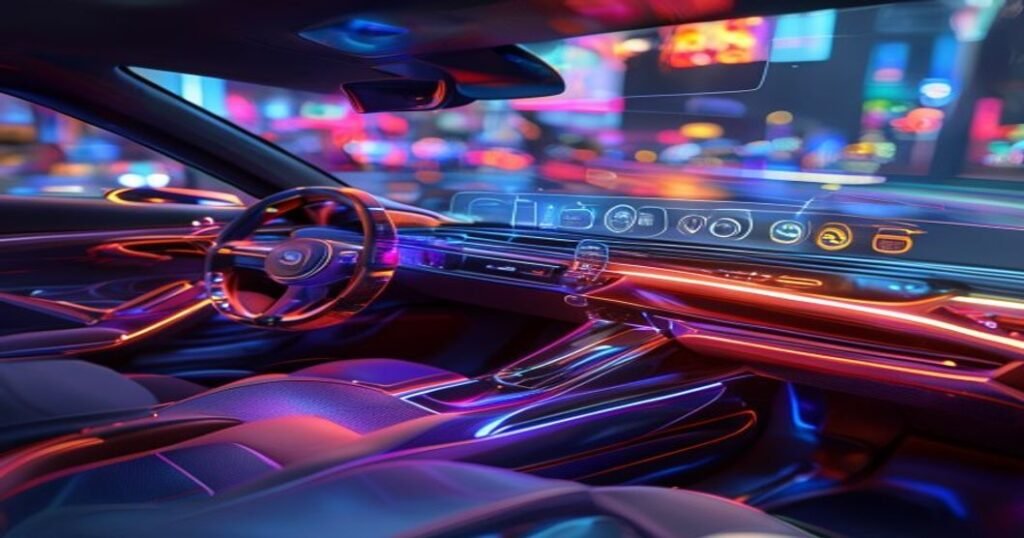
Beyond the act of driving, AI is radically redefining the interior of our cars. The dashboard of yesteryear, with its array of buttons and dials, is being replaced by sleek, intuitive digital interfaces. Voice assistants, powered by natural language processing AI, are becoming the norm, allowing us to control navigation, music, climate, and even make calls without ever taking our hands off the wheel or our eyes off the road.
And it’s not just about convenience; it’s about personalization. AI learns your preferences, your driving habits, even your mood. It can pre-warm the cabin on a cold morning, suggest a new route based on your calendar, or play your favorite podcast as soon as you settle in. This level of intelligent personalization transforms the car cabin into a truly bespoke environment. The integration with our personal devices is seamless, almost as if your phone just got smarter, and is now extending its intelligence into your car.
Entertainment on Wheels: Beyond the Pixels
With less focus on the actual act of driving, the in-car experience expands exponentially. Passengers, especially in future autonomous vehicles, will have more time for entertainment and productivity. AI-driven infotainment systems are delivering personalized content, interactive games, and even augmented reality experiences directly into the car. Imagine a scenario where the car itself becomes an extension of your digital lifestyle, offering cinematic experiences or a mobile office on the go. This is a clear example of how AI is rewriting the rules of entertainment, and why you’re already hooked – even when you’re just a passenger.
Manufacturing and Maintenance: AI Behind the Scenes
The impact of AI isn’t limited to the driving experience. Behind the scenes, AI is revolutionizing how cars are designed, manufactured, and maintained. In factories, AI-powered robots work alongside humans, performing complex tasks with precision and speed, optimizing assembly lines, and identifying defects before they become costly problems. Predictive maintenance, another marvel of AI, uses sensors and algorithms to monitor vehicle health in real-time, predicting potential failures before they occur and scheduling proactive service. This not only extends the lifespan of vehicles but also makes them safer and more reliable.
Supply chain management also benefits immensely from AI, which can analyze vast datasets to predict demand, optimize logistics, and ensure that parts are available exactly when and where they’re needed. This holistic application of AI from concept to after-sales service is streamlining processes and driving efficiencies across the entire automotive ecosystem.
What’s Next? The Road Ahead
Looking forward, the integration of AI into our vehicles will only deepen. We’re on the cusp of truly connected vehicle ecosystems where cars communicate not just with each other (V2V – vehicle-to-vehicle) but also with infrastructure (V2I – vehicle-to-infrastructure) and even pedestrians (V2P – vehicle-to-pedestrian). This V2X (vehicle-to-everything) communication, powered by AI, will create a seamless, intelligent traffic network, leading to safer roads, optimized traffic flow, and potentially even smart cities that adapt to our movements.
Imagine vehicles that can share real-time road condition data, reroute themselves collectively to avoid congestion, or even automatically find and reserve parking spaces. The possibilities are truly mind-boggling.
Conclusion: Buckle Up for the Future
The automotive industry is in the midst of its most exciting transformation in a century, and AI is undeniably the driving force. From making our commutes safer and more efficient to turning our car cabins into personalized, intelligent cocoons, AI is not just changing how we drive; it’s changing how we live, work, and interact with the world around us. While challenges remain, particularly around ethics and regulation, the trajectory is clear: our future vehicles will be intelligent partners, not just machines.
So, the next time you step into a car, take a moment to appreciate the silent symphony of algorithms working beneath the surface. The AI engine is just warming up, and trust me, the ride ahead is going to be absolutely spectacular. Are you ready to embrace the intelligent revolution on wheels?


