
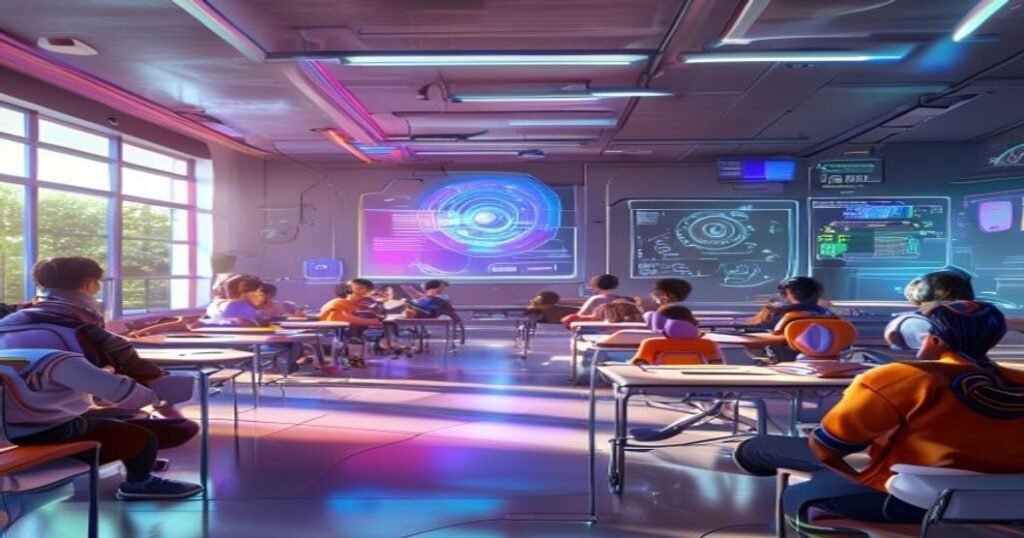

The AI Classroom Revolution: Why Education Will Never Be the Same (And That’s a Good Thing!)
Let’s be honest: for decades, our classrooms often felt like time capsules. Rows of desks, a teacher at the front, standardized tests dictating success – it was a system built for an industrial age, not for the dynamic, ever-changing world we inhabit now. But something fundamental is shifting. A quiet, yet incredibly powerful force is sweeping through every sector, and education is finally feeling its transformative ripple. I’m talking, of course, about Artificial Intelligence.
This isn’t just about fancy new gadgets; it’s about a complete reimagining of what learning can be. And personally, I think it’s one of the most exciting developments in education in generations. Forget the dystopian fears of robots replacing teachers; we’re on the cusp of an era where AI becomes our greatest ally in empowering every single learner to reach their full potential. It’s truly The Silent Revolution: How AI is Reshaping Our World and Unlocking Human Potential, and its impact on learning is profound.
The Old Model: One Size Fits… No One?
Think back to your own school days. Was every lesson perfectly tailored to your individual pace, your unique learning style, your specific interests? Probably not. The traditional model, by necessity, has always leaned towards a ‘one-size-fits-all’ approach. A teacher, often with 20, 30, or even more students, simply cannot provide truly individualized attention to everyone. This leads to bright students getting bored, struggling students falling behind, and countless others feeling disengaged because the material just isn’t clicking for them.
It’s not the fault of dedicated educators; it’s a systemic limitation. We’ve known for a long time that personalized learning is the holy grail, but achieving it at scale has always seemed like an insurmountable challenge. Until now.
Enter AI: The Ultimate Personal Tutor and Teacher’s Assistant
Here’s where AI steps in, not as a replacement, but as an incredibly powerful augmentation. Imagine an AI that understands your strengths, identifies your weaknesses, and then creates a dynamic, adaptive learning path specifically for you. This isn’t science fiction; it’s happening. AI-powered platforms can:
-
Tailor Content & Pace:
If you grasp a concept quickly, the AI moves you forward. If you’re struggling, it provides additional resources, different explanations, or even interactive exercises until mastery is achieved. No more waiting for the rest of the class, and no more being dragged along if you’re lost.
-
Provide Instant Feedback:
Gone are the days of waiting a week for a graded assignment. AI can provide immediate, constructive feedback on essays, coding projects, math problems, and more, allowing students to learn from mistakes in real-time.
-
Identify Learning Gaps:
AI can spot patterns in student performance that even the most observant teacher might miss, flagging areas where a student consistently struggles and suggesting interventions before those gaps become chasms.
-
Gamify Learning:
For some, learning can feel like a chore. AI can transform dull subjects into engaging, interactive experiences, using game-like elements to motivate and reward progress. Speaking of engaging experiences, the lines between learning and digital interaction are blurring, often paving the way for advancements that go Beyond the Screen: How Gaming is Forging the Path to the Metaverse (And Why You’re Already There!), creating more immersive educational environments.
But it’s not just about the students. Teachers are swamped with administrative tasks – grading papers, managing rosters, preparing reports. AI can liberate educators from these time sinks, freeing them up to do what they do best: inspire, mentor, and guide. Imagine a world where a teacher spends less time grading multiple-choice tests and more time having meaningful discussions or developing creative projects. This is the promise of AI in the classroom.
Beyond Rote Learning: Cultivating the Skills of Tomorrow
Perhaps the most crucial impact of AI on education lies in its ability to shift our focus from mere information retention to the cultivation of critical 21st-century skills. With readily available information and powerful AI tools at our fingertips, the ability to memorize facts becomes less important than the ability to:
-
Think Critically: Analyze, evaluate, and synthesize information.
-
Solve Complex Problems: Tackle real-world challenges with innovative solutions.
-
Communicate Effectively: Articulate ideas clearly and persuasively.
-
Collaborate Creatively: Work with others to achieve shared goals.
-
Adapt and Innovate: Embrace change and generate new ideas.
These are the skills that AI cannot easily replicate, and they are the skills that will empower students to thrive in a world increasingly shaped by AI. Education, fueled by AI, can now focus on nurturing these uniquely human capabilities, preparing students not just for specific jobs, but for a lifetime of learning and adaptability.
The Elephant in the Classroom: Challenges and Ethical Considerations
Of course, no revolution comes without its complexities. As The AI Chameleon: Why It’s Not Just a Tool, But the Very Fabric of Our Digital World, its integration into education raises important questions:
-
Data Privacy: How do we protect sensitive student data being collected by AI systems?
-
Algorithmic Bias: Are the AI algorithms fair and unbiased, or do they inadvertently perpetuate existing inequalities?
-
The Digital Divide: How do we ensure equitable access to these powerful AI tools for all students, regardless of socioeconomic background?
-
Over-reliance and Critical Thinking: How do we prevent students from becoming overly reliant on AI for answers, thereby stifling their own critical thinking and problem-solving muscles? This is a crucial balance, similar to how we might need to Escape the Digital Noise: How Digital Minimalism Can Recharge Your Life and Reclaim Your Focus in other areas of our lives.
-
Teacher Training: How do we equip educators with the skills and confidence to effectively leverage AI in their teaching practices?
These are not small hurdles, but they are surmountable with thoughtful design, robust ethical frameworks, and ongoing dialogue between educators, technologists, policymakers, and parents. It requires us to be proactive, not reactive, in shaping this future.
The Human Element Remains Irreplaceable
Lest anyone misinterpret, AI is not here to replace the human touch in education. Far from it. The magic of a passionate teacher, the camaraderie of a collaborative classroom, the empathy that develops between mentors and mentees – these are fundamentally human experiences that AI cannot replicate. What AI can do is enhance, amplify, and optimize the learning journey, making it more engaging, more effective, and more equitable for everyone.
Ultimately, AI allows educators to be more human, focusing on the higher-order thinking, emotional support, and inspirational guidance that truly makes a difference. It gives them the tools to see each student as an individual, rather than just another face in the crowd.
Embracing the Future of Learning
The classroom of tomorrow will look dramatically different from the one many of us grew up in, and that’s a cause for celebration. It will be a place where learning is dynamic, personalized, and deeply engaging. It will foster creativity, critical thinking, and collaboration – the very skills needed to navigate an increasingly complex world.
As we stand on the precipice of this educational transformation, it’s vital that we embrace AI not as a threat, but as an incredible opportunity. Let’s work together to harness its power responsibly, ensuring that every student has access to the personalized, empowering education they deserve. The future of learning isn’t just coming; it’s already here, and it’s powered by intelligence that’s both artificial and profoundly human.


