
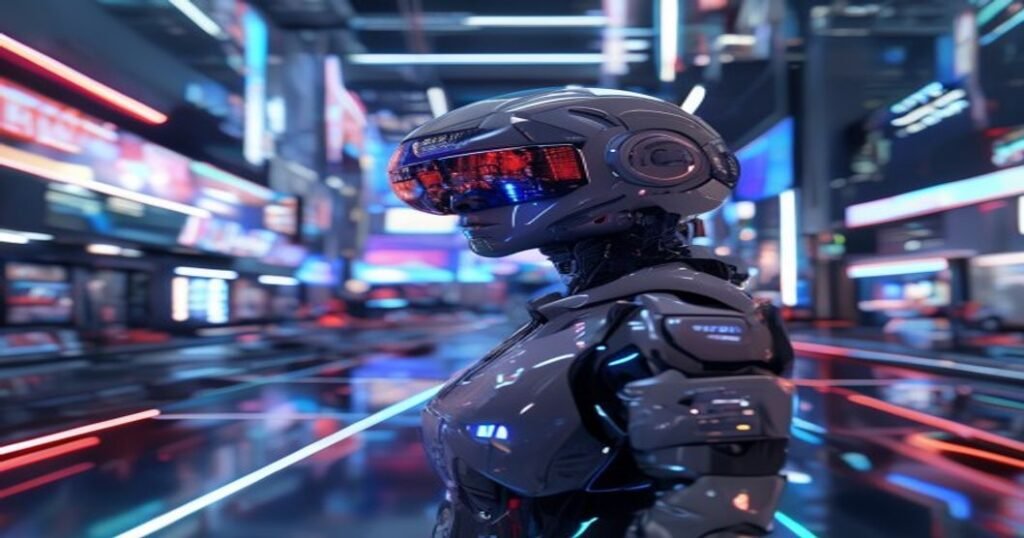

Enter the Odyssey: How AI & The Hyper-Real Metaverse Will Revolutionize Entertainment in 2026
The year is 2026, and the landscape of entertainment has undergone a seismic shift, transcending the passive consumption of content to embrace an era of active, hyper-personalized, and deeply immersive experiences. The driving forces behind this profound transformation? Artificial Intelligence (AI) and the burgeoning Hyper-Real Metaverse. No longer mere buzzwords, these technologies have converged to create a new paradigm where every show, game, concert, and narrative is tailored not just to your preferences, but to your very mood and real-time interactions. Welcome to the future of entertainment, where the line between reality and the digital realm is delightfully blurred.
The Dawn of Hyper-Personalized Entertainment
Gone are the days of one-size-fits-all content. In 2026, AI has become the ultimate curator and creator, understanding individual tastes with an unprecedented level of granularity. Imagine a streaming service that doesn’t just recommend movies, but dynamically edits scenes, changes character arcs, or even generates alternative endings based on your viewing history, emotional responses, and even biometric data. This isn’t science fiction; it’s the present reality.
- AI-Driven Narratives: Advanced AI models are now capable of generating scripts, music scores, and even visual effects in real-time. This allows for dynamic storytelling, where the plot of a series or the outcome of a game can adapt based on viewer choices or even collective audience sentiment. This makes every entertainment experience uniquely yours.
- Adaptive Music & Soundscapes: Concerts and soundtracks no longer follow a fixed progression. AI analyzes the audience’s energy, individual reactions, and even physiological data to adjust tempo, key, and instrumentation, creating a truly responsive auditory journey. Your favorite artist’s performance becomes a unique improvisation for you and your fellow attendees.
- Personalized Advertising & Discovery: Beyond simple recommendations, AI now anticipates your latent interests, introducing you to obscure genres, emerging artists, or niche experiences you didn’t even know you craved, all while ensuring advertising is so relevant it often feels like an extension of the content itself.
The Metaverse: Your New Playground for Entertainment
While AI personalizes the content, the Hyper-Real Metaverse provides the boundless canvas upon which these experiences unfold. It’s an interconnected network of persistent, interactive 3D virtual worlds where users, represented by highly customizable avatars, can socialize, work, shop, and, most importantly, be entertained. In 2026, the Metaverse isn’t just a place to play games; it’s a destination for every form of leisure.
Virtual Concerts and Festivals Redefined
Remember the early days of virtual concerts with pixelated avatars? That’s ancient history. In the Hyper-Real Metaverse of 2026, concerts are indistinguishable from their physical counterparts, and often surpass them. Holographic performers, dynamic stage designs that react to the music and audience, and haptic feedback suits allowing you to ‘feel’ the bass through vibrations – these are standard. Fans from across the globe gather in these digital arenas, sharing an experience that feels utterly real, yet transcends geographical limitations. The ability to customize your view, interact with the environment, and even meet your favorite artist’s digital twin is a game-changer.
Immersive Storytelling Beyond Screens
Movies and TV shows are no longer confined to flat screens. Imagine stepping into the world of your favorite fantasy saga, walking alongside the characters, and influencing the narrative through your actions. Experiential narratives within the Metaverse allow for unparalleled immersion. Theme parks exist entirely in digital space, offering rides and attractions that defy the laws of physics. For a deeper dive into how this digital revolution is changing everything, consider how Beyond Screens: How the Hyper-Real Metaverse and AI Will Redefine Entertainment in 2026 provides a comprehensive overview of this shift.
Gaming: The Ultimate Convergence
Gaming has always been at the forefront of digital entertainment, and in 2026, it serves as the ultimate proving ground for AI and Metaverse integration. Games are no longer pre-scripted experiences. AI-powered NPCs (Non-Player Characters) exhibit true intelligence, learning from player behavior, engaging in dynamic dialogue, and even developing their own personalities. Entire game worlds can be procedurally generated and evolve in real-time, offering endless replayability. Furthermore, the boundaries between different games are dissolving, with shared digital assets, economies, and social spaces creating a unified metaverse where your avatar and achievements carry across various titles.
The Role of AI in Metaverse Creation and Interaction
The very fabric of the Hyper-Real Metaverse is woven with AI. AI isn’t just personalizing your experience; it’s building the worlds themselves. From generating incredibly detailed landscapes and architectural wonders to populating them with intelligent digital entities, AI acts as the master architect and life-giver of the virtual realm. This allows for an unprecedented scale and complexity, making each visit to the Metaverse a truly novel adventure.
- Dynamic World Generation: AI algorithms create ever-evolving environments, from bustling cyber-cities to serene alien landscapes, ensuring that no two visits are exactly alike.
- Intelligent Avatars and Companions: Beyond mere representation, your avatar can be enhanced with AI, allowing it to learn gestures, expressions, and even conversational nuances, making interactions with others more authentic. AI companions, from virtual pets to sentient digital assistants, provide personalized interaction and assistance within the Metaverse.
- Ethical AI in Entertainment: With such powerful tools at play, ethical considerations around data privacy, AI bias, and the psychological impact of hyper-real experiences are paramount. Developers are actively integrating safeguards to ensure these immersive worlds remain positive and safe spaces for all.
This intricate dance between AI, 6G connectivity, and digital twins is not just reshaping entertainment but fundamentally altering how we interact with technology and each other. For a broader understanding of this technological confluence, it’s worth exploring The Hyper-Real Metaverse Unlocked: How AI, 6G, and Digital Twins Are Reshaping Our World in 2026.
Beyond Walls: Entertainment Integrating into Daily Life
The revolution isn’t confined to dedicated virtual spaces. AI-driven entertainment is also seamlessly integrating into our physical environments. Smart homes are evolving into adaptive entertainment hubs, where entire rooms can transform with dynamic lighting, soundscapes, and projected visuals to match your chosen activity. Want to watch a movie? The living room adjusts to a cinematic ambiance. Hosting a party? The space becomes a vibrant, interactive dance floor. This ambient intelligence is making our homes extensions of the entertainment universe. This concept aligns well with discussions around Beyond Walls: How AI-Driven Adaptive Interiors Will Redefine Your Home by 2026, showcasing how technology permeates every aspect of our lives.
The Economic & Creative Implications
This new era of entertainment isn’t just a technological marvel; it’s a booming economy. Digital creators, from indie game developers to virtual fashion designers, are finding unprecedented opportunities within the Metaverse. AI tools democratize content creation, allowing individuals to craft highly sophisticated experiences with relative ease. Brands are leveraging these platforms for immersive marketing campaigns, creating digital products and experiences that generate real-world value. The entertainment industry, as we knew it, is not merely evolving; it’s undergoing a complete metamorphosis, fostering new jobs, new artistic mediums, and new ways for audiences to engage with stories and experiences.
Conclusion: An Infinite Horizon
In 2026, AI and the Hyper-Real Metaverse have utterly transformed entertainment. We’ve moved from passive observers to active participants, from consumers of content to co-creators of our own digital odysseys. The experiences are more personal, more immersive, and more engaging than anything previously imaginable. As these technologies continue to mature, the future promises an even deeper integration into our lives, offering infinite possibilities for play, discovery, and connection. The only limit is our imagination, and with AI at the helm, even that boundary is constantly being pushed.


