
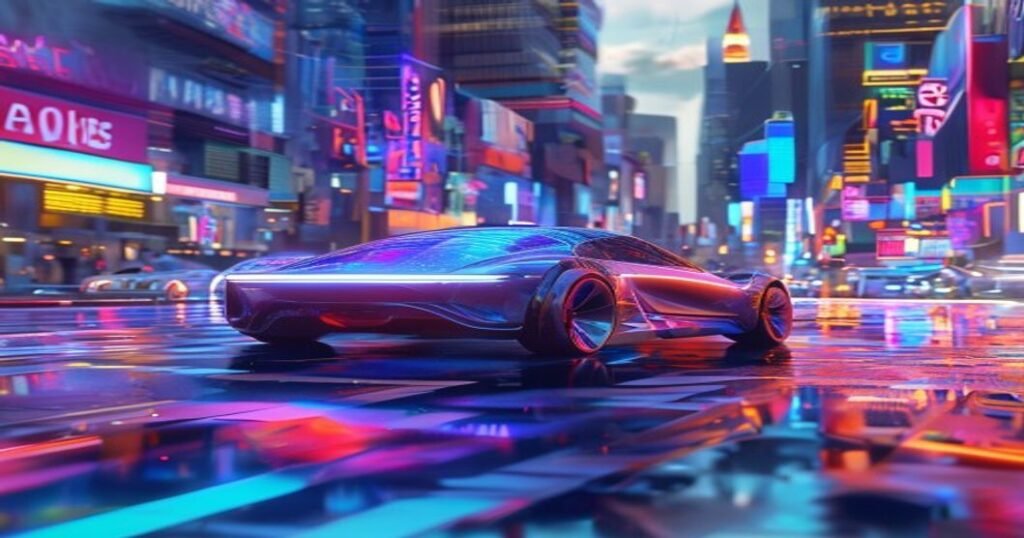

Driverless Dream or Autonomous Nightmare? The Road Ahead for Self-Driving Cars
Remember those sci-fi movies where cars glided effortlessly through futuristic cityscapes, devoid of human drivers? For decades, it felt like a distant fantasy, a charming but unrealistic vision of tomorrow. Well, folks, ‘tomorrow’ is undeniably here, knocking on our garage doors with lidar sensors and neural networks. Self-driving cars, once the stuff of dreams, are now a tangible, albeit complex, reality. But as we stand at this fascinating precipice, I can’t help but ask: Are we cruising towards a utopian dream of safer, more efficient roads, or are we inadvertently paving the way for an autonomous nightmare filled with unforeseen challenges?
It’s a question that keeps me up at night, oscillating between awe at human ingenuity and a healthy dose of skepticism. The buzz around autonomous vehicles is deafening, promising to revolutionize everything from urban planning to individual productivity. Yet, the road to a fully driverless world is proving to be a winding one, fraught with technical glitches, ethical dilemmas, and a good old-fashioned human fear of the unknown. Let’s buckle up and take a deep dive into what this revolution truly entails.
The Irresistible Promise: Why We Want Our Cars to Drive Themselves
First, let’s acknowledge the sheer allure. The pitch for self-driving cars is compelling, even seductive. Imagine:
-
Unprecedented Safety:
The vast majority of accidents are caused by human error – distraction, fatigue, impaired driving. Autonomous vehicles, theoretically, eliminate these factors. They don’t get tired, they don’t text, and they don’t drink and drive. The promise is a drastic reduction in road fatalities and injuries, making our roads safer for everyone.
-
Reclaimed Time and Productivity:
Think about your daily commute. Hours spent staring at the bumper in front of you could be transformed into time for reading, working, or simply relaxing. For professionals, it means an extra hour or two of work, for parents, a chance to spend more time with kids. The car becomes a mobile office, lounge, or even a bedroom.
-
Enhanced Accessibility:
For the elderly, people with disabilities, or those too young to drive, self-driving cars offer unprecedented freedom and independence. Mobility would no longer be a barrier, opening up new opportunities for millions.
-
Traffic Efficiency and Environmental Benefits:
Optimized routes, platooning (cars driving closely together to reduce drag), and smoother acceleration/braking could lead to reduced congestion, lower fuel consumption (or electricity usage), and less pollution. Our cities could breathe a little easier.
These are not small promises; they are transformative. They speak to a future that seems undeniably better, smarter, and more humane. It’s no wonder that tech giants and traditional automakers alike are pouring billions into making this vision a reality.
The Brain Behind the Wheel: How AI Drives Autonomy
At the heart of every self-driving car lies an incredibly sophisticated system powered by Artificial Intelligence. These vehicles aren’t just following pre-programmed routes; they’re constantly perceiving, predicting, and planning. They use an array of sensors – lidar (light detection and ranging), radar, cameras, ultrasonic sensors – to create a real-time, 360-degree map of their surroundings. This raw data, often terabytes per hour, is then fed into complex AI algorithms that act as the car’s brain.
These algorithms are trained on vast datasets of driving scenarios, learning to identify pedestrians, other vehicles, traffic lights, road signs, and even anticipate the unpredictable actions of other road users. It’s a monumental task, akin to teaching a computer to understand the chaotic, nuanced world of human interaction – but at 70 miles per hour. This isn’t just about advanced robotics; it’s about the very essence of machine intelligence being applied to one of humanity’s most common and dangerous activities. Indeed, The AI Revolution is Here: Why Intelligent Machines Are Redefining Our World (And What You Need to Know NOW), and nowhere is this more evident than in the automotive sector.
Hitting the Brakes: The Roadblocks to a Driverless Future
Despite the tantalizing promises and incredible technological advancements, the path to widespread autonomous driving is anything but smooth. We’re facing significant hurdles:
Technical Limitations and Edge Cases:
-
The Unpredictable World:
While AI excels in predictable environments, the real world is messy. A child chasing a ball into the street, a sudden downpour obscuring sensors, an unexpected construction zone – these are ‘edge cases’ that are incredibly difficult to program for. How does an AI interpret a human police officer’s hand signals, especially if they deviate from standard procedure?
-
Sensor Reliability:
Snow, heavy rain, thick fog, or even direct sunlight can compromise the effectiveness of sensors. While redundancy helps, no system is foolproof, and failing gracefully in adverse conditions is a massive challenge.
-
Human-Machine Handoff:
In semi-autonomous vehicles (Level 2 or 3), the transition of control from the car back to the human driver is notoriously tricky. Studies show that humans often become disengaged and take too long to react when suddenly asked to take over.
Ethical Quandaries and Legal Labyrinths:
-
The Trolley Problem on Wheels:
This classic philosophical dilemma takes on a terrifyingly real dimension with self-driving cars. In an unavoidable accident, if the car has to choose between two evils – say, hitting a group of pedestrians or swerving into a wall, potentially harming its occupant – how should it be programmed? Who decides? And, more importantly, who is accountable?
-
Liability and Accountability:
When an autonomous car causes an accident, who is at fault? The car owner? The manufacturer? The software developer? The regulator? This is a legal minefield that needs clear navigation before broad adoption.
-
Data Privacy and Security:
Self-driving cars collect an immense amount of data about their surroundings and their occupants. How is this data secured? Who owns it? What prevents it from being exploited or hacked?
Societal Shifts and Public Acceptance:
-
Job Displacement:
The most immediate and significant societal impact will be on the millions of people whose livelihoods depend on driving – taxi drivers, truck drivers, delivery personnel. While new jobs will undoubtedly emerge, the transition will be disruptive and requires proactive planning.
-
Infrastructure Overhaul:
Our current road infrastructure isn’t optimized for autonomous vehicles. Smart cities with V2X (vehicle-to-everything) communication, clearer lane markings, and advanced signage will be necessary for maximizing the benefits of self-driving tech.
-
Trust and Fear:
Perhaps the biggest hurdle is psychological. Can humans truly trust a machine with their lives, especially after high-profile accidents (even if statistically rare)? Overcoming this innate human skepticism will require flawless safety records and transparent communication.
The Global Race and Our Place in It
It’s no secret that the development of autonomous technology isn’t just about consumer convenience; it’s a geopolitical chess game. Nations and tech giants are locked in an intense competition to be at the forefront of this revolution. From Silicon Valley startups to established European automakers and ambitious Asian tech companies, the race is on to capture market share, set industry standards, and define the future of mobility. This isn’t merely about building better cars; it’s about shaping economies, influencing future urban landscapes, and securing strategic advantages in the global tech arena. It’s part of a broader, Unseen War: How the Global AI Race is Reshaping Nations, Power, and Your Future, and the automotive sector is on the front lines.
For countries like Pakistan, grappling with its own development challenges and opportunities, understanding and engaging with this technological tide is crucial. Will we be passive recipients of technology developed elsewhere, or can we foster our own innovation ecosystems, adapt to these changes, and even contribute meaningfully? The question of Pakistan’s AI Awakening: Will We Ride the Digital Wave or Drown in the Past? is highly relevant here, as the future of our auto industry, logistics, and even urban planning will be inextricably linked to how we approach autonomous systems.
What Happens Now? The Future is Nuanced
So, where does that leave us? Are we hurtling towards an autonomous utopia or a dystopian future where robots decide our fate on the roads? The truth, as always, is far more nuanced. We are unlikely to wake up one morning to a world where every car is fully autonomous. Instead, the transition will be gradual, incremental, and probably a bit messy.
We’ll continue to see advancements in assisted driving features (Level 2 and 3 autonomy) – cars that can park themselves, maintain lanes, and handle stop-and-go traffic. Fully autonomous vehicles (Level 4 and 5) will likely first appear in geo-fenced areas: robotaxis in specific city zones, autonomous shuttles on fixed routes, or self-driving trucks on dedicated highway lanes. These controlled environments allow for rigorous testing and gradual public acclimatization before wider deployment.
The role of human drivers won’t vanish overnight, but it will certainly evolve. We might see a future where driving is a choice, a luxury, or even a nostalgic hobby, rather than a necessity. The car will transform from a mere mode of transport into a highly intelligent, connected, and personalized mobility companion.
My Take: Proceed with Optimism, But With Eyes Wide Open
As a seasoned observer of technological shifts, my take is one of cautious optimism. The promise of self-driving cars – particularly in terms of safety and accessibility – is too profound to ignore. The technology is advancing at a breathtaking pace, and the sheer intellectual capital being poured into this field is staggering. It’s not a question of *if* but *when* and *how* we integrate these machines into our lives.
However, we must approach this revolution with our eyes wide open, acknowledging the formidable challenges ahead. This isn’t just an engineering problem; it’s a societal one. It requires policymakers, ethicists, urban planners, and the public to engage in a broad, thoughtful conversation about the kind of future we want to build. We need robust regulations, transparent ethical frameworks, and a commitment to address the social dislocations that will inevitably arise.
The road to a fully autonomous future is long, complex, and full of unexpected twists and turns. But one thing is certain: the journey itself is going to be one of the most exciting and transformative rides of our generation. Let’s make sure we’re prepared for whatever lies around the bend.


