
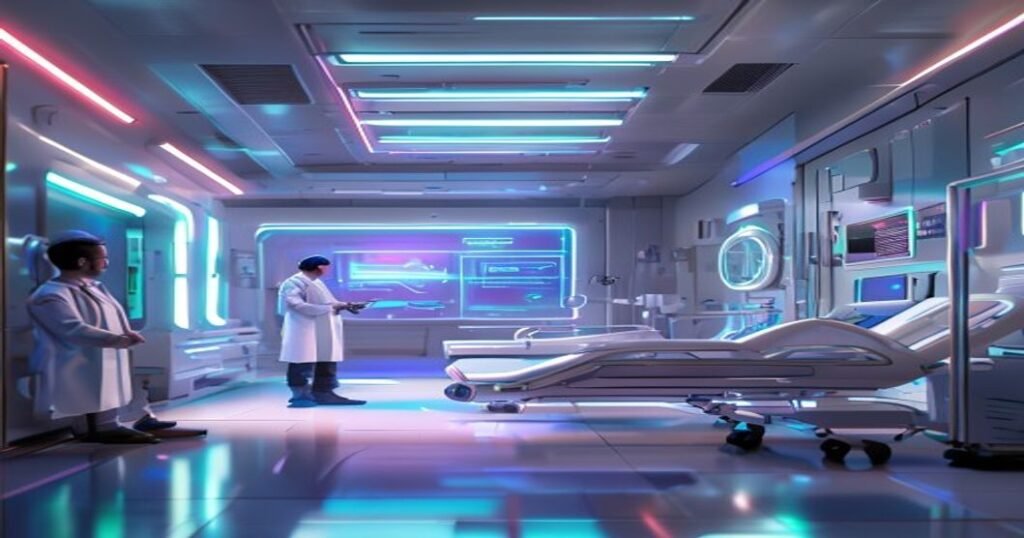

Let’s be honest: for all its incredible advancements, healthcare can sometimes feel… outdated. We wait weeks for appointments, get generalized treatments that may or may not work perfectly for us, and often, diagnoses come only after a disease has taken root. It’s a system built on human brilliance, yes, but also human limitations. But what if I told you that a revolution is unfolding right now, one that promises to transform medicine from a reactive, one-size-fits-all approach to a proactive, deeply personalized experience? I’m talking about Artificial Intelligence, and trust me, it’s not just for self-driving cars or chatbots anymore. It’s coming for your health, and it’s going to be glorious.
As a seasoned observer of the tech landscape, I’ve seen countless trends come and go, but the sheer, transformative power of AI is something else entirely. It’s not just a new tool; it’s a foundational shift in how we approach problems, analyze data, and create solutions across every conceivable domain. Indeed, The AI Tsunami: How Artificial Intelligence Is Reshaping Every Corner of Our Lives (And Why You Can’t Afford To Be Left Behind) is already here, and its impact on healthcare is nothing short of breathtaking.
The Dawn of a New Era: Why Healthcare Needs AI More Than Ever
Think about the complexities of modern medicine. Doctors grapple with an ever-increasing volume of research, patient data, and diagnostic images. Pharmaceutical companies spend billions and years developing new drugs, often with high failure rates. Patients, meanwhile, often feel like just another number in a crowded waiting room. This isn’t a critique of our dedicated healthcare professionals – they’re heroes – but rather of the sheer scale of the challenges they face. The human brain, as brilliant as it is, simply cannot process the gigabytes of data required to offer truly optimal, individualized care for every single person.
This is where AI steps in. AI isn’t about replacing doctors; it’s about augmenting them, giving them superpowers they’ve never had before. Imagine a tireless assistant who can sift through millions of medical journals in seconds, identify patterns invisible to the human eye, and predict risks long before symptoms appear. This isn’t science fiction anymore; it’s the current frontier, and it’s why AI is rapidly becoming the most vital partner in medicine’s evolution.
AI as Your Digital Doctor: Precision Diagnostics Takes Center Stage
One of the most immediate and profound impacts of AI is in diagnostics. Consider radiology or pathology: doctors examine countless images for subtle anomalies. It’s painstaking work, prone to fatigue and human error. Now, AI algorithms, trained on vast datasets of medical images, can identify cancerous lesions, detect early signs of diseases like glaucoma, or pinpoint neurological conditions with astonishing accuracy and speed. They can flag suspicious areas that a human eye might miss, essentially providing a second, hyper-vigilant opinion.
I’ve read countless stories about AI systems detecting early-stage cancers from mammograms or lung scans that were initially overlooked. This isn’t just an improvement; it’s a paradigm shift. Early detection often means the difference between a treatable condition and a devastating one. It’s like having a microscopic Sherlock Holmes tirelessly examining every pixel, looking for clues that could save your life. This capability to process and interpret complex data is just one facet of how The AI Earthquake: How Artificial Intelligence is Reshaping Everything We Know (And Why You Can’t Afford to Ignore It) is making waves in our most critical sectors.
Tailored Treatments: The Promise of Personalized Medicine
Beyond diagnosis, AI is unlocking the holy grail of medicine: personalization. For decades, treatments have largely followed a ‘one-size-fits-most’ model. While effective for many, it often means trial-and-error for others, wasting precious time and resources, and sometimes leading to adverse reactions. But what if your treatment plan was designed specifically for you, based on your unique genetic makeup, lifestyle, medical history, and even the subtle biomarkers only an AI could detect?
AI can analyze an individual’s entire genomic sequence, compare it with known disease markers, predict how they might respond to different drugs, and even recommend the optimal dosage. This isn’t just about selecting the right pill; it’s about understanding the intricate dance of your body’s biology and prescribing interventions that are maximally effective with minimal side effects. Imagine a future where your doctor, armed with AI, can tell you precisely which chemotherapy regimen will work best for your specific cancer, or which antidepressant will have the most beneficial effect on your brain chemistry. That future is not far off; it’s being built by data scientists and medical researchers right now.
Accelerating Drug Discovery: From Lab Bench to Bedside, Faster
The journey from a promising molecule to an approved drug is notoriously long, expensive, and fraught with failure. It can take over a decade and cost billions of dollars, with most candidates failing in clinical trials. AI is revolutionizing this process by performing in-silico (computer-simulated) experiments, rapidly screening millions of chemical compounds, predicting their efficacy and toxicity, and even designing entirely new molecules from scratch.
This drastically reduces the time and cost associated with early-stage drug discovery. By identifying the most promising candidates faster, AI helps prioritize research, leading to a more efficient pipeline for life-saving medications. Think about the speed with which vaccines were developed recently – AI played a significant, if often unsung, role in accelerating that process. It’s a testament to how AI to the Rescue: How Artificial Intelligence is Revolutionizing Animal Conservation and Saving Species extends its reach to virtually any complex problem-solving domain, including the intricate challenges of human health.
AI in Predictive Health: Preventing Illness Before It Starts
Perhaps one of the most exciting, yet often overlooked, areas is AI’s role in predictive health. Imagine wearing a smart device that constantly monitors your vital signs, sleep patterns, and activity levels. An AI could analyze this continuous stream of data, identifying subtle shifts that precede the onset of illness. It could alert you to early signs of a heart attack risk, warn you about an impending diabetic crisis, or even suggest lifestyle changes to prevent chronic conditions.
This proactive approach moves healthcare away from just treating sickness and towards maintaining wellness. Instead of reacting to a full-blown illness, we can intervene early, often with simpler, less invasive methods. This isn’t just about extending lifespan; it’s about enhancing ‘healthspan’ – the number of years we live in good health, free from debilitating diseases.
The Ethical Tightrope: Navigating the Challenges and Building Trust
Of course, no technological revolution comes without its challenges. The widespread adoption of AI in healthcare raises critical ethical questions. Data privacy is paramount: who owns our health data, and how is it protected? Bias in algorithms is another serious concern; if AI is trained on unrepresentative datasets, it could perpetuate or even exacerbate existing health disparities. And, naturally, there’s the question of the ‘human touch’ – can AI ever truly replace the empathy and intuition of a human doctor?
My opinion? We need robust regulatory frameworks, transparent AI models, and constant vigilance to ensure these technologies are developed and deployed ethically. AI should serve humanity, not the other way around. The goal isn’t to replace doctors, but to empower them. The human element – compassion, critical thinking, ethical judgment – will always be indispensable. AI is a tool, albeit an incredibly powerful one, that allows our doctors to be even better at what they do.
A Future Where Health is Truly Personalized, Proactive, and Accessible
We stand at the precipice of a medical revolution unlike anything humanity has ever seen. AI isn’t just optimizing existing processes; it’s fundamentally reshaping our understanding of health and disease. It’s moving us towards a future where preventative care is the norm, diagnoses are ultra-precise, treatments are tailored to the individual, and drug discovery is dramatically accelerated. We’re talking about a future where complex medical conditions become manageable, where more lives are saved, and where the quality of life for millions is significantly improved.
This isn’t a distant dream; it’s the exciting reality unfolding before our eyes. The convergence of AI, big data, and medical science promises a healthcare system that is more efficient, more accurate, and profoundly more personal. It’s an exhilarating time to be alive, witnessing science push boundaries that once felt like pure fantasy. Get ready, because your doctor just got a superpower, and healthcare is about to change forever – for the better.


