
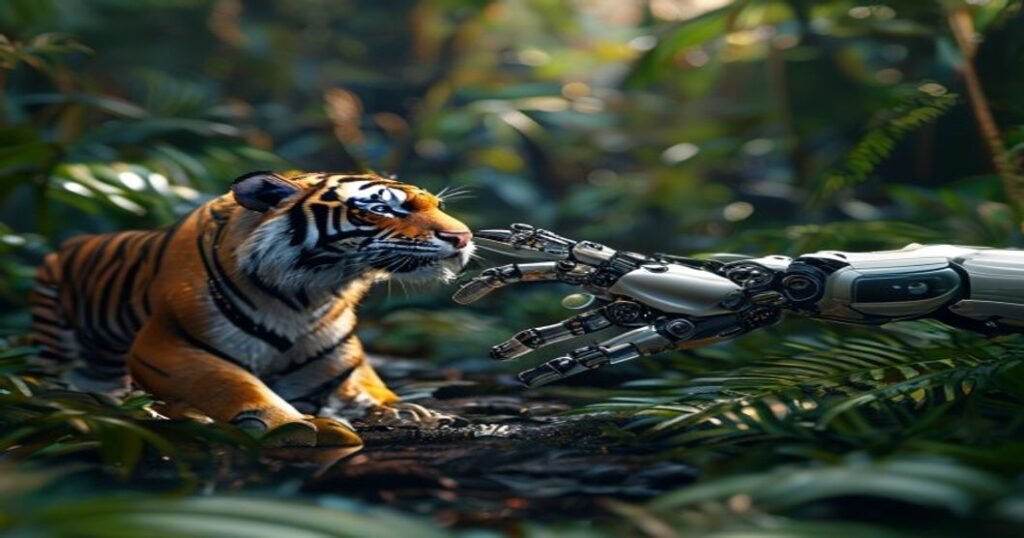

Let’s be honest, sometimes the news about our planet’s incredible wildlife can feel like a punch to the gut. Species disappearing at an alarming rate, habitats vanishing, the relentless pressure of human expansion – it’s enough to make even the most optimistic among us feel a deep sense of despair. For a long time, the fight to protect our animal kingdom felt like an uphill battle, fought by brave but often outmatched individuals and organizations armed with passion, but limited resources.
But what if I told you there’s a powerful new ally emerging, one that’s quietly, intelligently, and sometimes even autonomously, reshaping the very landscape of conservation? I’m talking about Artificial Intelligence (AI). This isn’t just about flashy gadgets or science fiction anymore; it’s about practical, groundbreaking applications that are giving conservationists an unprecedented edge, turning the tide in ways we could barely imagine just a decade ago. If you thought AI was only for the boardrooms and tech labs, think again. The AI Earthquake: How Artificial Intelligence is Reshaping Everything We Know (And Why You Can’t Afford to Ignore It) is certainly rumbling through the animal kingdom too, bringing both immense challenges and incredible opportunities.
The Silent Sentinels: AI in Wildlife Monitoring and Poaching Prevention
One of the biggest hurdles in conservation has always been simply knowing what’s out there and what threats it faces. Imagine trying to monitor vast, dense forests or expansive oceans for elusive creatures or illegal activities. It’s a monumental task. This is where AI truly shines.
Eyes and Ears Everywhere: Smarter Surveillance
- Automated Camera Trap Analysis: Traditionally, camera traps generate millions of images, most of which show nothing but rustling leaves or an empty forest. Human analysis is time-consuming and prone to error. AI algorithms can now instantly sift through these images, identifying species, counting individuals, and even recognizing specific animals (like unique leopard spot patterns or tiger stripes) with remarkable accuracy. This gives researchers real-time data on population health, distribution, and behavior, allowing for targeted conservation strategies.
- Drones and Anti-Poaching: Drones equipped with thermal cameras and AI-powered vision systems are becoming the silent guardians of our wilderness. They can patrol vast areas, detect human presence (poachers) even at night, and differentiate between animals and people. When a potential threat is identified, the AI can trigger an alert to rangers, enabling rapid response and significantly increasing the chances of intercepting illegal activities before they harm wildlife. This isn’t just about catching criminals; it’s about saving lives – both animal and human.
- Acoustic Monitoring: Beyond visuals, AI is also lending its ‘ears’ to conservation. Microphones deployed in remote areas can pick up a symphony of sounds. AI algorithms can then distinguish between the calls of specific animal species, the whirring of chainsaws indicating illegal logging, or even the tell-tale rumble of off-road vehicles. This provides an auditory map of biodiversity and threats that would be impossible for humans to process manually.
Smarter Science: AI for Research, Prediction, and Understanding
Conservation isn’t just about protecting what’s there; it’s also about understanding complex ecological systems and predicting future challenges. AI’s ability to process and analyze massive datasets is revolutionizing how we conduct wildlife science.
Unlocking Nature’s Secrets
- Predictive Modeling: Climate change, habitat loss, and disease outbreaks are constantly shifting the landscape for animals. AI models can integrate vast amounts of data – climate patterns, deforestation rates, disease incidence, animal migration routes – to predict where and when certain species will be most vulnerable. This allows conservationists to proactively allocate resources, establish protected corridors, or prepare for potential crises.
- Genomic Analysis: Understanding the genetic diversity within a species is crucial for its long-term survival. AI can process complex genomic data to identify genetic bottlenecks, assess population health, and even guide breeding programs for endangered species, ensuring maximum genetic variation.
- Behavioral Insights: Ever wonder why animals do what they do? AI is helping us decode animal behavior patterns from tracking data, video analysis, and even vocalizations. This deeper understanding is vital for designing effective conservation interventions that respect natural behaviors and ecological needs.
It’s clear that the ‘rules of the game’ in conservation are being rewritten, much like how AI, Data, and Emerging Tech are Rewriting the Rules of Modern Sports. The insights gained are not just academic; they’re actionable, leading directly to better outcomes for wildlife.
The Healing Algorithms: AI in Animal Welfare and Veterinary Medicine
Beyond wild populations, AI is also making significant strides in the direct care and welfare of individual animals, whether in rescue centers, zoos, or even our own homes.
Personalized Care and Early Detection
- Diagnostic Support: AI-powered tools are assisting veterinarians in diagnosing illnesses faster and more accurately. By analyzing medical images (X-rays, MRIs), blood tests, and even symptom descriptions, AI can suggest potential diagnoses and treatment plans, especially in remote areas with limited specialist access.
- Health Monitoring: Wearable sensors combined with AI can monitor an animal’s vital signs, activity levels, and behavioral changes. This is invaluable for detecting early signs of distress, illness, or injury in zoo animals, livestock, and even pets, allowing for timely intervention.
- Optimizing Rehabilitation: For injured or orphaned wildlife undergoing rehabilitation, AI can help tailor recovery plans, predict optimal release times, and monitor progress, ensuring the best chance of successful reintroduction into the wild.
The Human Element: Skills, Ethics, and the Future
While AI offers incredible promise, it’s vital to remember that it’s a tool, not a magic bullet. The success of AI in conservation hinges on the humans who design, implement, and interpret its findings. This means a significant Great Skill Shift: Why Your Dream Job Just Got Rewritten (and How to Master the New Rules) is underway in the conservation sector, demanding a blend of traditional ecological knowledge with data science, machine learning, and ethical AI development.
Challenges and Considerations:
- Data Quality and Bias: AI is only as good as the data it’s trained on. Poor quality or biased data can lead to inaccurate or even harmful outcomes.
- Cost and Accessibility: Advanced AI solutions can be expensive, limiting their availability to well-funded organizations. Efforts are needed to make these technologies more accessible globally.
- Ethical Implications: We must continuously grapple with the ethical questions surrounding AI’s role in animal lives. How much intervention is too much? What are the implications of constant surveillance? These are discussions we must have openly and often.
- Local Engagement: AI tools must be developed and implemented in collaboration with local communities and indigenous populations, whose traditional ecological knowledge is invaluable and whose livelihoods are often directly impacted by conservation efforts.
Despite these challenges, the trajectory is clear: AI is becoming an indispensable part of the conservation toolkit. The ‘AI gold rush’ isn’t just about profits; it’s also about a new frontier of innovation that can serve our planet. The AI Gold Rush: Why Every Investor Needs to Understand the Algorithmic Revolution (Before It’s Too Late!) extends to those investing in the future of our wildlife, too, recognizing the immense value in these technological advancements.
A Glimpse into Tomorrow: What’s Next?
The potential for AI in animal conservation is still largely untapped. We can expect to see:
- Even more sophisticated predictive models that can account for dynamic and complex ecological interactions.
- Robotics integrated with AI for tasks like habitat restoration in challenging terrains or monitoring in hazardous environments.
- Citizen science platforms powered by AI, allowing ordinary people to contribute to data collection and analysis, amplifying conservation efforts exponentially.
- Increased collaboration across borders, with nations sharing data and AI models to address global conservation challenges. It’s inspiring to see how Pakistan’s Tech Takeoff: How a Nation’s Youth is Disrupting the Global Startup Scene – And Why You Should Care!, as these emerging tech hubs can contribute significantly to global conservation solutions, leveraging their innovation for planetary good.
Conclusion: A Future Where AI and Animals Thrive Together
The fight for our planet’s biodiversity is far from over, but for the first time in a long time, I feel a genuine sense of hope that we have a fighting chance. AI isn’t just a technological marvel; it’s a powerful ally for the voiceless, a guardian for the vulnerable, and a beacon for a more sustainable future. By embracing these intelligent systems, by fostering the new skills required, and by always keeping ethical considerations at the forefront, we can empower conservationists to not just halt the decline, but truly reverse it. The future of our world’s magnificent animal kingdom might just be in the hands of algorithms, guided by human hearts dedicated to preservation.


