
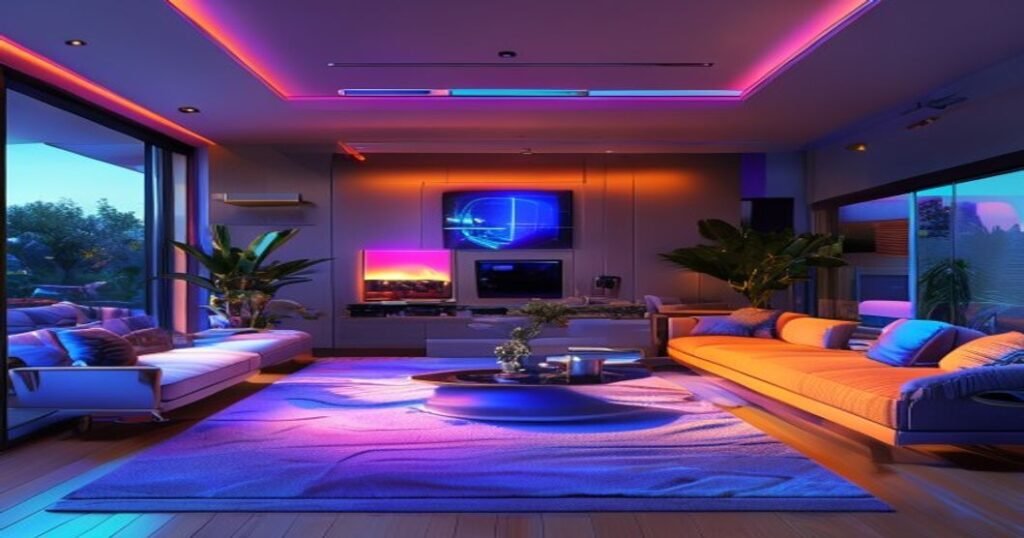

Beyond Mood Boards: How AI is Crafting Your Dream Home Before You Even Know You Want It
Let’s face it: designing a home, whether it’s a cozy apartment or a sprawling villa, can be an absolute minefield. You scroll through endless Pinterest boards, battle with color palettes, agonize over furniture layouts, and still, somehow, the final result often feels… a little off. It’s like trying to translate a whispered dream into a tangible reality, and often, something gets lost in translation. But what if there was a way to bypass all that guesswork, all that potential for regret, and land directly in a space that feels unequivocally ‘you’? What if your home could literally anticipate your desires, your moods, your very lifestyle, and design itself around them?
Welcome to the era where Artificial Intelligence isn’t just crunching numbers or automating factories; it’s stepping into our most personal spaces, revolutionizing interior design as we know it. Forget generic trends and one-size-fits-all aesthetics. We’re talking about hyper-personalized living, driven by algorithms so insightful they might just know you better than you know yourself.
The Old Way: A Marathon of Mismatches
Think about the traditional design process. You hire a designer, or you bravely embark on a DIY journey. There are consultations, mood boards are painstakingly assembled, samples are ordered, and then comes the waiting game. Decisions are often based on a snapshot of your current preferences, filtered through someone else’s aesthetic lens or your own limited design vocabulary. The outcome, while often beautiful, isn’t always a perfect reflection of your evolving self. It’s expensive, time-consuming, and let’s be honest, fraught with the potential for costly mistakes.
Interior design has long been an art, a deeply human endeavor relying on intuition, experience, and subjective taste. And while that human element remains irreplaceable, AI is proving to be the ultimate co-pilot, enhancing, not replacing, the creative journey. The goal isn’t to remove the designer, but to empower them (and you!) with tools that make the process more efficient, more insightful, and exponentially more personal.
Enter AI: Your Digital Design Muse
This isn’t about robots rearranging your furniture (at least not yet!). It’s about sophisticated software analyzing vast datasets, understanding patterns, and generating possibilities that humans simply couldn’t conceive at such speed and scale. Imagine uploading a few photos of your current space, answering a quick questionnaire about your lifestyle, hobbies, and even your emotional responses to different colors or textures. AI takes all this in, chews on it, and then — *voila* — presents you with design concepts tailored specifically to you.
This goes Beyond Smart Homes: How AI is Crafting Your Dream Interior Before You Even Know It. It’s not just about turning on lights with a voice command; it’s about the very fabric of your home’s aesthetic and functional design being woven by intelligent systems. These systems learn from your preferences, not just what you explicitly state, but what you implicitly show through your digital footprint – the images you save, the articles you read, even your typical energy consumption patterns. It’s a level of customization that feels almost prophetic.
From Data to Dream Home: How AI Works Its Magic
Understanding You, The User: The Data Whisperer
The first step for AI is getting to know you. This isn’t just about asking ‘what’s your favorite color?’ It’s about deep data analysis. AI can:
- Analyze Visual Input: You upload images of rooms you love, furniture pieces you own, or even abstract art that resonates with you. AI identifies recurring themes, color schemes, textures, and styles.
- Process Textual Cues: Your descriptions, feedback, even your social media posts can be analyzed for sentiment and preference indicators.
- Leverage Behavioral Data: As smart home technology becomes more integrated, AI can observe how you interact with your space – which lights you prefer at certain times, how you adjust the thermostat, even your sleep patterns. This informs design choices that enhance comfort and well-being.
This immense capacity for processing and making sense of disparate information is where AI truly shines. It’s akin to having the knowledge base of countless interior designers, architects, and psychologists at its fingertips, making the concept of the world’s first ‘Google’ seem rudimentary in its predictive power for personal taste.
Generative Design: Endless Possibilities at Warp Speed
Once AI understands your core aesthetic and functional needs, it enters the realm of generative design. Instead of presenting a few options, AI can generate hundreds, even thousands, of unique design solutions based on predefined parameters. It can:
- Optimize Layouts: Based on traffic flow, natural light, and room function, AI can suggest optimal furniture arrangements and structural modifications.
- Curate Materials & Finishes: From flooring to wall coverings, AI can recommend combinations that align with your style, budget, and even environmental preferences.
- Suggest Smart Product Integration: seamlessly recommending smart lighting, climate control, and entertainment systems that fit the design and your lifestyle.
And here’s the kicker: many of these platforms now integrate with Virtual Reality (VR) and Augmented Reality (AR). You can ‘walk through’ your AI-designed home before a single brick is laid or a brushstroke applied. You can swap out a sofa, change a wall color, or adjust the lighting with a gesture, experiencing the changes in real-time. This iterative, highly visual process drastically reduces miscommunications and buyer’s remorse.
Beyond Aesthetics: AI for Wellness and Functionality
The impact of AI on interior design stretches far beyond just looking good. It’s increasingly about creating spaces that actively support your well-being. Think about it: our homes are our sanctuaries, and AI can make them work harder for our health and happiness.
Optimizing Light, Comfort, and Air Quality
Imagine a home where the lighting subtly shifts throughout the day to mimic natural circadian rhythms, improving your sleep and energy levels. Or where the temperature and humidity self-regulate based on your personal comfort profile, even detecting your presence and adjusting accordingly. AI-powered sensors can monitor air quality, detecting pollutants and automatically triggering purifiers or ventilation systems. This kind of environmental control is not just convenient; it’s a proactive approach to a healthier living space.
This push towards creating environments that actively enhance human health isn’t confined to medical settings. Just as AI is revolutionizing diagnostics and personalized treatments in healthcare, ushering in a new era of hyper-personalized health, it’s doing the same for our living spaces. It’s truly Beyond the Clinic: How AI is Ushering in a New Era of Hyper-Personalized Health and Why You Should Care, extending its influence into the very homes that shape our daily lives.
Adaptive and Flexible Spaces
Modern living often demands multipurpose spaces. A living room might need to transform into a home office, a guest bedroom, or a yoga studio at different times. AI can design for this fluidity, suggesting modular furniture, hidden storage solutions, and even dynamic room dividers that optimize space usage. It can learn your daily routines and proactively suggest configurations, making your home a truly responsive, flexible entity.
The Future Is Now (and Even More Personalized)
Where does this all lead? We’re heading towards truly ‘proactive’ homes. Imagine your home not just reacting to your commands, but anticipating your needs. Feeling stressed after a long day? Your AI-powered home might subtly dim the lights, play calming music, and even suggest a relaxing aromatherapy scent. Planning a dinner party? It could suggest table settings, lighting moods, and even adjust the kitchen layout for optimal prep flow. The potential for seamless integration with our lives is immense.
While still in the realm of advanced research, the idea of technology responding directly to our thoughts is gaining traction. As we delve deeper into understanding the human brain and developing sophisticated interfaces, we can envision a future where our homes might respond not just to our explicit commands, but to our unspoken desires, our moods, or even our very neurological states. The advancements in The Ultimate Upgrade: How Brain-Computer Interfaces Are Rewiring Humanity’s Future could one day extend to truly intuitive home environments, where your interior adjusts to your mental state without you lifting a finger or uttering a word.
The Human Touch: Still Irreplaceable
Of course, this isn’t to say that AI will replace human designers entirely. Far from it. The human element – the empathy, the nuanced understanding of cultural contexts, the ability to tell a story through design, the sheer creative leap that often defies logic – remains vital. AI is a powerful tool, a sophisticated assistant that handles the computational heavy lifting, sifts through endless options, and provides unprecedented insights. It frees up designers to focus on the higher-level creative strategy, the emotional connection, and the unique artistic flair that only a human can bring.
Ultimately, AI in interior design is about democratizing good design. It’s making personalized, functional, and aesthetically pleasing spaces accessible to more people, breaking down barriers of cost, time, and expertise. It’s transforming our homes from static structures into dynamic, living environments that evolve with us, truly becoming extensions of our selves.
Conclusion: Your Home, Reimagined by Intelligence
The future of interior design isn’t just smart; it’s intuitive, deeply personal, and incredibly intelligent. We’re moving beyond simple automation to a world where our living spaces are designed from the ground up to reflect who we are, how we live, and what makes us thrive. So, the next time you dream of your perfect home, know that an army of algorithms might already be working to make that dream a living, breathing reality. The blank canvas of interior design is now infused with the power of AI, promising spaces that aren’t just decorated, but truly understood and designed for the unique individual within them.


