
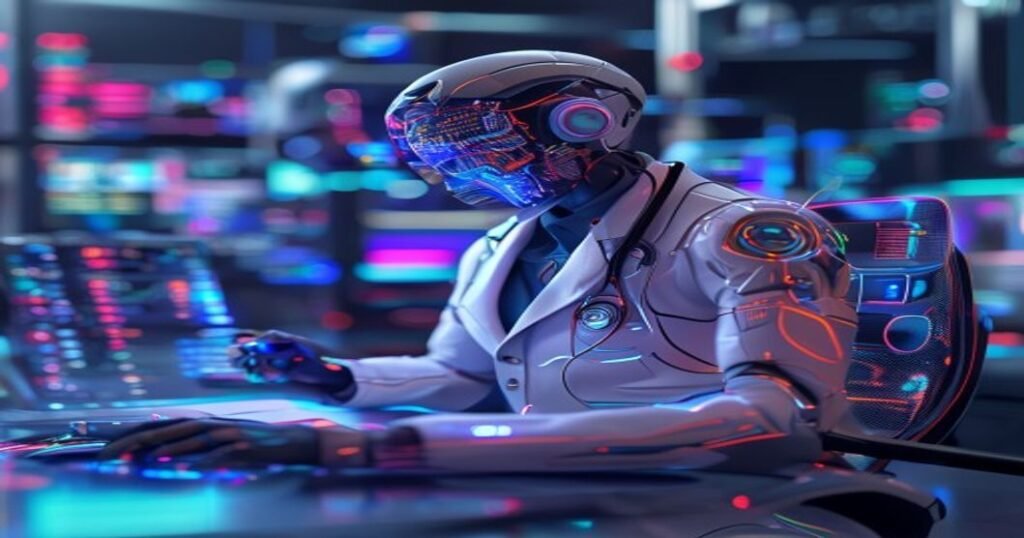

Remember the last time you felt a little off? Perhaps a persistent cough, an inexplicable fatigue, or just a general sense of ‘meh.’ What was your first step? For many of us, it’s a quick search online, followed by a visit to the doctor – where, more often than not, we’re treated based on a broad set of symptoms and standard protocols. It’s a system designed to treat the ‘average’ patient, but let’s be honest, who among us is truly ‘average’?
That one-size-fits-all approach to healthcare, while a marvel of human ingenuity for centuries, is rapidly becoming a relic of the past. Why? Because a quiet, yet powerful, revolution is underway, powered by something you hear about almost daily: Artificial Intelligence. And trust me, it’s not just for self-driving cars or recommending your next binge-watch. AI is fundamentally reshaping how we understand, maintain, and reclaim our health, ushering in an era of hyper-personalized wellness that feels almost like science fiction.
The Cracks in the ‘Average’ Model: Why We Need a New Approach
Our bodies are incredibly complex, unique ecosystems. From our genetic makeup to our microbiomes, from our daily habits to our environmental exposures, a million variables contribute to our health profile. Traditional medicine, for all its life-saving breakthroughs, often struggles to account for this staggering individuality. Diagnoses can be broad, treatments sometimes hit-or-miss, and preventative advice generic. This isn’t a criticism of doctors – they’re heroes doing incredible work with the tools they have – but rather a recognition that the sheer volume of data about each of us has become too vast for human minds alone to process effectively.
Think about it: a doctor might spend 15 minutes with you, relying on your verbal description of symptoms, a quick physical exam, and perhaps a handful of lab results. That’s a tiny snapshot of your overall health narrative. What if, instead, your doctor had access to a continuous, evolving story of your body, meticulously tracked and analyzed? What if they could predict potential health issues years before they manifest, or prescribe a treatment plan perfectly tailored to your unique biology? This isn’t a pipe dream anymore; it’s the promise of AI in health.
The AI Doctor Will See You Now: How Machine Learning is Transforming Wellness
At its core, AI excels at pattern recognition and processing immense datasets at speeds no human could ever match. This capability is like rocket fuel for personalized medicine. Here’s how it’s breaking new ground:
1. Unlocking Your Genetic Blueprint
Your DNA holds a universe of information about your predispositions, your responses to certain medications, and even your ideal diet. Genomic sequencing used to be astronomically expensive and slow. Now, it’s becoming more accessible, and AI is the key to interpreting its complex code. By analyzing your unique genetic data, AI can help doctors understand your risk for certain diseases, identify the most effective drugs with the fewest side effects, and even suggest lifestyle modifications perfectly aligned with your biology. Imagine a future where your medication isn’t just a best guess, but a precise, genetically informed choice.
2. The Wearable Revolution: Your Body’s Constant Companion
Smartwatches, fitness trackers, continuous glucose monitors, smart rings – these aren’t just gadgets; they’re the unseen revolution, gathering a torrent of real-time biometric data. Heart rate, sleep patterns, activity levels, blood oxygen, even stress indicators. AI algorithms sift through this data, identifying subtle deviations that might signal an impending issue long before you feel any symptoms. From detecting early signs of atrial fibrillation to predicting flu outbreaks in a community, these ‘silent sentinels’ are empowering us to be proactive guardians of our own health.
3. Precision Diagnostics and Early Detection
One of the most exciting applications of AI is in improving diagnostic accuracy and speed. AI can analyze medical images (X-rays, MRIs, CT scans) with incredible precision, often spotting anomalies that even trained human eyes might miss. This isn’t about replacing radiologists, but augmenting their capabilities, providing a second, tireless, and hyper-observant ‘eye.’ Early detection of diseases like cancer, diabetic retinopathy, or neurological disorders means earlier intervention, which dramatically improves outcomes. It’s about catching problems when they’re whispers, not shouts.
4. Personalized Lifestyle Coaching and Disease Management
Forget generic diet plans and exercise routines. AI can create truly personalized wellness programs. By integrating data from your wearables, genetic profile, dietary preferences, and even your calendar, AI can recommend specific meals, workout routines, and stress management techniques tailored just for you. For those managing chronic conditions, AI-powered platforms can provide continuous monitoring, medication reminders, and adaptive advice, helping individuals stay on track and avoid complications. It’s like having a personal health coach and nutritionist available 24/7, constantly learning and adapting to your needs.
Navigating the AI Tsunami: Challenges and the Human Element
While the potential is undeniably exhilarating, it would be naive to ignore the challenges that come with such a profound technological shift. The AI Tsunami brings with it critical questions:
- Data Privacy and Security: Our health data is intensely personal. Ensuring its security and ethical use is paramount. Robust regulations and transparent practices are crucial to building trust.
- Bias in Algorithms: If the data used to train AI models is biased (e.g., predominantly from one demographic), the AI’s recommendations could perpetuate or even amplify health disparities. Diverse and representative datasets are essential.
- The Human Touch: While AI can provide incredible insights, it cannot replace empathy, human connection, and the nuanced judgment of a compassionate doctor. AI should be a tool that empowers healthcare professionals, not one that diminishes their role.
- Accessibility and Equity: Will these advanced personalized health technologies be accessible to everyone, or will they widen the gap between the health ‘haves’ and ‘have-nots’? We must strive for equitable access.
And what about the sheer volume of information? Just as the ancient Library of Alexandria was a repository of all human knowledge, a ‘first Google’ of its time, we now face an explosion of health data. The challenge isn’t just collecting it, but interpreting it wisely, avoiding a ‘digital dark age’ of overwhelming, uncontextualized information. This is where AI’s ability to synthesize and prioritize becomes invaluable. It helps us avoid being lost in The Ghost of Alexandria-like paradox, where knowledge is abundant but understanding scarce.
The Future is Now: Your Health, Redefined
We are standing at the precipice of a new era in health and wellness. The shift from reactive treatment to proactive, personalized care is not just a technological advancement; it’s a paradigm shift in how we perceive and interact with our own bodies. Imagine a world where:
- Your annual physical is replaced by continuous, passive monitoring that alerts your doctor (and you) to potential issues before they become serious.
- Medications are prescribed not just based on your diagnosis, but on your unique genetic profile, ensuring maximum efficacy and minimal side effects.
- Your diet and exercise regimen are dynamically adjusted based on your real-time physiological responses, environmental factors, and personal goals.
- Access to expert medical insights and personalized advice is available at your fingertips, empowering you to make informed decisions about your health every single day.
This isn’t about robots replacing doctors; it’s about equipping doctors with superpowers and empowering individuals with unprecedented control over their well-being. It’s about moving beyond simply extending lifespan to enhancing ‘healthspan’ – living not just longer, but healthier, more vibrant lives.
So, the next time you hear about AI, don’t just think about futuristic robots. Think about the profound, deeply personal impact it’s already having, and will continue to have, on your health. This revolution is here, and it’s making ‘average’ health care a thing of the past. Are you ready to embrace the future of *your* health?

