
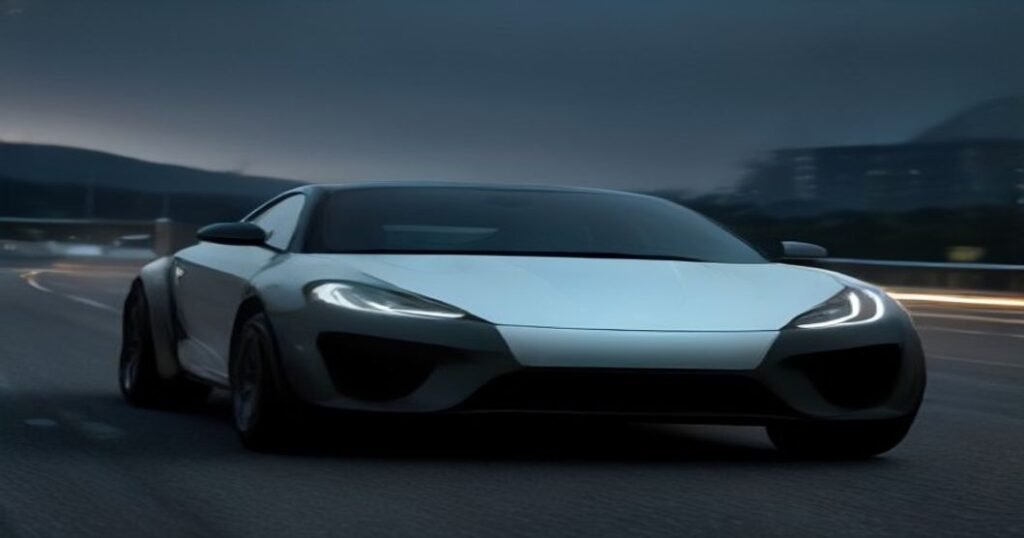

Unleashed AI: How Smart Cars are Redefining Driving (And Why You’ll Never Look Back)
Let’s be honest. For decades, the car has been a marvel of engineering, a symbol of freedom, and a personal space. But apart from a few incremental improvements – better fuel efficiency, nicer infotainment systems – the fundamental act of driving has remained largely unchanged. You get in, you steer, you accelerate, you brake. Simple, right? Well, buckle up, because that era is rapidly becoming a relic of the past. We are living through nothing less than an automotive revolution, powered by one of the most transformative technologies humanity has ever conceived: Artificial Intelligence.
My take? This isn’t just about self-parking features or fancy voice commands anymore. We’re talking about a complete reimagining of what a vehicle is, what it does, and how it interacts with us and the world around it. The automotive industry, once a bastion of mechanical prowess, is now becoming a playground for software engineers and AI developers. And trust me, once you experience what’s coming, you won’t just appreciate it – you’ll wonder how we ever managed without it.
The Silent Driver: Autonomous Vehicles Take the Wheel
Ah, the self-driving car. For years, it felt like a perpetual ‘tomorrow’ technology, a concept perpetually five years away. But look around now. While fully autonomous, go-anywhere vehicles are still a work in progress, the advancements we’ve seen are nothing short of breathtaking. From advanced driver-assistance systems (ADAS) that keep you in your lane and brake automatically, to increasingly sophisticated highway autopilot features, the car is learning to drive itself, one mile at a time.
What’s truly fascinating is the sheer volume of data these systems process in real-time. Cameras, lidar, radar, ultrasonic sensors – they all paint an intricate, constantly updating picture of the vehicle’s surroundings. AI algorithms then crunch this colossal dataset, making split-second decisions that would overwhelm a human driver. It’s not just about seeing; it’s about understanding, predicting, and reacting. This isn’t just an upgrade; it’s a paradigm shift. If you want to grasp the sheer scale of this technological upheaval and its implications across industries, I highly recommend reading The AI Tidal Wave: How Artificial Intelligence is Reshaping Everything You Know (And What You MUST Do Now). It provides crucial context for understanding why the auto sector is undergoing such radical change.
Of course, the road to full autonomy is paved with challenges, from regulatory hurdles to ethical dilemmas. But the momentum is undeniable. I predict that within our lifetime, most people will experience a seamless transition where their car handles the tedious, monotonous parts of driving, freeing up mental space for work, entertainment, or simply enjoying the ride.
Beyond the Dashboard: The Intelligent Cockpit
But AI’s influence isn’t confined to the car’s exterior or its ability to navigate traffic. Step inside any modern vehicle, and you’ll immediately notice the transformation. The infotainment system isn’t just playing music; it’s learning your preferences, anticipating your needs, and even monitoring your focus.
- Personalized Experiences: AI-powered systems can recognize drivers and passengers, automatically adjusting seat positions, mirror settings, climate control, and even preferred music playlists.
- Advanced Voice Assistants: Forget rigid commands. Natural language processing (NLP) allows you to converse with your car like you would a human, making calls, sending messages, setting navigation, and controlling vehicle functions with intuitive ease.
- Driver Monitoring: Cameras and sensors track driver alertness, detecting signs of fatigue or distraction and issuing warnings, enhancing safety in ways previously unimaginable.
- Predictive Maintenance: AI analyzes vehicle data in real-time, predicting potential mechanical issues before they become critical failures, alerting you to necessary maintenance and saving you time and money.
This isn’t just about convenience; it’s about creating a truly integrated and intuitive environment that understands and responds to its occupants. It’s making the car an extension of your digital life, but one that actively works to enhance your physical safety and comfort. The human-machine interface within the car is becoming so advanced that it hints at even deeper integrations, where the vehicle might one day understand our intentions with incredible precision. For a glimpse into how deeply intertwined technology and human consciousness could become, delve into Your Mind, Unlocked: Why Brain-Computer Interfaces Are the Ultimate Frontier (And How AI is Making it Real) – it’s food for thought regarding the ultimate evolution of personalized interaction.
The AI-Driven Automotive Ecosystem: From Factory Floor to Forecourt
The impact of AI isn’t limited to the car itself; it’s revolutionizing the entire automotive industry, from concept to production to sales and beyond. In manufacturing, AI-powered robotics are performing complex tasks with unparalleled precision and efficiency, streamlining assembly lines and reducing errors. Generative AI is even assisting designers in creating new vehicle concepts and optimizing components for aerodynamics and structural integrity.
Supply chain management is another area seeing massive disruption. AI algorithms predict demand fluctuations, optimize logistics routes, and identify potential bottlenecks before they occur, ensuring that parts arrive on time and production remains uninterrupted. For dealerships, AI is personalizing the buying experience, from targeted advertising to virtual test drives and even predicting which car models will be most popular in specific regions.
My opinion is clear: for any business within this vast ecosystem, embracing AI is no longer optional. It’s a fundamental requirement for survival and growth. This isn’t just about gaining an edge; it’s about staying relevant. Businesses that fail to integrate AI into their operations will find themselves rapidly outmaneuvered. This struggle for adaptation isn’t unique to auto, either. If you run a business, you absolutely need to understand this trend; check out The AI Gold Rush: Why Every Business Needs to Dig In Now (Or Get Left Behind) to ensure your enterprise isn’t left in the dust.
Societal Shifts and the Human Element
With such profound technological shifts come equally profound societal implications. The automotive industry has historically been a massive employer, and the rise of AI and automation inevitably raises questions about job displacement. While some roles will undoubtedly be automated, new opportunities will emerge in AI development, data science, ethical AI oversight, and the maintenance of complex autonomous systems. It’s a transformation, not an obliteration.
The very concept of car ownership might also evolve. If autonomous ride-sharing services become ubiquitous and highly affordable, will we still feel the need to own a depreciating asset that sits idle 95% of the time? This could lead to a future where personal mobility is a service, not a possession.
For individuals, adapting to this changing landscape is crucial. New skills will be in demand, and lifelong learning will become even more vital. The automotive sector, like many others, will see its workforce evolve dramatically. Understanding how to navigate this new terrain is paramount, which is why resources like Beyond the Bots: Future-Proofing Your Career in the AI-Driven Job Market are so essential right now. It’s not about fearing the change, but preparing for it.
The Road Ahead: An Exciting (and Challenging) Journey
We are truly at a pivotal moment in automotive history. The infusion of AI into every facet of how vehicles are designed, manufactured, operated, and experienced is creating a future that was once the stuff of science fiction. From reducing accidents and traffic congestion to creating hyper-personalized travel experiences, the potential benefits are immense. However, it’s not a journey without its bumps. Cybersecurity, data privacy, and the development of robust, reliable AI systems that can handle every conceivable scenario will continue to be critical areas of focus.
What I find most exhilarating is that this isn’t just about faster or fancier cars; it’s about fundamentally reshaping our relationship with transportation and the very fabric of our urban environments. It’s a shift as monumental as the invention of the automobile itself, or the transition from horses to horsepower. These are grand, sweeping changes, echoing previous industrial and technological revolutions. To truly appreciate the magnitude of what we’re witnessing, it helps to look back at how society adapted during other periods of massive change. Understanding these historical parallels can offer invaluable insights into our present and future, as explored in Echoes of Revolution: How History’s Grandest Shifts Predict Our AI-Driven Future.
So, as you hit the road today, take a moment to consider the silent revolution unfolding around you. The cars of tomorrow aren’t just vehicles; they’re intelligent, connected, and constantly evolving partners. And my prediction? We’re only just scratching the surface of what they’ll be able to do. The future of driving isn’t just coming; in many ways, it’s already here, and it’s spectacular.


