

Alright, let’s talk about something that truly gets under my skin: the heartbreaking decline of our planet’s incredible wildlife. We’ve all seen the documentaries, the gut-wrenching images of animals on the brink. It’s a crisis that feels overwhelming, a battle fought on countless fronts – poaching, habitat destruction, climate change. For years, the dedicated men and women on the ground have been fighting with passion and perseverance, but often, it feels like they’re swimming against an impossible tide.
But what if I told you there’s a powerful new ally emerging, a silent sentinel and digital detective that’s rapidly changing the game? I’m talking, of course, about Artificial Intelligence. This isn’t just about robots taking over; it’s about intelligent systems augmenting human efforts, giving us a fighting chance against some of the most complex threats our animal kingdom faces. And honestly, it’s nothing short of revolutionary.
The Unseen Battle: Why Traditional Methods Weren’t Enough
Imagine trying to protect vast stretches of wilderness, sometimes thousands of square miles, with limited human patrols. It’s like finding a needle in a haystack, except the needle is a critically endangered rhino and the haystack is an entire national park the size of a small country. Poachers are increasingly sophisticated, organized, and ruthless. Their networks are often intricate, leveraging modern technology to evade capture. Meanwhile, climate change subtly erodes habitats, pushing species into new, unfamiliar territories or to extinction’s edge.
Then there’s the sheer scale of monitoring. How do you track thousands of individual animals, understand their migration patterns, detect diseases, or even just count populations accurately over time? Manual methods are slow, expensive, and often inaccurate. We needed something that could see further, process faster, and predict better. And that’s precisely where AI steps in.
AI: The New Guardian of the Wild
It sounds almost too good to be true, doesn’t it? AI, the same technology redefining our hyper-personalized homes and optimizing our daily lives, is now being deployed in the most remote corners of the world to protect our natural heritage. And it’s doing it in ways that would have been pure science fiction just a decade ago.
Eyes in the Sky (and on the Ground)
-
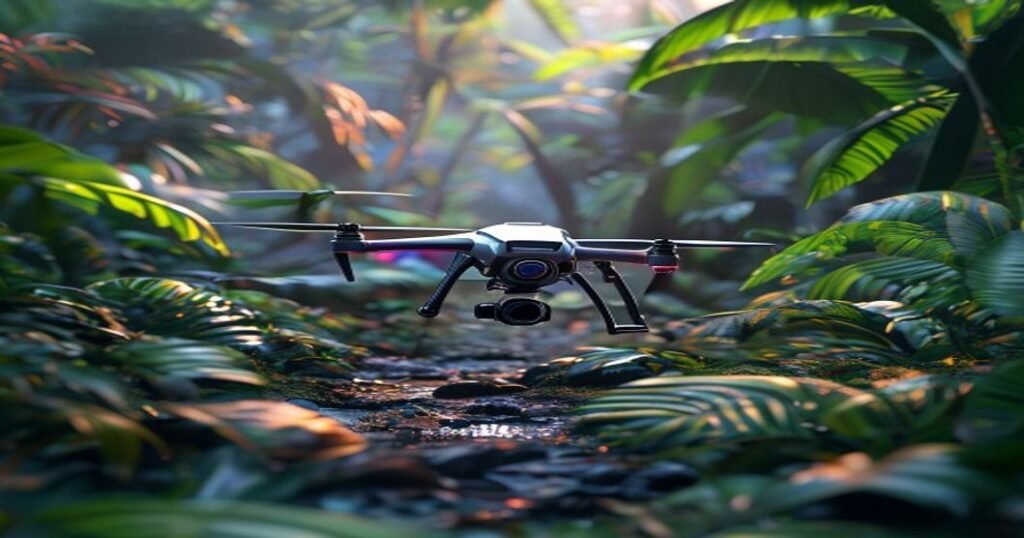
Drone Patrols and Satellite Imagery: Drones equipped with thermal cameras and AI-powered vision can scan vast areas for poachers, even at night. The AI identifies human activity, vehicles, or even specific animal species, flagging suspicious movements for human rangers. Similarly, satellite imagery, when crunched by AI algorithms, can detect subtle changes in forest cover, identify illegal logging operations, or monitor the health of coral reefs over time, providing an unprecedented top-down view of our planet’s ecosystems.
-
Smart Camera Traps: Forget static cameras that just snap endless photos of leaves blowing in the wind. Modern camera traps are AI-enabled. They can differentiate between species, identify individual animals (like a specific tiger by its stripe pattern), and even send real-time alerts when a target species or a human intruder is detected. This means researchers get critical data without disturbing the animals, and conservationists get immediate warnings of threats.
Predictive Power: Forecasting Threats Before They Strike
This is where AI truly shines, moving beyond just reacting to problems to actively preventing them. AI algorithms are voracious data eaters. They can analyze historical poaching data, weather patterns, economic indicators, and even moon cycles to predict when and where poaching is most likely to occur. This allows conservation teams to deploy their limited resources strategically, setting up patrols in high-risk areas before an incident happens. It’s like having a crystal ball, but powered by data, and it’s saving lives.
Beyond poaching, AI is being used to model the spread of diseases within animal populations, predict how species will adapt (or struggle to adapt) to climate change, and optimize migration corridors. This is truly unleashing the algorithmic alchemist, turning raw data into actionable insights that guide scientific discovery and conservation strategies.
Individualized Care and Behavioral Insights
Think about the precision of AI in other fields. Now apply that to individual animals. AI is helping veterinarians diagnose illnesses earlier, analyze animal vocalizations to understand distress or social interactions, and even monitor the well-being of animals in zoos or rehabilitation centers. Sensors attached to animals can transmit data on heart rate, movement, and location, which AI then analyzes to flag anomalies that might indicate stress, injury, or unusual behavior. This level of personalized monitoring, while still nascent, promises to elevate animal welfare to new heights.
Beyond the Wild: AI in Animal Welfare and Domestic Life
It’s not just about the big, majestic creatures in far-off lands. AI is also making a significant impact on the lives of our pets and domestic animals. Smart feeders learn your pet’s eating habits, adjusting portions and timing. AI-powered collars can track location, activity levels, and even vital signs, alerting owners to potential health issues. For shelters, AI can analyze animal behavior from video footage to help match pets with suitable adopters, increasing successful placements and reducing returns. In agriculture, AI is helping monitor livestock health, optimize feeding, and reduce environmental impact, leading to more humane and sustainable practices.
The Challenges and the Ethical Compass
Of course, it’s not all sunshine and digital roses. The deployment of AI in conservation comes with its own set of challenges. Data accuracy is paramount – bad data leads to bad predictions. The cost of advanced AI systems can be prohibitive for many conservation organizations. There are also ethical considerations, though perhaps less complex than in other AI domains. How do we ensure these technologies don’t inadvertently disrupt natural behaviors or create new dependencies? How do we protect the privacy of the rangers using these systems?
These are questions we must grapple with as we integrate more AI into our conservation efforts. It’s a reminder that technology is a tool, and its impact is determined by human intent and oversight. Just as we consider the profound implications of AI’s long-term trajectory and its place in our destiny, we must also consider its responsible application in safeguarding the natural world.
The Future is Here, and It’s AI-Powered
Looking ahead, the potential for AI in animal conservation and welfare is truly astounding. Imagine swarms of micro-drones, working autonomously, mapping entire ecosystems in real-time. Picture AI systems so advanced they can not only predict poaching but identify the individuals involved through facial recognition (where ethical and legal), dismantle their networks, and trace illegal wildlife products back to their source. Think of personalized health diagnostics for every animal in a species, preventing outbreaks before they devastate populations.
This isn’t just about preserving species; it’s about preserving the delicate balance of life on Earth, understanding our planet on a deeper level, and ultimately, ensuring a healthier future for all. The AI revolution is fundamentally reshaping how we learn and adapt, and nowhere is that more evident or more critical than in our fight to save the animal kingdom.
So, the next time you hear about AI, don’t just think about self-driving cars or smart assistants. Remember the silent sentinels flying over remote forests, the digital detectives sifting through mountains of data, and the algorithmic alchemists working tirelessly to give Earth’s most vulnerable creatures a fighting chance. It’s a powerful, hopeful narrative, and one that gives me immense optimism for the future of our planet.


