
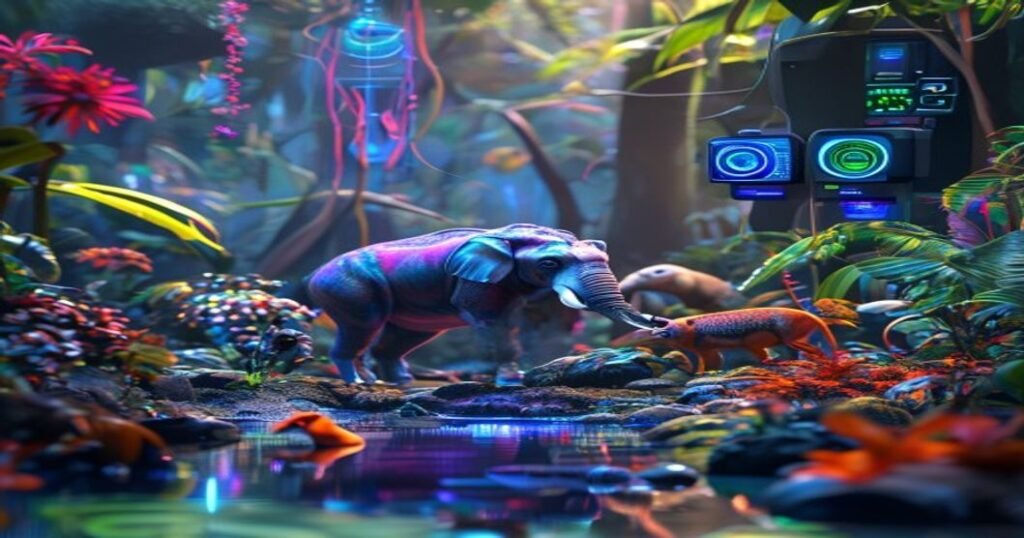

Alright, folks, buckle up! If you thought artificial intelligence was just for self-driving cars or making your smart home even smarter, think again. The AI revolution isn’t just happening in Silicon Valley boardrooms or our classrooms; it’s quietly, yet profoundly, reshaping the very fabric of the animal kingdom. And honestly, it’s one of the most exciting, and often overlooked, applications of this AI Tsunami that’s reshaping every corner of our lives. From the sprawling savannas where endangered species roam to the cozy confines of your living room with your furry companion, AI is stepping in, offering solutions we could only dream of just a few years ago. And trust me, as someone who’s always got an eye on both tech and nature, this convergence is nothing short of breathtaking.
The Silent Guardians: AI in Wildlife Conservation
Let’s start with the big picture: wildlife conservation. It’s a battle against time, poaching, habitat destruction, and climate change. For decades, dedicated conservationists have fought these uphill battles with limited resources. But what if I told you that AI is now providing them with superpowers? We’re talking about smart sensors, drone technology, and advanced algorithms working together to monitor vast, remote areas that were previously impossible to cover. Imagine a world where thermal imaging drones, powered by AI, can detect poachers in the dead of night, alerting rangers in real-time. This isn’t science fiction anymore; it’s happening right now.
Fighting Poaching with Predictive Analytics
One of the most devastating threats to iconic species like rhinos and elephants is poaching. Traditionally, anti-poaching efforts relied on patrols, which are inherently reactive. But AI changes the game. Systems are being developed that analyze vast datasets – everything from weather patterns and moon phases to past poaching incidents and market prices for ivory or rhino horn – to predict where and when poachers are most likely to strike. This predictive policing allows rangers to deploy resources more strategically, turning a reactive defense into a proactive shield. It’s like having a digital guardian angel for our most vulnerable creatures, and it’s truly heartening to see AI to the Rescue: How Artificial Intelligence is Revolutionizing Animal Conservation and Saving Species.
Monitoring Habitats and Health from Afar
Beyond direct protection, AI is transforming how we monitor animal populations and their habitats. Satellite imagery, often processed by AI, can track deforestation rates, identify changes in water sources, and even count large animal herds from space. Specialized cameras equipped with AI can identify individual animals by unique markings, facial recognition (yes, even for animals!), or gait analysis. This allows researchers to track migration patterns, assess population health, and understand social structures without intrusive human interference. This wealth of data provides unparalleled insights into ecosystems, empowering us to make more informed conservation decisions.
From Paws to Hooves: AI’s Impact on Animal Health and Welfare
Now, let’s bring it a little closer to home. If you’re a pet owner, you know the worry that comes with a sick animal. Veterinary medicine, while incredibly advanced, still relies heavily on observation and educated guesswork. But just as AI is rewriting the future of human health and saving lives, it’s doing the same for our animal companions.
Smarter Diagnostics, Faster Treatments
Imagine your vet using an AI-powered tool that can analyze your pet’s X-rays, MRIs, or blood tests with incredible speed and accuracy, often catching subtle anomalies that even the most experienced human eye might miss. AI algorithms are being trained on massive datasets of animal medical records, enabling them to assist in diagnosing everything from early-stage cancers to neurological disorders. This means faster, more accurate diagnoses, leading to quicker and more effective treatments. We’re also seeing wearable tech for pets – think smart collars that monitor heart rate, activity levels, and even sleep patterns – all feeding data into AI systems that can alert owners or vets to potential health issues before they become critical. It’s personalized pet care reaching a whole new level!
Revolutionizing Livestock Management
And it’s not just companion animals. In agriculture, AI is dramatically improving the welfare and productivity of livestock. AI-powered cameras monitor animal behavior, identifying signs of distress, illness, or even lameness in individual animals within a large herd. Automated feeding systems, guided by AI, can dispense precise nutrition tailored to each animal’s needs, optimizing health and reducing waste. This isn’t just about efficiency; it’s about creating more humane and healthier environments for farm animals, a win-win for everyone.
Decoding the Wild: Understanding Animal Communication and Behavior
One of the most fascinating frontiers for AI in the animal world is in helping us understand creatures on their own terms. For centuries, humans have struggled to truly comprehend the intricate communication systems and complex behaviors of other species. AI is finally starting to crack that code.
The Rosetta Stone for Animal Voices
Scientists are using AI to analyze vocalizations from whales, dolphins, birds, and even prairie dogs. These algorithms can identify patterns, distinguish between different calls, and even start to infer meaning. Imagine a future where we could, with some level of accuracy, understand what a specific whale song signifies, or what a flock of birds is communicating about a predator. This isn’t about teaching animals human language; it’s about learning their language, offering unprecedented insights into their social structures, emotional states, and environmental needs.
Behavioral Insights Beyond Human Observation
Similarly, AI-driven video analysis can meticulously track and interpret animal behavior in ways that human observers simply cannot. It can identify subtle behavioral shifts indicative of stress, mating rituals, or foraging strategies across vast periods and large groups. This deep dive into animal psychology and sociology helps us not only protect species more effectively but also fosters a profound respect for their intelligence and complexity. It challenges our anthropocentric views and opens our minds to the richness of life on Earth.
The Road Ahead: Challenges and Ethical Considerations
Of course, no technological revolution comes without its considerations. While the benefits of AI in the animal kingdom are immense, we must approach its deployment with careful thought. There are ethical questions around data privacy for individual animals (even if it sounds strange to us, these are living beings!), the potential for unintended consequences in wild ecosystems if we intervene too much, and the need to ensure that AI remains a tool to empower conservationists and vets, not replace the invaluable human element of care and compassion.
My take? The potential outweighs the risks, provided we maintain a critical, ethical lens. This isn’t about turning animals into robots or managing nature like a spreadsheet. It’s about giving us, the stewards of this planet, the most powerful tools available to protect, understand, and coexist with the incredible diversity of life around us. The world is changing rapidly, and as the AI earthquake reshapes everything we know, it’s imperative that we harness its power for the good of all creatures, great and small.
A Future Where Every Species Has a Voice
The integration of AI into the animal world is still in its nascent stages, but the trajectory is clear. We are entering an era where technology can amplify our efforts to protect endangered species, provide superior care for our pets, and deepen our understanding of the sentient beings with whom we share this planet. It’s an incredibly hopeful vision – one where technology, rather than alienating us from nature, brings us closer to it, allowing us to listen, learn, and protect with unprecedented effectiveness. The silent revolution is underway, and it promises a louder, healthier, and more vibrant future for every creature on Earth. And frankly, I can’t wait to see what amazing breakthroughs come next!


