
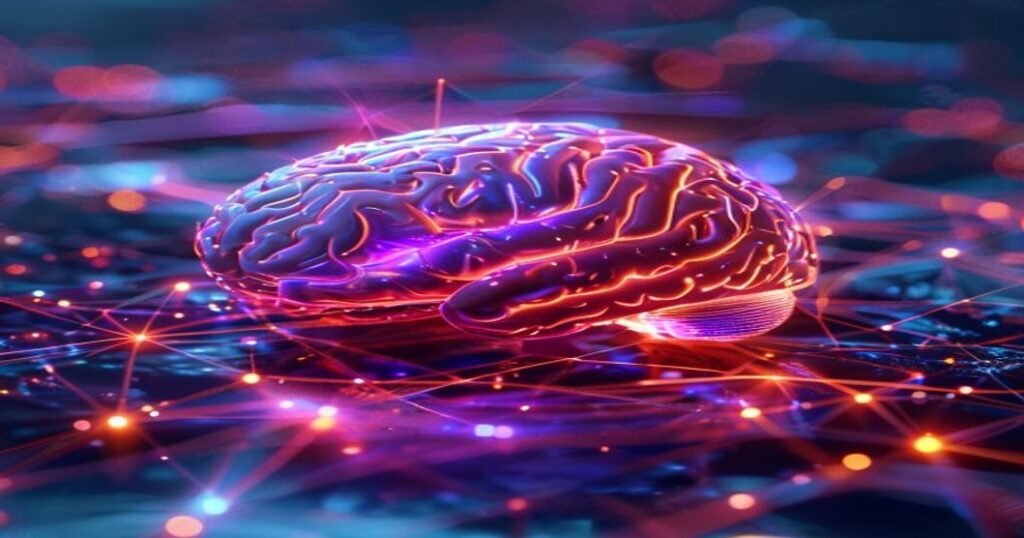

Imagine a world where your thoughts aren’t confined to the silent chambers of your skull. A world where an idea, a memory, or even a feeling can be shared, processed, or acted upon with the speed of light, bypassing the clumsy intermediaries of speech or touch. Sound like science fiction? Well, hold onto your neurons, because Brain-Computer Interfaces (BCIs) are rapidly pulling this vision from the realm of dreams into our tangible reality. This isn’t just about controlling a cursor with your mind; it’s about fundamentally rewiring what it means to be human, and frankly, I find it both exhilarating and terrifying in equal measure.
What Exactly Are We Talking About? A Primer on BCIs
At its core, a Brain-Computer Interface is exactly what it sounds like: a direct communication pathway between a brain and an external device. Think of it as a translator that takes the electrical signals firing in your grey matter and converts them into commands that a computer, a prosthetic limb, or even another brain can understand. And yes, it works the other way too, potentially feeding information *into* your brain.
Now, when we talk about BCIs, it’s important to distinguish between the various approaches. You’ve got your non-invasive methods, like EEG caps, which sit on your scalp and pick up brain waves. These are great for general control or gaming, but the signal quality can be a bit like trying to hear a whisper in a crowded room. Then there’s the more profound stuff: invasive BCIs. These involve electrodes implanted directly into the brain tissue, offering incredibly precise and rich data. While the idea of surgery might make you wince, the precision gained is transformative, opening up possibilities that truly boggle the mind.
From Sci-Fi Dream to Life-Changing Reality
The Miracles of Restoration
The earliest and most impactful applications of BCIs have been in the realm of restoration – giving back what illness or injury has taken away. For individuals living with paralysis, conditions like ALS, or ‘locked-in syndrome’, BCIs have been nothing short of miraculous. Imagine being unable to move or speak, yet being able to type out a message, control a robotic arm to pick up a cup, or even navigate a wheelchair, all purely through thought. We’re talking about restoring agency, communication, and a profound sense of self to people who previously had none. It’s a testament to human ingenuity and compassion.
This isn’t just about restoring basic function; it’s about a deeply personalized approach to health and well-being. The data gathered from these interfaces can be incredibly specific to an individual’s neural patterns and needs. This level of granular insight into brain activity isn’t just for control; it paves the way for advanced diagnostics, personalized therapies for neurological disorders, and even real-time monitoring of mental states. It’s a prime example of how Beyond the Clinic: How AI is Ushering in a New New Era of Hyper-Personalized Health and Why You Should Care, where technology is tailor-made to individual biological and cognitive profiles, moving us away from one-size-fits-all medical solutions.
The Leap to Augmentation: Beyond Recovery
But here’s where things get really fascinating, and perhaps a little unsettling: augmentation. What happens when BCIs move beyond merely restoring function to *enhancing* it? The chatter in scientific circles isn’t just about helping the disabled; it’s about giving the able-bodied a cognitive edge. Imagine direct access to the internet, instantaneous knowledge recall, telepathy, or even the ability to ‘download’ new skills directly into your brain. The prospect of enhancing memory, processing speed, or even learning a new language in an instant isn’t just a fantasy anymore; it’s a tangible, albeit distant, scientific objective.
We’re talking about a potential paradigm shift in human evolution. If we can bypass traditional sensory inputs and motor outputs, our interaction with the digital world, and indeed with each other, will be fundamentally transformed. It begs the question: what are the limits of human potential when our brains are directly interfaced with the boundless power of computing?
The Indispensable Role of AI: The Unseen Architect
Now, none of this would be possible without our unsung hero: Artificial Intelligence. The raw electrical signals from our brains are incredibly complex, noisy, and highly individualistic. They don’t arrive as neat, labeled commands. This is where AI steps in as the ultimate interpreter. Machine learning algorithms are tasked with sifting through this neural chaos, identifying patterns, learning to differentiate between different thoughts or intentions, and translating them into actionable commands.
Think about it: a BCI needs to understand if you’re trying to move a mouse, type a letter, or simply thinking about your grocery list. AI algorithms are constantly learning, adapting, and refining their understanding of your unique neural fingerprint. They filter out noise, predict your intentions, and make the interface more intuitive and responsive. Without advanced AI, a BCI would be little more than a fancy, useless electrode array. This is precisely the kind of complex data processing and pattern recognition that has already proven so disruptive in other fields. If you’ve been paying attention to how intelligent machines are parsing vast datasets to predict market trends or optimize ad placements, then you understand the kind of computational heavy lifting required here. It’s another powerful example of The AI Earthquake: How Smart Machines are Redefining Digital Marketing & SEO (And Why You Can’t Afford to Ignore It) – the ability of AI to make sense of, and act upon, previously unmanageable volumes of data.
The speed at which AI can process and learn from these neural signals is truly mind-boggling. It’s not just about interpreting; it’s about anticipating and optimizing. This symbiotic relationship between human brain and artificial intelligence is what makes BCI truly powerful. It’s not just connecting a brain to a computer; it’s connecting a brain to an intelligent, adaptive partner that learns with you.
Navigating the Ethical Labyrinth
Of course, with such profound power comes equally profound ethical questions. And let’s be honest, this is where the ‘terrifying’ part of my earlier statement comes in. If our thoughts can be accessed, can they be surveilled? If our brains are connected to external networks, can they be hacked? The security implications of a compromised BCI are frankly chilling, raising questions about privacy, autonomy, and even mental integrity.
Then there’s the question of equity. Will these ultimate upgrades only be available to the elite, creating a new digital divide between the enhanced and the unenhanced? What happens to the concept of human identity when our memories can be augmented, our thoughts influenced, or even our personality traits altered through technology? We need to establish clear ethical guidelines, robust security protocols, and ensure equitable access long before these technologies become widespread. Ignoring these questions now would be a catastrophic oversight, reminiscent of lessons unlearned from history about controlling vast repositories of knowledge and power, as discussed in The Ghost of Alexandria: What the World’s First ‘Google’ Teaches Us About AI, Knowledge, and the Looming Digital Dark Age. The potential for misuse is as vast as its potential for good.
The Road Ahead: Hurdles and Horizons
Despite the incredible progress, significant hurdles remain. Surgical risks, the long-term biocompatibility of implants, the enormous bandwidth required for seamless thought transfer, and the sheer complexity of the human brain itself are formidable challenges. We’re still in the early days, really, much like the nascent internet in the 90s. The technology needs to become smaller, safer, more reliable, and critically, less invasive for widespread adoption.
Public acceptance is another huge factor. The idea of having a chip in your brain, even if it promises superpowers, is a big leap for many. Open dialogue, transparent research, and a clear demonstration of benefits will be essential to build trust and overcome natural human apprehension. This isn’t just about technological prowess; it’s about societal readiness and thoughtful integration.
My Take: An Inevitable Evolution?
My personal conviction is that Brain-Computer Interfaces are not just another gadget or a fleeting trend; they represent a fundamental shift in our relationship with technology and, more importantly, with ourselves. We are moving towards a future where the line between human and machine blurs, not in a dystopian, robotic sense, but in a symbiotic evolution. The ability to directly interface with the digital realm, to augment our natural capabilities, is a frontier too compelling to ignore.
However, this journey demands profound wisdom. It’s imperative that as we develop these tools, we also develop the ethical frameworks, the societal structures, and the philosophical understanding to wield them responsibly. We stand at the precipice of an era where humanity has the power to redefine itself. It’s a monumental undertaking, fraught with peril and promise, but one that I believe is ultimately inevitable. The question isn’t if BCIs will change our future, but how we choose to shape that change.
The convergence of neuroscience and artificial intelligence is creating a wave of innovation that promises to be nothing short of revolutionary. Like a rising tide, it will lift some boats and challenge others. Embracing this transformation with open eyes and a critical mind is not just an option; it’s a necessity for anyone looking to navigate the future of science and technology.

