
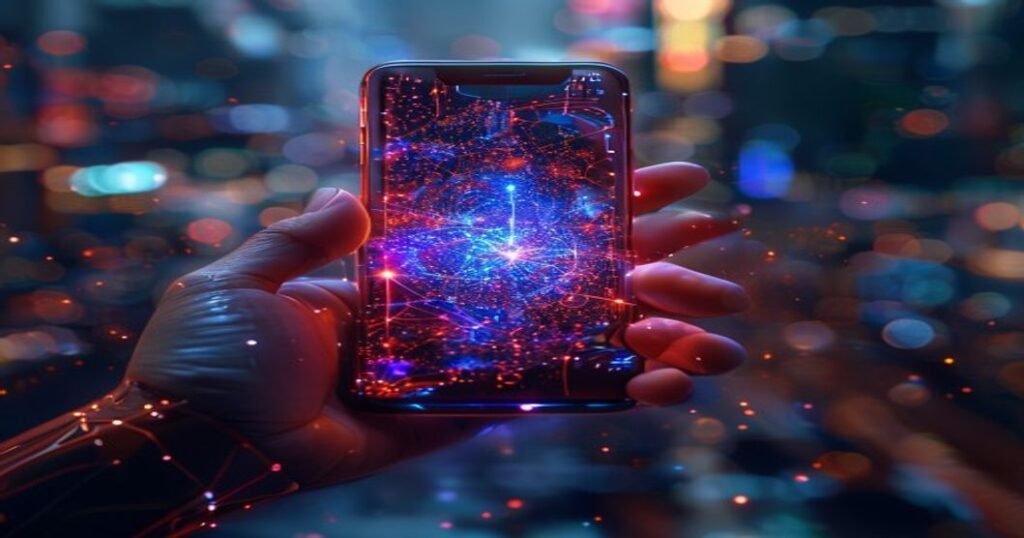

Remember when smartphones were just… smart? They let us call, text, browse the web, and play a few games. Revolutionary at the time, absolutely. But let’s be honest, they were essentially super-fast pocket computers. Fast forward to now, and we’re standing at the precipice of an even greater transformation. Our phones aren’t just getting smarter; they’re evolving into genuine companions, anticipatory assistants, and even creative partners, thanks to the silent, yet seismic, integration of Artificial Intelligence.
It’s no longer just about fancy new camera lenses or brighter screens. While those physical advancements are certainly welcome, the true magic is happening under the hood, in the digital brains of our devices. What we’re witnessing is The Silent Revolution: How AI is Turning Your Smartphone into a Genius Companion (And Why You’re Already Hooked). It’s a fundamental shift that’s redefining what a smartphone is and, more importantly, what it can do for us.
Beyond the Hype: What Does AI in Your Phone Actually Mean?
For many, AI still sounds like science fiction – sentient robots or complex supercomputers. But in the context of your smartphone, AI is far more practical and pervasive, even if you don’t always notice it. It’s the sophisticated algorithms and machine learning models that allow your phone to learn, adapt, and make intelligent decisions without explicit programming for every single scenario. Think of it as a continuous learning engine, constantly optimizing and enhancing your experience.
The Camera: Your Personal AI Photographer
Let’s start with perhaps the most obvious and beloved application: photography. Gone are the days when a great photo required a bulky DSLR and a deep understanding of aperture and shutter speed. Today, your smartphone’s camera, powered by AI, can do things that would’ve seemed impossible just a few years ago. It intelligently recognizes scenes – whether you’re shooting a vibrant sunset, a delicious plate of food, or a beloved pet – and instantly adjusts settings like exposure, white balance, and saturation to deliver a stunning shot. Portrait mode, with its beautiful, creamy bokeh, is another prime example of AI in action, isolating your subject with remarkable precision. Low-light photography, once the bane of phone cameras, has been transformed by computational photography, stitching together multiple frames to create bright, detailed images that defy the physics of tiny sensors. It’s like having a professional photographer meticulously editing every shot, but in milliseconds.
Performance and Battery: The Invisible Optimization Engine
Ever wonder why your phone, even with demanding apps, still manages to last a full day? A significant part of that credit goes to AI. Modern smartphones utilize AI to intelligently manage background processes, predict your usage patterns, and optimize power consumption. If your phone knows you typically don’t use a certain app after 9 PM, it might limit its background activity. If it senses you’re about to start a gaming session, it might proactively allocate more resources to the GPU. This isn’t just about longer battery life; it’s about a smoother, more responsive user experience, where the phone anticipates your needs before you even articulate them.
Personalization That Truly Understands You
This is where AI truly shines and transforms your phone from a generic device into a deeply personal one. Your phone is constantly learning about you: your daily routines, the apps you use most, your communication patterns, even your preferred aesthetic for photos. AI helps in:
- Adaptive Display: Adjusting screen brightness and color temperature based on your environment and even the time of day to reduce eye strain.
- Smart Notifications: Prioritizing alerts from important contacts or apps, and intelligently bundling less critical notifications so your attention isn’t constantly fragmented.
- Predictive Text and Suggestions: Not just correcting typos, but predicting entire phrases, suggesting contacts for specific times of day, or even recommending relevant information based on your current context.
- Curated Content: From personalized news feeds to music recommendations and even app suggestions, AI ensures the content you consume is tailored to your unique tastes.
It’s no longer just about what you tell your phone to do; it’s about what your phone silently observes and then anticipates, making your digital life feel remarkably intuitive.
Enhanced Security and Privacy
While often a concern, AI is also a powerful ally in securing your device and data. Facial recognition and fingerprint scanners have become incredibly sophisticated thanks to AI, making biometric authentication faster and more secure than ever before. AI also plays a crucial role in detecting suspicious activity, identifying malware, and flagging potential phishing attempts. It continuously learns new threats and adapts its defenses, creating a dynamic shield around your personal information. Of course, the ethical implications of data collection remain a vital conversation, but AI is undeniably a double-edged sword that, when wielded responsibly, can significantly bolster our digital safety.
The Broader Impact: More Than Just Your Handset
The AI revolution in smartphones isn’t happening in isolation. It’s part of a much larger global trend, an The AI Tidal Wave: Why Your Job Will Change (And How You Can Not Just Survive, But THRIVE!) that is reshaping industries, economies, and even daily life. Our phones are the most personal gateways to this AI-powered world, acting as a central hub for interactions with smart homes, connected vehicles, and even wearable health tech. Imagine your phone proactively adjusting your home thermostat when it knows you’re heading home, or alerting your doctor to unusual vital signs detected by your smartwatch. This interconnectedness, orchestrated by AI, promises a future of unparalleled convenience and efficiency.
The Rise of On-Device Generative AI
While cloud-based AI has been doing the heavy lifting for years, the latest trend is bringing powerful AI models directly to your device. This ‘on-device AI’ or ‘edge AI’ means less reliance on internet connectivity, faster processing, enhanced privacy (as data doesn’t always leave your phone), and entirely new capabilities. We’re talking about real-time language translation during calls, AI-powered image and video editing that rivals professional software, and even generative AI tools that can compose emails, summarize documents, or create unique wallpapers right on your phone – all without sending your personal data off to a remote server. This shift is monumental, fundamentally changing the performance and autonomy of your smartphone.
Looking Ahead: What’s Next for Your Genius Companion?
The pace of innovation in AI-powered smartphones is relentless. We can expect even more profound integrations in the near future:
- Proactive Health Monitoring: Beyond basic fitness tracking, AI will analyze subtle changes in your voice, typing patterns, or even micro-expressions captured by the camera to potentially detect early signs of stress, fatigue, or even certain health conditions.
- Hyper-Personalized Interfaces: Your phone’s UI might dynamically reconfigure itself based on your current task, location, or even emotional state, presenting exactly the information and tools you need at that moment.
- Advanced Augmented Reality (AR): AI will make AR experiences more realistic and interactive, allowing your phone to seamlessly blend digital information with the physical world in increasingly useful ways, from navigating complex environments to instant language translation of real-world text.
- Ethical AI Frameworks: As AI becomes more powerful, expect greater emphasis on transparency, fairness, and user control over their data and AI interactions.
The implications of this burgeoning AI ecosystem extend beyond personal convenience. It’s changing how we work, learn, and interact with the world. For individuals and professionals alike, understanding and adapting to these advancements is becoming less of an option and more of a necessity. Indeed, this rapid evolution means that The Great AI Reset: Why Your Job Isn’t Safe (And How to Future-Proof Your Career RIGHT NOW) is a relevant consideration even as we talk about our everyday gadgets. The skills of tomorrow will be intrinsically linked to leveraging these intelligent tools, and your smartphone is often the first, most accessible touchpoint.
The Bottom Line: Embrace the Genius
Your smartphone is no longer just a communication device; it’s an extension of your mind, a proactive assistant, and an indispensable tool. The AI embedded within it isn’t just a gimmick; it’s the very fabric that allows these devices to become truly intuitive, powerful, and deeply personal. It’s quietly working in the background, making your photos better, your battery last longer, your interactions smoother, and your digital world safer. So, the next time you pick up your phone, take a moment to appreciate the genius living in your pocket. It’s not just smart; it’s anticipating your next move, learning your habits, and evolving with you. The future of smartphones is here, and it’s powered by AI, making every interaction feel a little more magical.


