
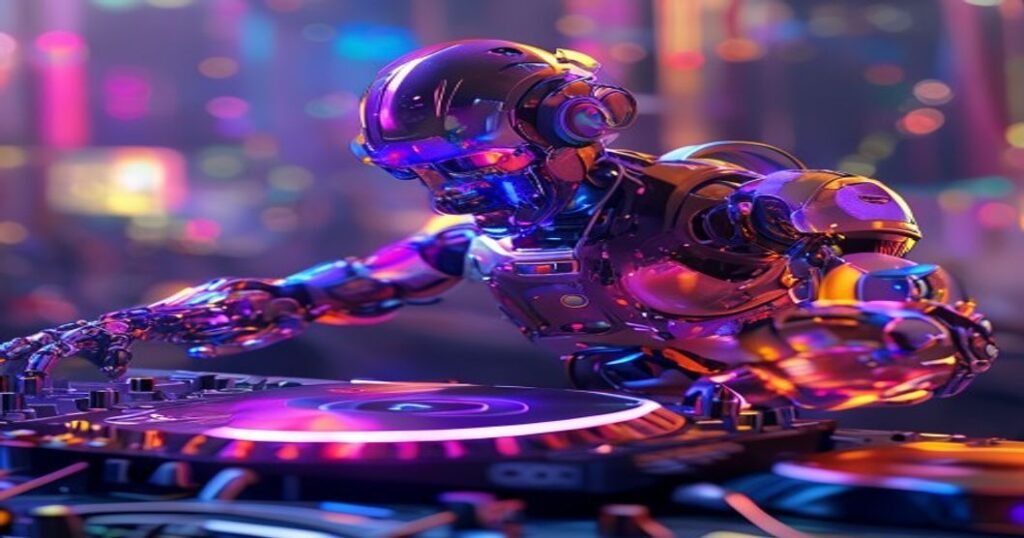

Alright, let’s be honest. When you hear ‘Artificial Intelligence,’ your mind probably jumps to robots taking over the world, self-driving cars, or maybe even those super-smart chatbots you argue with online. But what if I told you that AI has already snuck its way into your most cherished downtime activities? That’s right, the very fabric of how we consume movies, listen to music, play games, and even binge-watch our favorite creators is being quietly, but dramatically, remixed by AI. And the craziest part? Many of us haven’t even fully noticed the seismic shift happening beneath our very screens and headphones.
Forget the futuristic fantasies for a moment. The AI Revolution Isn’t Coming, It’s Already Here: Why You’re Living In The Future (And Didn’t Even Notice). It’s not just in the labs; it’s in the studios, the production houses, the editing suites, and even the recommendation engines that know your tastes better than your closest friends. It’s an unstoppable force, a creative collaborator, and, yes, sometimes a controversial disruption, that’s reshaping the entire entertainment landscape. Let’s pull back the curtain and see how deep this rabbit hole goes.
Hollywood’s New Script: From VFX to Virtual Actors
Think about your favorite blockbusters. Those mind-bending visual effects, those impossibly detailed CGI creatures, the seamless de-aging of beloved actors – a lot of that magic is now being turbocharged by AI. It’s no longer just about painstaking manual work; AI algorithms are making complex simulations faster, rendering fantastical worlds more realistic, and even helping artists refine their creations with unprecedented efficiency. Deepfake technology, while often discussed with a hint of fear, is also being explored (and legally protected, one hopes!) for scenarios like creating digital doubles for stunt work or historical re-enactments without needing an actor on set.
Beyond the visual spectacle, AI is diving into the very heart of storytelling. Imagine AI assisting screenwriters by analyzing vast databases of successful movie plots, character arcs, and dialogue patterns to identify what resonates with audiences. It can suggest alternative endings, predict audience engagement with specific scenes, or even generate initial script drafts. While a human touch remains indispensable for true narrative brilliance, AI is proving to be an incredible brainstorming partner, pushing creative boundaries and streamlining the pre-production process.
Then there’s the growing conversation around virtual actors. While still in its nascent stages, the idea of photorealistic, AI-generated performers capable of delivering lines, emoting, and performing stunts without a human counterpart is both thrilling and unsettling. It opens up avenues for eternal characters, cost-effective productions, and entirely new forms of storytelling. Of course, the ethical implications and the role of human actors in such a future are hot topics of debate. But one thing is clear: the silver screen is undergoing an unprecedented transformation, and the entertainment industry is realizing that The AI Avalanche: Why Your Business Can’t Afford to Just Watch (And What to Do NOW).
The Soundtrack of Tomorrow: AI Composing, Personalizing, and Performing
Your ears aren’t immune to the AI revolution either. Artificial intelligence is quietly revolutionizing the music industry, from how songs are composed to how they reach your ears.
-
Algorithmic Composition:
AI tools can now generate original musical pieces in various genres. While not always possessing the soul of a human composer, these programs are incredible at creating background scores for videos, jingles for advertisements, or even entire instrumental tracks. This democratizes music creation, allowing aspiring artists without formal training to produce polished tracks.
-
Personalized Playlists and Discovery:
This is where AI has been in our lives for ages, often unnoticed. Streaming services like Spotify and Apple Music use sophisticated AI algorithms to analyze your listening habits, suggest new artists you’ll love, and curate daily mixes that feel almost telepathic. This isn’t just a convenience; it’s fundamentally changed how we discover and engage with music, creating a personalized sonic universe for every listener.
-
Virtual Artists and Voice Synthesis:
From Hatsune Miku to AI-generated vocals mimicking deceased legends, the concept of a non-human musical performer is no longer science fiction. AI can synthesize incredibly realistic singing voices, allowing for unique artistic expressions or even helping artists refine their own vocal tracks. This pushes the boundaries of who, or what, can be a ‘musician.’
The debate rages on about originality and copyright, but there’s no denying that AI offers powerful new instruments for musicians and unprecedented personalization for listeners. It’s a compelling example of how The AI Quake: Why Every Corner of Your World is Shifting (And You Barely Noticed) – even in something as deeply human as music.
Gaming’s Next Level: Smarter Worlds, Deeper Immersion
For gamers, AI isn’t just a fancy add-on; it’s woven into the very fabric of modern interactive entertainment. Think about it:
-
Intelligent NPCs:
Non-Player Characters (NPCs) are becoming astonishingly sophisticated. AI governs their behaviors, reactions, and dialogue, making game worlds feel more alive and unpredictable. Instead of following rigid scripts, modern NPCs can adapt to player actions, remember past interactions, and even learn, leading to truly dynamic and immersive experiences.
-
Procedural Generation:
Many open-world games use AI to procedurally generate vast landscapes, dungeons, and even quests. This allows for virtually infinite replayability and ensures that no two player experiences are exactly alike, creating expansive universes that would be impossible to hand-craft.
-
Adaptive Difficulty and Personalization:
AI can analyze a player’s skill level and adjust game difficulty on the fly, ensuring a challenging yet never frustrating experience. It can also personalize content, recommending quests, gear, or even story paths based on a player’s previous choices and playstyle.
The line between reality and simulation blurs further with every AI innovation in gaming, creating experiences that are richer, more responsive, and incredibly engaging.
The Creator Economy, Supercharged by AI
It’s not just the big studios and labels feeling the AI influence. Individual content creators – the YouTubers, Twitch streamers, TikTok stars, and independent podcasters – are leveraging AI to elevate their game and compete in an increasingly crowded digital landscape.
AI-powered editing software can automate tedious tasks like cutting out dead air, adding subtitles, or even generating rough cuts. AI can help with scriptwriting prompts, generate captivating thumbnail images, or even compose royalty-free background music. Tools exist that analyze audience engagement, suggesting optimal posting times or content topics based on performance data. For many small businesses and individual entrepreneurs in the content space, the message is clear: The AI Tsunami: Why Every Business, Big or Small, Needs to Ride the Wave or Drown. Embracing these tools isn’t just about efficiency; it’s about unlocking new creative potential and reaching wider audiences.
The Ethical Maze and Creative Crossroads
Of course, this powerful shift isn’t without its challenges and controversies. The rapid rise of AI in entertainment brings forth crucial questions:
- Job Displacement: Will artists, writers, musicians, and editors find their roles diminished or replaced by AI? The concern is real, and the industry is grappling with how to adapt and reskill its workforce.
- Originality and Copyright: Who owns the copyright to AI-generated content? How do we protect human creativity when machines can mimic or even generate new works? These are complex legal and ethical quandaries being debated globally.
- Authenticity and Deepfakes: As AI gets better at creating hyper-realistic images and voices, distinguishing between what’s real and what’s manipulated becomes increasingly difficult. This raises concerns about misinformation, consent, and the very nature of trust in media.
- Homogenization of Creativity: If AI is trained on existing data, will it lead to a lack of true innovation, simply regurgitating patterns rather than pioneering new artistic expressions? The fear is that a reliance on AI could stifle the unique, unpredictable spark of human genius.
My take? While these concerns are valid and need robust solutions, I believe AI will ultimately serve as a powerful *tool* for human creators, rather than a total replacement. It will elevate the baseline, allowing artists to focus on the higher-level conceptual and emotional aspects of their work, leaving the more repetitive or data-intensive tasks to the machines. The human element of storytelling, emotion, and unique perspective will always be irreplaceable. But we must navigate this era carefully, establishing ethical guidelines and fostering a collaborative environment where humans and AI augment each other.
Embracing the AI Era: A New Canvas for Creativity
The truth is, AI is no longer a futuristic concept confined to sci-fi movies; it’s here, now, weaving itself into the very fabric of our entertainment. From the epic CGI battles in your favorite films to the personalized soundtrack of your life, from the infinitely explorable worlds of video games to the viral content crafted by your favorite online personalities, AI is undeniably the silent partner in much of the magic we consume. It’s exhilarating, a little daunting, and absolutely fascinating.
As consumers, we’re experiencing richer, more personalized, and often more spectacular entertainment than ever before. For creators and businesses in the entertainment space, ignoring this wave isn’t an option. It’s about understanding its capabilities, navigating its challenges, and most importantly, harnessing its power to tell stories, evoke emotions, and create experiences that were once only imaginable. The show, powered by AI, has just begun.


