
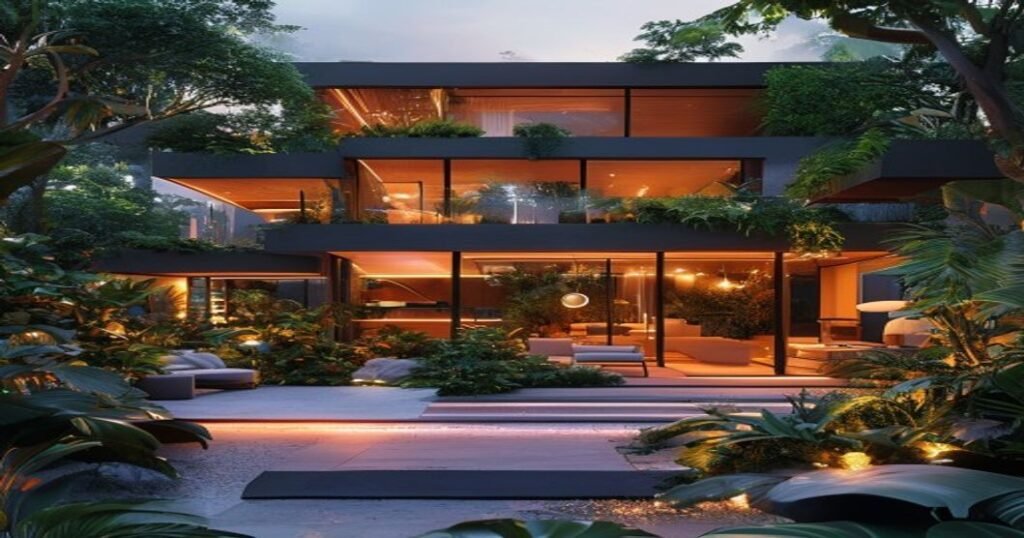

Ever walk into a space that just *feels* right? A place where your shoulders drop, your breath deepens, and a sense of calm washes over you? For far too long, our homes have been mere shelters, places to eat and sleep. But something profound is shifting in the world of interior design, something that promises to transform our living spaces into true sanctuaries – responsive, nurturing, and utterly intelligent.
We’re talking about the incredible convergence of biophilic design and smart home technology. It’s not just about adding a few plants or installing a fancy thermostat; it’s a holistic philosophy that’s redefining what ‘home’ truly means. Think of it: the soothing embrace of nature combined with the seamless efficiency of cutting-edge tech, all working in harmony to elevate your well-being. If you’re looking to create a space that doesn’t just house you, but truly *heals* and *empowers* you, then buckle up, because this is the future you’ve been dreaming of.
The Whispers of the Wild: Rediscovering Biophilic Design
Let’s start with biophilic design. It’s not a new concept, but its relevance has skyrocketed in our increasingly digital, urbanized lives. At its core, biophilia is our innate human connection to nature and other living systems. Biophilic design, therefore, is the practice of bringing the natural world indoors, not just aesthetically, but functionally and experientially.
Why now? Because we’re more disconnected from nature than ever before. We spend an overwhelming amount of time indoors, staring at screens, under artificial lights. This detachment takes a toll on our mental and physical health, leading to stress, fatigue, and even what some call ‘nature deficit disorder’. Biophilic design offers a powerful antidote, weaving elements of the natural world back into our daily environments.
More Than Just Pretty Plants: The Profound Benefits
- Mental Wellness: Studies consistently show that exposure to nature reduces stress, improves mood, and enhances cognitive function. Imagine a living room that actively calms your mind after a long day.
- Physical Health: Improved air quality from plants, better sleep patterns due to natural light exposure, and even reduced blood pressure are all documented benefits.
- Productivity and Creativity: In work-from-home settings, biophilic elements can boost focus and spark innovative thinking.
- Enhanced Aesthetics: Let’s be honest, nothing beats the organic beauty and vibrant life that natural elements bring to a space.
Implementing biophilic design goes beyond a few potted plants (though those are a great start!). It involves maximizing natural light, incorporating natural materials like wood, stone, and cork, choosing colors inspired by nature, creating views to the outdoors, and even mimicking natural patterns and shapes in your decor. It’s about designing a space that feels alive, breathing, and deeply connected to the world outside your walls.
The Brainy Abode: Understanding the Smart Home Evolution
On the other side of the coin, we have smart home technology. For many, ‘smart home’ still conjures images of complicated gadgets or quirky voice assistants. But the reality now is far more sophisticated. We’re moving beyond simple automation – turning lights on and off with an app – into a realm where our homes are truly intelligent, responsive, and predictive.
The latest iteration of smart homes isn’t just about convenience; it’s about creating an optimized living environment tailored specifically to you. Imagine lighting that adjusts throughout the day to support your circadian rhythms, mimicking the natural progression of sunlight. Think of heating and cooling systems that learn your preferences and optimize energy usage not just for savings, but for your comfort and wellness. We’re talking about integrated systems that monitor air quality, manage humidity, and even subtly adjust ambient sounds to create the perfect atmosphere.
This isn’t just smart software running a few devices; it’s rewriting the reality of how we interact with our immediate environment. Our homes are becoming active participants in our lives, anticipating needs and proactively creating the ideal conditions for our well-being. It’s a huge leap from simple remote controls to an intuitive ecosystem that truly understands and supports its inhabitants.
The Seamless Symphony: Blending Nature’s Calm with Tech’s Intelligence
Here’s where the magic truly happens: when biophilic design and smart home technology stop being two separate concepts and start working together in a seamless symphony. This isn’t just about coexistence; it’s about mutual enhancement. Smart tech can amplify the benefits of biophilic design, and nature can soften the perceived harshness of technology.
- Automated Natural Light: Smart blinds and tunable lighting systems can mimic the sun’s natural patterns, ensuring you get optimal daylight exposure during the day and warm, dim light in the evenings, supporting healthy sleep cycles.
- Smart Plant Care: Integrated sensors can monitor soil moisture, light levels, and nutrient needs for your indoor plants, automating watering systems to keep your green companions thriving with minimal effort.
- Air Quality Management: Smart air purifiers and ventilation systems, often hidden within biophilic elements like living walls, can maintain optimal air quality, silently filtering pollutants and allergens.
- Sensory Immersion: Picture a system that, based on your mood or the time of day, can activate nature-inspired scents, play soothing ambient sounds (like rain or forest noises), and adjust lighting to create a truly immersive, calming environment.
When you combine these elements, your home becomes a responsive, living entity. It’s an environment that literally adapts to you, optimizing comfort, enhancing health, and fostering a deeper connection to the natural world. This comprehensive integration of physical space and digital intelligence is so profound, it feels like Generative AI is becoming our world’s new operating system, starting right within the walls of our homes.
Designing for Tomorrow: Personalization, Sustainability, and a Shift in Mindset
The beauty of this trend lies in its capacity for deep personalization. AI-driven systems can learn your routines, your preferences, and even your biological responses to different environments. This means your home isn’t just smart; it’s uniquely *yours*, a custom-tailored sanctuary that responds to your individual needs in real-time. Imagine waking up to simulated dawn, the gentle aroma of essential oils diffusing, and your favorite calming music playing softly, all orchestrated by your intelligent home.
Furthermore, this integration is a huge win for sustainability. Smart systems optimize energy consumption, reduce waste (think smart irrigation for plants!), and can even help you make more eco-conscious choices by providing data on your environmental impact. It’s about creating homes that are not only good for us but good for the planet too.
For interior designers, architects, and even homeowners, embracing this fusion requires a shift in perspective. It’s no longer just about aesthetics or functionality in isolation; it’s about understanding systems, data, and the intricate dance between human well-being and technological prowess. Frankly, the skills required in this evolving landscape are changing rapidly, demanding a blend of human creativity and an understanding of artificial intelligence to craft these sophisticated, future-forward spaces.
The Human Touch: Navigating the Challenges
Of course, no revolution comes without its hurdles. The initial investment for truly integrated smart home and biophilic systems can be significant. There’s also the complexity of installation and maintenance, and valid concerns around data privacy and security. But as technology becomes more accessible and intuitive, these barriers are steadily decreasing.
Crucially, as our homes become ‘smarter’, the human element remains paramount. Technology is a tool, an enabler. It should serve to enhance our lives, not overshadow the irreplaceable value of human connection, aesthetic preference, and the simple joy of a space that feels genuinely like home. The best designs will always strike a delicate balance, leveraging technology to amplify nature’s benefits while ensuring the space feels inviting, authentic, and emotionally resonant.
Embrace Your Intelligent Oasis
The merging of biophilic design and smart home technology isn’t just a fleeting trend; it’s a profound shift in how we conceive and interact with our living spaces. It’s an invitation to create homes that are not just beautiful, but deeply nurturing, intelligently responsive, and truly life-enhancing. Imagine a home that actively supports your health, calms your mind, and inspires your spirit, all while operating with effortless efficiency.
This future is not distant; it’s being built now, one integrated, intelligent, and naturally inspired sanctuary at a time. Are you ready to transform your space into a place where nature’s calm meets tech’s brilliance, creating the ultimate haven for mind, body, and soul?


