
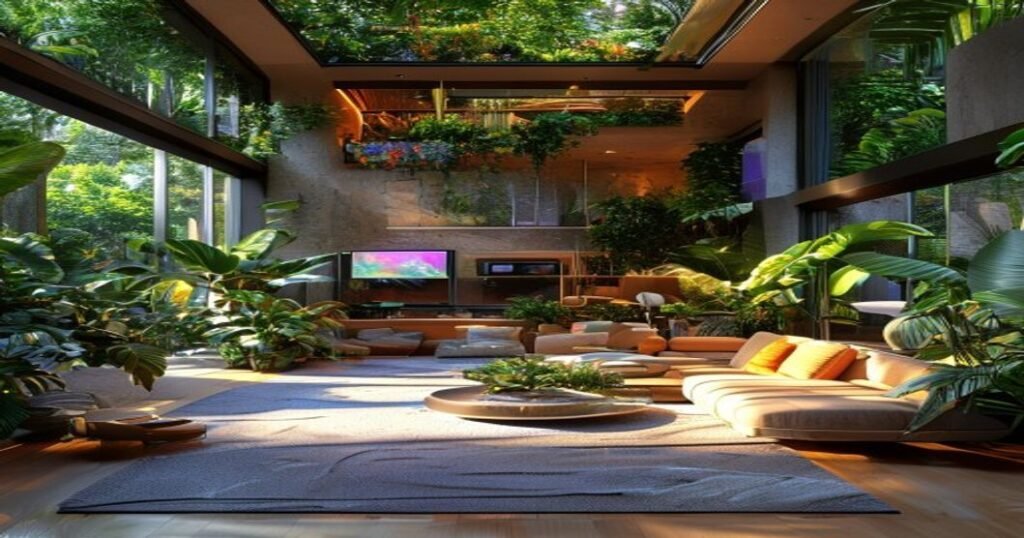

Alright, let’s talk about our homes. For centuries, they’ve been our sanctuaries, our comfort zones, the places where we kick off our shoes and truly unwind. But something incredible is happening right now, a quiet revolution that’s transforming our living spaces from mere shelters into vibrant, responsive ecosystems. We’re seeing a magnificent merger of two seemingly disparate worlds: the calming, life-affirming principles of biophilic design and the cutting-edge intelligence of smart home technology. And honestly, it’s about time.
Think about it. We spend an unprecedented amount of our lives indoors, often staring at screens, disconnected from the very rhythms that govern our natural world. Simultaneously, technology has seeped into every corner of our existence, promising convenience and control. For a while, it felt like a dichotomy: either you embraced sterile, futuristic minimalism with all the gadgets, or you opted for rustic, ‘unplugged’ tranquility. But what if we could have both? What if our homes could be as intelligent as they are inspiring, as connected as they are calming?
The Biophilic Awakening: Why We Crave Green
First, let’s peel back the layers of biophilic design. It’s not just about adding a few potted plants – though those are certainly part of it! Biophilia, a term popularized by E.O. Wilson, suggests that humans possess an innate tendency to connect with nature and other living systems. In design, this translates into creating environments that satisfy this deep-seated craving. We’re talking about spaces that:
- Maximise natural light and ventilation.
- Incorporate natural materials like wood, stone, and bamboo.
- Feature living plants, water elements, and natural patterns.
- Offer views of nature, whether through actual windows or carefully curated art.
- Mimic natural forms and processes, such as fractal patterns or variable light conditions.
Why does this matter? Because research overwhelmingly shows that exposure to nature, even indirect, reduces stress, improves mood, enhances creativity, and boosts overall well-being. In an increasingly urbanised, fast-paced world, our homes become vital havens where we can recharge, refocus, and reconnect. Who wouldn’t want a living room that feels like a tranquil forest glade or a bedroom that evokes the serenity of a mountain retreat?
The Smart Home Evolution: Beyond the Blinking Lights
On the flip side, we have the incredible ascent of smart home technology. What once felt like a novelty or a sci-fi fantasy is now firmly embedded in mainstream living. From smart thermostats that learn our preferences to automated lighting that adjusts to the time of day, our homes are becoming more responsive, efficient, and personalised. It’s no longer just about turning lights on with your voice; it’s about creating an ambient environment that anticipates your needs.
And let’s be honest, the tech scene is moving at warp speed. Just look at the general trajectory of innovation. It feels like we’re constantly on the cusp of the next big thing, always pushing boundaries. This relentless pursuit of innovation extends to our living spaces, promising unparalleled convenience and comfort.
Where Jungles Meet Circuits: The Seamless Integration
Now, here’s where it gets really exciting: the beautiful synergy of biophilia and smart tech. Imagine a home that not only *looks* natural but also *feels* natural, orchestrated by unseen intelligence. This isn’t just a dream; it’s happening right now:
1. Dynamic Lighting That Mimics Nature
Forget harsh overheads. Smart lighting systems can now adjust their colour temperature and intensity throughout the day, mimicking the natural circadian rhythms of the sun. Waking up to a gentle, warm glow that slowly brightens, then transitioning to cool, crisp light for productivity during the day, and finally winding down with a soft, amber hue in the evening – this is a biophilic smart home in action. It supports our natural sleep-wake cycles, improving mood and energy.
2. Automated Plant Care and Vertical Gardens
Green walls and indoor gardens are stunning, but maintaining them can be a chore. Enter smart irrigation systems, self-watering planters, and even hydroponic setups connected to apps. These systems monitor soil moisture, light levels, and nutrient delivery, ensuring your leafy companions thrive without you lifting a finger. Imagine a living wall that practically cares for itself, a vibrant, oxygen-rich backdrop to your daily life.
3. Air Quality and Climate Control with a Natural Touch
Smart air purifiers and humidifiers work in tandem with climate control systems to maintain optimal indoor air quality and temperature. But imagine integrating these with natural ventilation strategies – smart windows that open automatically when outdoor air quality is good, or sensors that detect pollutants and trigger air purification. It’s about creating an internal atmosphere that feels as fresh and pure as a walk in the woods.
4. Soundscapes and Olfactory Experiences
Our homes aren’t just visual spaces. Smart speakers can now play ambient nature sounds – the gentle rustle of leaves, distant birdsong, the calming murmur of a stream – helping to mask urban noise and promote relaxation. Diffusers, controlled by smart apps, can release natural essential oils, creating subtle, soothing olfactory environments that further enhance the biophilic experience.
5. Virtual Windows and Dynamic Art
For those living in urban environments with limited access to actual nature views, technology offers a stunning alternative. High-definition screens can display breathtaking, real-time nature scenes, complete with changing weather patterns and wildlife. Imagine a ‘window’ in your apartment that cycles through a serene forest landscape, a bustling coral reef, or a calming mountain vista. It’s an immersive, dynamic form of biophilic art that adapts to your mood or the time of day.
The Orchestrator: How AI is Making it Seamless
Behind much of this seamless integration lies the power of Artificial Intelligence. AI isn’t just for complex algorithms or futuristic robots; it’s the invisible hand orchestrating the symphony of your smart biophilic home. It learns your preferences, anticipates your needs, and intelligently manages all the connected systems to create an optimal environment. From optimising energy use to personalising your daily wellness routine, AI is the brain enabling the heart of your home to beat in harmony with nature.
And let’s be clear: this isn’t just a niche trend for early adopters. The influence of AI is a seismic shift, The AI Tsunami: Why You Can’t Afford to Ignore the Silent Revolution That’s Reshaping Our World. It’s fundamentally altering how we interact with our environments, making complex systems intuitive and personal. In interior design, AI-powered tools are helping designers visualise and implement these intricate systems, from initial concept to final execution, ensuring that the technology enhances, rather than detracts from, the natural aesthetic.
The Creative Edge: AI Empowering Designers and Homeowners
It’s not just about automation; it’s about empowerment. Designers are increasingly leveraging AI to explore biophilic principles and smart home integration with unprecedented speed and precision. AI can generate countless design iterations, analyse thermal performance, simulate natural light, and even suggest ideal plant species based on indoor conditions. For homeowners, AI-driven apps make it easier than ever to customise and control their environments, truly making the home their own personal sanctuary. In fact, it’s fair to say that How AI is Rewriting the Rules of Content Creation (And Why You Can’t Afford to Be Left Behind), extending far beyond text and images into the very fabric of spatial design and experience.
A Glimpse into the Future: What’s Next?
The convergence of biophilic design and smart home technology is still in its nascent stages, yet its potential is boundless. We can anticipate even more sophisticated integrations:
- Personalised Wellness Pods: Dedicated zones within the home that adapt to individual biometric data, adjusting light, temperature, sound, and aroma to optimise for sleep, meditation, or intense focus.
- Biologically Integrated Architecture: Buildings that are literally alive, with self-healing materials, active facades that breathe, and integrated vertical farms that provide fresh produce.
- Haptic and Multisensory Feedback: Floors that mimic the feel of grass, walls that change texture, and interfaces that respond with natural sensations, blurring the lines between the digital and the organic.
- Community-Level Biophilic Smart Grids: Entire neighbourhoods designed around these principles, where homes communicate with each other and the environment to create sustainable, healthful communities.
This isn’t just about luxurious living; it’s about creating homes that actively contribute to our health and the planet’s well-being. And it’s an exciting time for innovation, with countless startups emerging to tackle different facets of this grand challenge. Whether it’s developing new sustainable materials, creating smarter sensors, or designing intuitive user interfaces, the entrepreneurial spirit is clearly igniting a future where our homes are truly harmonious. Pakistan’s Digital Odyssey: How Youth and Tech are Igniting a Future, One Startup at a Time, is just one example of how new ventures are pushing boundaries, not just in digital tech but also in how we conceive and construct our living spaces.
Challenges and the Path Forward
Of course, like any powerful trend, there are challenges. The initial cost of implementing advanced smart biophilic systems can be a barrier for many. There are also considerations around data privacy and ensuring that technology enhances rather than overwhelms our natural environments. The goal isn’t to replace nature with technology but to use technology to deepen our connection to it.
As a content creator and SEO expert, I find this field particularly fascinating. It’s a compelling narrative of human ingenuity meeting our primal need for nature, all powered by the very technology that often threatens to disconnect us. It’s about building homes that are not just smart, but wise – spaces that understand us, nurture us, and help us thrive.
Conclusion: Embrace the Future Home
The blending of biophilic design and smart home technology represents the pinnacle of modern interior design – a holistic approach that prioritises human well-being and ecological responsibility. It’s an invitation to reimagine our homes not just as places we live, but as active partners in our health, happiness, and productivity. So, if you’re thinking about your next home renovation or designing a new space, consider how you can invite both the wild and the wired to coexist beautifully. The future of living is green, smart, and utterly captivating.


