
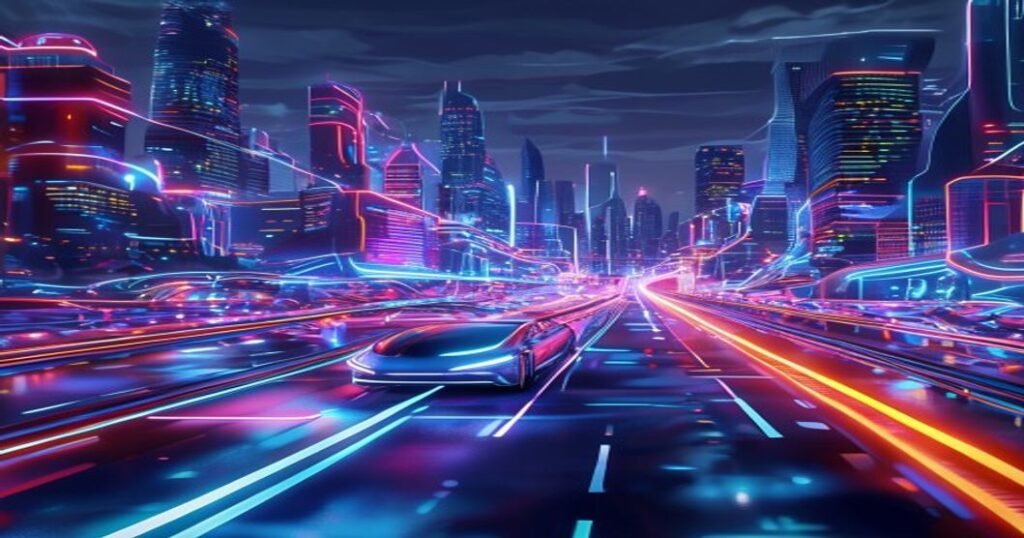

Alright, let’s talk cars. But not just any cars. We’re talking about the monumental, jaw-dropping transformation that’s sweeping through the automotive world right now. Forget everything you thought you knew about getting from point A to point B because the rules of the road are being fundamentally rewritten. This isn’t just an upgrade; it’s a complete paradigm shift, driven by two titans: Electric Vehicles (EVs) and Artificial Intelligence (AI).
As someone who’s watched technology evolve and reshape industries, I can tell you, the auto sector is in the midst of its most exciting, and perhaps most terrifying, upheaval yet. It’s like the advent of the internal combustion engine all over again, but this time, it’s faster, smarter, and far more interconnected. So, buckle up, because we’re about to explore how these forces aren’t just changing what we drive, but how we live, work, and move.
The Electric Juggernaut Isn’t Just Humming, It’s Roaring
Remember when EVs felt like a niche, eco-conscious choice? A novelty for the early adopters? Well, those days are long gone. The electric vehicle revolution has moved from a quiet hum to a full-blown roar, and it’s exhilarating to witness. Everywhere you look, new models are hitting the market, range anxiety is becoming a distant memory, and the charging infrastructure is evolving at a breakneck pace. We’re seeing nations commit to electric futures, manufacturers retooling entire factories, and consumers embracing the instant torque and silent sophistication of electric propulsion.
It’s not just about reducing emissions, though that’s a massive win. It’s about a superior driving experience. The instant acceleration of an EV is addictive, the low center of gravity provides exceptional handling, and the reduced maintenance is a blessing for wallets. What we’re experiencing is a profound shift in consumer expectations, where performance, sustainability, and cutting-edge tech converge. It’s a testament to ingenuity, proving that cleaner doesn’t mean less powerful, and often, it means far more refined. In fact, it’s part of The Silent Revolution: How Electric Vehicles and AI Are Rewriting the Future of Driving (and What It Means for YOU).
AI: The Unseen Driver of Tomorrow’s Roads
While EVs provide the electrified muscle, AI is the intelligent brain powering the entire operation. It’s the secret sauce, the invisible hand guiding cars towards a future that was once relegated to sci-fi films. AI isn’t just making cars ‘smarter’; it’s fundamentally rethinking their role and capabilities. From advanced driver-assistance systems (ADAS) that prevent accidents to sophisticated infotainment platforms that learn your preferences, AI is interwoven into every fiber of modern automotive design.
Think about it: your car can now see more than you can, react faster, and even predict potential hazards before they fully materialize. Lane-keeping assist, adaptive cruise control, automatic emergency braking – these aren’t just features; they’re the nascent stages of autonomous driving, all powered by complex AI algorithms processing vast amounts of sensor data in real-time. This isn’t just evolving; it’s radically reshaping our entire world, and you. Truly, The AI Earthquake: How Artificial Intelligence Isn’t Just Evolving, It’s Radically Reshaping Our Entire World (and YOU!) is happening in the auto industry.
Beyond Self-Driving: A Connected Ecosystem
But AI’s influence extends far beyond merely driving the car. It’s creating a connected ecosystem. We’re talking about Vehicle-to-Everything (V2X) communication, where cars don’t just ‘see’ their surroundings but talk to them. They communicate with other vehicles (V2V), with traffic infrastructure (V2I) like smart traffic lights, and even with pedestrians’ smartphones (V2P). Imagine a world where traffic jams are dramatically reduced because vehicles are coordinating their movements, where emergency vehicles automatically clear paths, and where your car pre-orders your coffee as you approach your favorite café.
This level of connectivity, orchestrated by AI, transforms the car from a solitary mode of transport into a node in a vast, intelligent network. It promises not just safer roads, but more efficient use of resources, reduced pollution, and ultimately, a better quality of life in urban environments. It’s an undeniable force, an AI Avalanche: Why Everything You Thought You Knew About The Future Just Got Rewritten.
The Ethical Crossroads of Autonomous Intelligence
Of course, with such transformative power comes significant questions and challenges. The ethical implications of autonomous vehicles are profound. Who is liable in an accident involving a self-driving car? How do these algorithms make life-or-death decisions in unavoidable scenarios? And what about the immense amount of data these vehicles collect? Privacy concerns are paramount, and the development of robust, transparent ethical frameworks is as crucial as the technological advancements themselves.
Then there’s the human element. The joy of driving, the open road, the feeling of control – will these become relics of a bygone era? While autonomous technology promises to free up commute time and reduce stress, there’s an undeniable emotional attachment many of us have to our vehicles and the act of driving. Balancing progress with preserving these aspects of human experience will be a delicate dance.
What This Means for YOU: Driver, Passenger, Innovator
For individuals, the impact is multifaceted. If you’re a driver, your relationship with your car will change. Instead of being solely focused on the road, you might become a passenger in your own vehicle, using the commute time for work, entertainment, or relaxation. This shift in how we perceive and use our vehicles will have ripple effects across urban planning, car ownership models (think more subscription services and shared mobility), and even the design of our cities.
For those in the workforce, especially in sectors tied to transportation, adaptation is key. The demand for mechanics specializing in internal combustion engines might decrease, while the need for software engineers, AI ethicists, data scientists, and technicians for electric powertrains will skyrocket. It’s a compelling reminder that to truly thrive in this rapidly evolving landscape, you need to Future-Proof Your Career: The Essential Skills You Need NOW for the AI-Powered Job Market! The auto industry is no exception; it’s at the forefront of this skills revolution.
The Road Ahead: Navigating the New Auto Frontier
We are standing at the precipice of a mobility revolution, one that promises unprecedented safety, efficiency, and convenience. The convergence of EVs and AI isn’t just about faster, cleaner, or smarter cars; it’s about reimagining our entire transportation paradigm. It’s about reclaiming countless hours currently lost to traffic, reducing the environmental footprint of travel, and creating a more integrated, responsive world.
Challenges remain, particularly in regulation, ethical considerations, and infrastructure development. But the momentum is undeniable. The auto industry, once a bastion of tradition, is now leading the charge into a future defined by intelligence and electricity. It’s a future that promises to be wild, exciting, and utterly transformative for everyone on the planet.
So, as you look at the cars on the road today, know that you’re witnessing the tail end of one era and the thrilling dawn of another. The automotive landscape is no longer just about horsepower and torque; it’s about processing power and connectivity. And honestly, I can’t wait to see what drives us next.


