
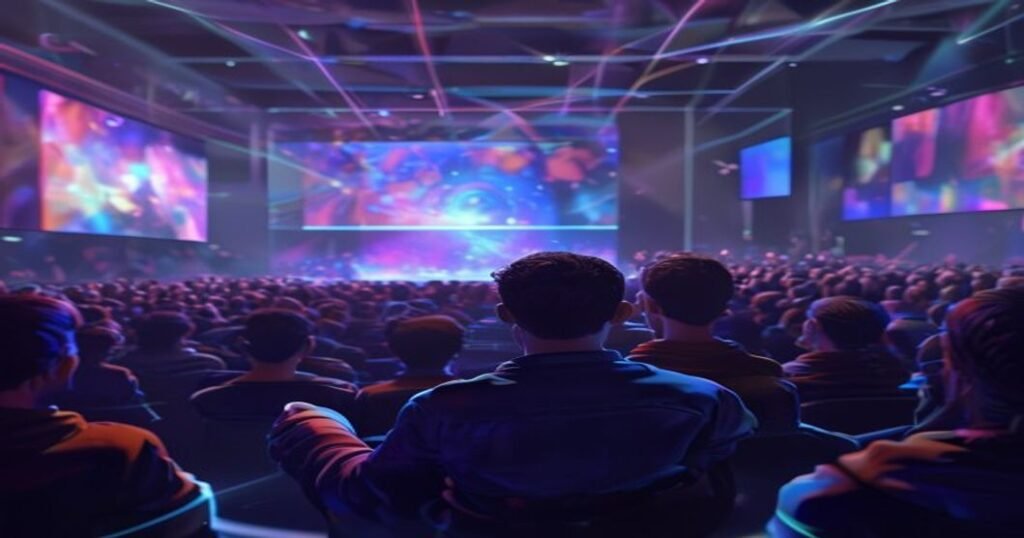

Welcome to 2026, where the lines between reality and imagination have not just blurred, but elegantly dissolved. The world of entertainment, once confined by screens and physical spaces, has undergone a seismic transformation, propelled by the unstoppable forces of Artificial Intelligence (AI), the burgeoning Metaverse, and breathtaking Holographic technology. This isn’t just about watching a show; it’s about living it, breathing it, and shaping it. For startupurdu.com, we delve into how these converging technologies are crafting an entertainment landscape so rich, so personal, and so utterly immersive, it promises to be nothing short of a hyper-real revolution.
The Dawn of Hyper-Personalized Narratives: AI as Your Personal Storyteller
Gone are the days of one-size-fits-all entertainment. In 2026, AI isn’t just a tool for recommendation engines; it’s an active participant in crafting the very fabric of our recreational experiences. Imagine a movie where the plot twists react to your real-time emotional responses, or a video game where non-player characters (NPCs) possess genuinely adaptive personalities, remembering your past interactions and evolving their behavior accordingly. This level of dynamic, hyper-real automation extends beyond simple choices, delving into complex psychological profiling to deliver content that resonates with your deepest desires and even challenges your perspectives.
Algorithmic Creativity: Beyond Human Imagination
- Dynamic Storylines: AI authors generate endless narrative branches based on user engagement.
- Adaptive Soundtracks: Music scores evolve in real-time to match the mood and action.
- Procedural World Generation: Environments in games and virtual experiences are uniquely tailored for each player, ensuring no two journeys are ever identical.
- Sentiment-Driven Content: AI monitors user sentiment (via biometric data, if opted in) to adjust pacing, character interactions, and thematic elements.
This personalization creates an unprecedented level of engagement, making every entertainment experience feel uniquely crafted for the individual. The implication for creators is profound, shifting focus from fixed productions to building sophisticated, adaptive frameworks that allow AI to perform the intricate task of real-time content generation.
The Metaverse: Your New Entertainment Universe
If AI provides the intelligence, the Metaverse offers the boundless stage. By 2026, the Metaverse is no longer a nascent concept but a vibrant, interconnected network of persistent virtual worlds where social interaction, commerce, and, crucially, entertainment, thrive. Virtual concerts featuring photorealistic avatars of real artists (or entirely AI-generated ones), immersive theatrical performances where you can step onto the stage, and interactive art installations that react to your presence are now commonplace.
Concerts, Festivals & Spectacles in the Digital Realm
The ability to attend a global music festival from your living room, with friends from across continents, all represented by highly customizable digital avatars, has revolutionized the live events industry. Artists are finding new avenues for expression and monetization, building bespoke virtual arenas and selling digital merchandise (NFTs) that offer unique experiences within the Metaverse. This expanding digital economy is not just changing how we consume entertainment but also unlocking the Metaverse Economy: AI-Powered Strategies for Business Dominance in 2026, creating entirely new revenue streams and brand opportunities.
Interactive Cinematic Experiences
Beyond passive viewing, the Metaverse ushers in an era of ‘participatory cinema.’ Imagine entering a virtual movie scene, conversing with characters, influencing plot decisions, and exploring narrative threads from multiple perspectives. These experiences leverage advanced VR/AR technologies, coupled with AI-driven character intelligence, to create stories that are no longer just watched but lived.
Holographic Entertainment: Blending Worlds
The dream of holograms has moved from science fiction to cutting-edge reality by 2026, serving as a crucial bridge between the purely digital Metaverse and our physical world. Holographic technology, powered by sophisticated AI and advanced optical systems, allows for projections that are indistinguishable from reality, appearing to occupy physical space. This is not just about static images; these are dynamic, interactive, and often tactile experiences.
Live Holographic Performances
From a stadium-sized holographic pop star performing simultaneously in multiple cities to intimate holographic storytelling sessions in your living room, this technology is bringing digital artistry into our physical environments. Imagine attending a play where actors are physically present, but an entire magical forest, an ancient city, or alien creatures are rendered holographically around them, reacting to their movements and the audience’s presence.
Augmented Reality (AR) Experiences: The Everyday Metaverse
While the full Metaverse often implies dedicated VR headsets, AR applications are bringing holographic entertainment into our daily lives through smart glasses and advanced smartphone projections. Public spaces transform into interactive art galleries, historical landmarks offer holographic tours with AI-powered guides, and even mundane objects can be augmented with playful, AI-generated characters that interact with you.
The Technological Backbone: 6G and Advanced AI
None of this hyper-real entertainment would be possible without a robust technological foundation. By 2026, the rollout of 6G networks provides the ultra-low latency and immense bandwidth critical for seamless, high-fidelity Metaverse and holographic experiences. Coupled with advancements in AI processing, which can render complex graphics, manage vast data flows, and generate real-time interactive content, the infrastructure is finally catching up with our wildest imaginations. Indeed, the synergy between 6G, AI, and the Metaverse: The Telecom Triad Redefining Connectivity by 2026 is the unsung hero enabling this new era of entertainment.
The New Creator Economy & Investment Boom
This revolution isn’t just for consumers; it’s igniting an unprecedented boom for creators, developers, and investors. New skill sets are in demand: metaverse architects, AI narrative designers, holographic experience engineers, and virtual fashion stylists. This era marks The Great Reshuffle: Navigating AI & Metaverse Careers in 2026 and Beyond, as traditional roles evolve and entirely new professions emerge to build and populate these digital worlds. The financial implications are equally staggering, with massive venture capital flowing into startups at the cutting edge of AI, VR, AR, and holographic tech. Understanding The Great AI-Metaverse Investment Boom: Navigating Opportunities & Risks in 2026 is crucial for anyone looking to capitalize on this transformative period.
Opportunities for Content Creators:
- Digital Real Estate: Designing and monetizing virtual venues and experiences.
- AI Companions: Crafting sophisticated AI personalities for interactive entertainment.
- Holographic Art: Creating immersive art installations for public and private spaces.
- Avatar Customization: Developing and selling unique digital fashion and accessories.
Challenges and Ethical Considerations
While the future of entertainment is dazzling, it’s not without its complexities. The proliferation of hyper-realistic AI-generated content raises questions about authenticity and the potential for deepfakes. Data privacy becomes paramount as AI systems collect vast amounts of user information to personalize experiences. Furthermore, accessibility and digital divides remain critical challenges, ensuring that this incredible future of entertainment is available to everyone, not just a privileged few.
Navigating the New Frontier:
- Authenticity vs. AI-Generated Content: Establishing clear guidelines and ethical frameworks.
- Data Security and Privacy: Robust protocols for protecting user biometric and behavioral data.
- Digital Addiction: Addressing the potential for over-immersion in virtual worlds.
- Inclusive Access: Ensuring affordability and technological access for diverse populations.
The Future Beyond 2026: An Ever-Evolving Canvas
2026 marks a significant milestone, but it’s merely a stepping stone. The synergy between AI, the Metaverse, and holographic technology is an ever-evolving canvas. We can anticipate even more sophisticated neural interfaces, allowing for direct thought-to-digital interaction; sensory feedback systems that truly simulate touch, taste, and smell in virtual environments; and an even deeper integration of AI into every facet of creative production. The boundaries of what constitutes ‘entertainment’ will continue to expand, pushing the limits of human perception and imagination.
Conclusion: Embrace the Hyper-Real
The entertainment landscape of 2026 is a testament to human ingenuity and technological ambition. It’s a world where every story is personal, every experience is immersive, and every moment has the potential to be hyper-real. For consumers, it offers an unparalleled escape and engagement. For businesses and creators, it presents a frontier brimming with opportunities and challenges alike. At startupurdu.com, we believe that understanding these shifts is not just about predicting the future; it’s about actively participating in its creation. Get ready to embrace an entertainment revolution that will redefine how we play, learn, and connect in ways we once only dreamed of.


