
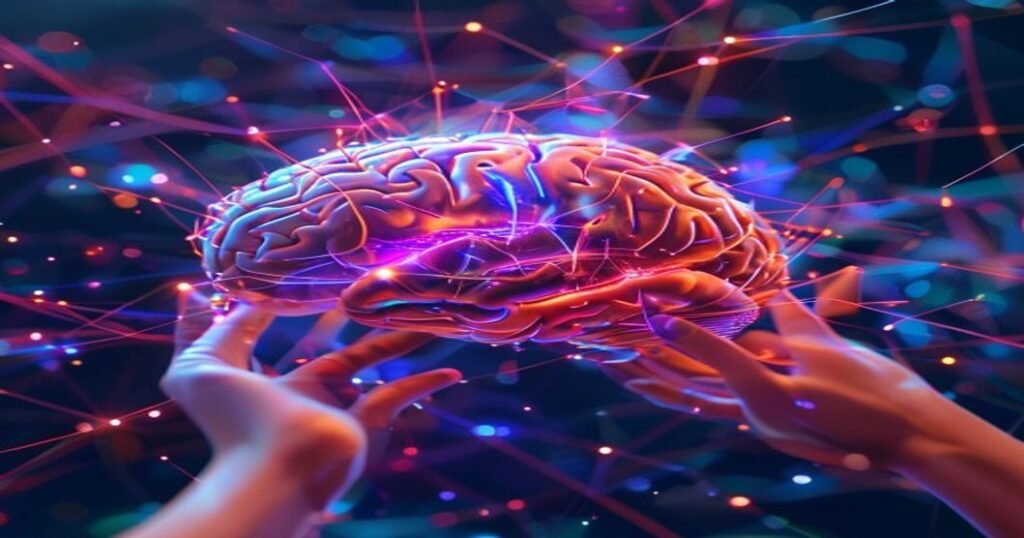

Remember when we used to marvel at sci-fi movies, picturing a future where machines thought for themselves? Well, that future isn’t just knocking; it’s practically moved in, rearranged the furniture, and is now brewing a cup of coffee. Artificial intelligence (AI) has transcended the realm of theoretical possibility to become an omnipresent force, subtly (and not so subtly) reshaping every facet of our existence. From the way we work to how we learn, interact, and even perceive reality, AI isn’t just a trend; it’s a fundamental rewiring of our entire world, and crucially, it’s rewiring you.
As someone who’s watched the tech landscape evolve at warp speed, I can tell you that what we’re witnessing now is unprecedented. It’s not just another technological advancement; it’s a paradigm shift that demands our attention, our understanding, and our active participation. Let’s dive deep into this transformative era and understand what it truly means for humanity.
The AI Avalanche: Where Did All This Change Come From?
For years, AI was a niche subject, confined to academic labs and specialized industries. Then, seemingly overnight, it exploded into the mainstream. Large language models, generative AI, sophisticated automation—these terms went from jargon to everyday conversation. It’s an AI avalanche, sweeping away old notions and challenging our deeply held beliefs about technology and its limits. What triggered this rapid acceleration?
A confluence of factors, really: vast improvements in computational power, the sheer volume of data available for training, and breakthroughs in algorithms. This perfect storm allowed AI to move beyond simple automation to sophisticated intelligence, capable of tasks that once required human intuition and creativity. Think about it: AI can now write articles, generate art, compose music, and even engage in surprisingly nuanced conversations. This isn’t just an upgrade; it’s a whole new operating system for society.
We see its influence everywhere. Your streaming service suggests your next binge-watch with uncanny accuracy, your navigation app deftly reroutes you around traffic, and even the clothes you buy online are often recommended by algorithms parsing your preferences. It’s woven into the fabric of daily life, often so seamlessly that we barely notice its pervasive presence. This subtle infiltration means that the ‘new normal’ isn’t a distant future; it’s happening right now, in your pocket, on your screen, and in the background of almost everything you do.
Beyond the Bot: Your Career Isn’t Disappearing, It’s Evolving
One of the most pressing questions, and understandably so, is about the future of work. Will robots take our jobs? It’s a fear as old as the industrial revolution, amplified now by AI’s ability to perform cognitive tasks. My opinion? While some roles will undoubtedly be automated, the narrative isn’t one of universal job loss, but of profound transformation and the creation of entirely new opportunities. This isn’t just about automation; it’s about augmentation.
Imagine repetitive, data-intensive tasks being handled by AI, freeing up human workers to focus on creativity, critical thinking, strategic planning, and interpersonal communication. These are uniquely human skills that AI, for all its brilliance, still struggles to replicate with genuine empathy and nuanced understanding. The smart move isn’t to compete with AI but to collaborate with it.
We’re already seeing new job titles emerge: AI trainers, AI ethicists, prompt engineers, AI-powered content strategists. These roles leverage human oversight and creativity to guide and refine AI systems. The key to thriving in this evolving landscape is adaptability and a commitment to continuous learning. Beyond the Bot: Why AI Won’t Just Steal Your Job, It’ll Spark Your Next Big Career Move, pushing us towards more fulfilling, human-centric endeavors.
Upskilling for the AI Age: What You Need to Know
- Prompt Engineering: Learning how to effectively communicate with AI models to get the best results. It’s a blend of logic and creativity.
- Data Literacy: Understanding how data is collected, processed, and used by AI is crucial, regardless of your field.
- Critical Thinking & Problem Solving: AI can offer solutions, but humans must define the problems and evaluate the outcomes.
- Creativity & Innovation: These uniquely human attributes will become even more valuable as AI handles the mundane.
- Emotional Intelligence: Leadership, teamwork, empathy – skills that foster connection and understanding are irreplaceable.
The AI Brain Trust: Unleashing Science’s Next Golden Age
Beyond our individual careers, AI is acting as an incredible accelerant for innovation across every scientific discipline. It’s like giving every researcher a super-powered assistant, capable of sifting through unimaginable volumes of data, identifying patterns, and formulating hypotheses at speeds no human team could ever achieve. This is The AI Brain Trust: How Artificial Intelligence is Unleashing Science’s Next Golden Age and What It Means for Humanity.
In medicine, AI is revolutionizing drug discovery, personalized treatment plans, and early disease detection. AI algorithms can analyze medical images with greater accuracy than the human eye, predicting disease progression and suggesting optimal interventions. In environmental science, AI helps us model climate change, predict natural disasters, and manage resources more efficiently. From astrophysics to material science, AI is providing breakthroughs that would have taken decades, if not centuries, through traditional methods.
This isn’t just about speed; it’s about expanding the horizons of what’s possible. AI can explore millions of molecular combinations for new drugs, simulate complex biological processes, and even design new materials with specific properties, all before a single experiment is run in a physical lab. This synergistic relationship between human ingenuity and AI’s processing power is leading to a renaissance in scientific discovery, promising solutions to some of humanity’s most intractable problems.
Navigating the Future: A Call to Conscious Participation
The ubiquity of AI, while exciting, also brings with it a complex web of ethical considerations. Questions of privacy, bias in algorithms, the potential for misuse, and accountability are not just academic debates; they are real-world challenges that demand our collective attention. As AI systems become more autonomous and integrated into critical infrastructure, ensuring fairness, transparency, and human oversight becomes paramount.
This is where conscious participation from every individual comes in. We can’t afford to be passive recipients of this technological wave. Understanding how AI works, questioning its outputs, advocating for ethical guidelines, and pushing for equitable access are responsibilities we all share. It’s about shaping the future, not just reacting to it.
For businesses, this means investing not just in AI technology, but in AI literacy for their workforce, and developing robust ethical frameworks for its deployment. For educators, it means reimagining curricula to equip the next generation with the skills to thrive in an AI-powered world. And for individuals, it means embracing a mindset of lifelong learning and curiosity.
Embracing the AI Revolution: Your Toolkit for Success
- Stay Curious: Read, explore, and experiment with AI tools. Understanding their capabilities and limitations is your first step.
- Develop Adaptability: The only constant is change. Cultivate a flexible mindset, ready to pivot and learn new skills.
- Focus on Human-Centric Skills: Empathy, creativity, collaboration, and critical thinking will be your superpowers.
- Engage Ethically: Be aware of the ethical implications of AI. Advocate for responsible development and deployment.
- Build a Network: Connect with others navigating this new landscape. Share insights and collaborate on solutions.
The Journey Ahead: More Human Than Ever
The great rewiring of our world by AI isn’t just about sophisticated algorithms and powerful machines. It’s fundamentally about us. It’s about how we choose to wield this incredible power, how we adapt, and how we redefine what it means to be human in an increasingly intelligent world. My conviction is that AI, when leveraged thoughtfully and ethically, can unlock unprecedented levels of human potential, allowing us to focus on the things that truly matter: creativity, connection, and solving the grand challenges facing our planet.
So, instead of viewing AI as a threat, let’s see it as an invitation—an invitation to evolve, to learn, and to craft a future that is not only technologically advanced but also deeply human. The future is not just coming; it’s being built, byte by byte, and we are all part of its architects. Are you ready to pick up your tools?


