
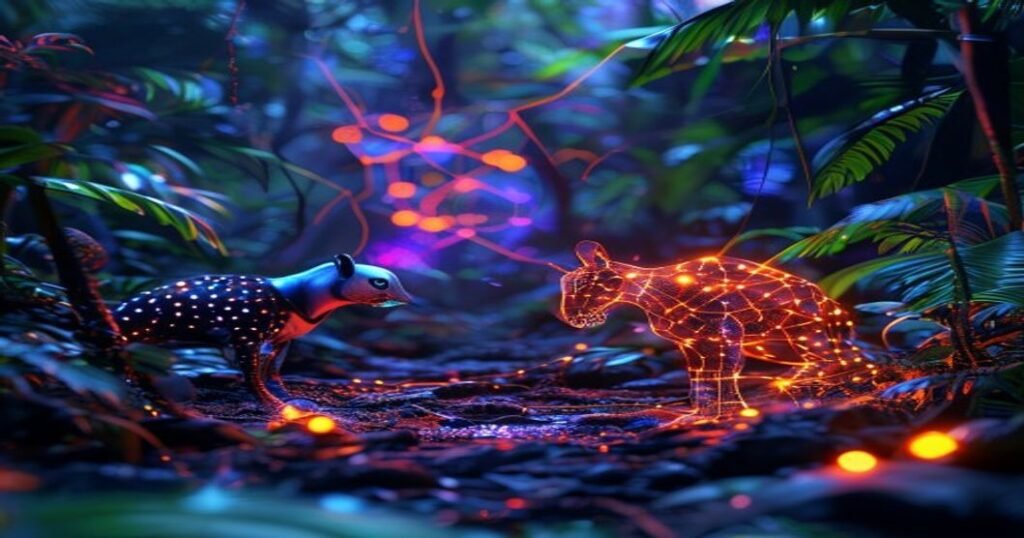

Have you ever paused, truly paused, and wondered about the untold stories unfolding in the depths of our planet’s wild spaces? The silent struggles of an endangered tiger, the intricate migrations of whales, the secret lives of nocturnal creatures? For generations, understanding the animal kingdom has been a monumental, often impossible, task. Our traditional methods, as noble as they are, often feel like trying to catch smoke with a net.
But what if I told you that a profound, transformative shift is underway – a silent revolution not in the dense jungle itself, but in the data streams flowing from it? Yes, we’re talking about Artificial Intelligence – the ultimate game-changer, not just for our tech startups and smart cities, but for the very survival of species that share this fragile Earth with us. It’s a wild, incredible journey, and frankly, it’s one of the most exciting developments I’ve witnessed in how we interact with the natural world. In a very real sense, The Silent Revolution: How AI and Tech Are Unlocking the Secret Lives of Animals and Rewriting Conservation’s Future is no longer just a fancy title; it’s our undeniable reality, happening right now.
The Unseen World: Why We Need Tech More Than Ever
Let’s be brutally honest: humanity has not always been the best steward of this planet. From rampant deforestation and habitat destruction to relentless poaching and the insidious creep of climate change, the animal kingdom faces existential threats on an unprecedented scale. Conservationists, often working on shoestring budgets and with incredible dedication, are constantly playing catch-up. Traditional boots-on-the-ground patrols, manual animal counts, and laborious data entry, while essential, simply cannot keep pace with the magnitude of the problem.
Imagine trying to count every fish in the ocean, track every migratory bird across continents, or identify every individual tiger in a vast, dense forest. It’s a task that stretches human capabilities to their absolute limits, often failing to provide the comprehensive, real-time insights needed for effective intervention. We needed a new set of eyes, ears, and, crucially, a brain capable of processing a world’s worth of information. Enter AI.
AI’s Eyes and Ears: Decoding the Digital Jungle
This is where Artificial Intelligence truly shines, acting as an extension of our senses, allowing us to perceive the wild in ways previously confined to science fiction. The sheer volume of data involved in monitoring ecosystems is staggering, but AI thrives on complexity.
Drones and Satellite Imagery: The Sky’s the Limit
- Poaching Detection: AI-powered drones, equipped with thermal cameras and sophisticated algorithms, can scan vast areas, identifying human intruders or vehicles in real-time, even at night. This provides crucial early warnings to rangers, transforming reactive responses into proactive interventions.
- Habitat Mapping: Satellites feeding data to AI systems can track deforestation, desertification, and changes in water bodies with incredible precision. This helps conservationists understand habitat loss and fragmentation, allowing for targeted restoration efforts.
- Animal Tracking: Forget laborious manual tracking. AI analyzes drone footage and satellite images to identify animal movements, migratory patterns, and even herd dynamics, offering insights into their responses to environmental changes or human encroachment.
Think of these drones and satellites as tireless, silent sentinels, covering vast, often inaccessible terrains that would be impossible for human teams to monitor continuously. They are giving us a God’s-eye view, filtered through the analytical power of machine learning.
Acoustic Sensors: Listening to the Whisper of the Wild
The jungle, the ocean, the savanna – they are never truly silent. They hum with the sounds of life. AI is transforming this ambient noise into actionable intelligence. Networks of acoustic sensors, strategically placed, can pick up everything from the distinct calls of endangered species to the tell-tale sounds of chainsaws (indicating illegal logging) or gunshots (signifying poaching activity). Suddenly, the jungle isn’t just a cacophony; it’s a data orchestra, and AI is the conductor, isolating critical signals from the background noise.
Camera Traps & Facial Recognition (for animals!): The Ultimate ID System
Camera traps have been a conservation staple for years, but the sheer volume of images they generate can overwhelm human analysts. AI changes this entirely. Using sophisticated image recognition, AI can now:
- Identify Individuals: Like a high-tech detective, AI can differentiate individual animals by their unique patterns – a tiger’s stripes, a leopard’s spots, an elephant’s ear notches, or a whale’s fluke markings. It’s like Facebook for jaguars, minus the awkward family photos! This allows for precise population counts and individual health monitoring.
- Behavioral Analysis: By analyzing sequences of images, AI can track behaviors, interactions, and even signs of distress or injury, providing unprecedented insights into social structures and health within populations.
The implications are massive, not just for conservationists, but for any organization looking to leverage cutting-edge analytics to build something truly impactful. In a sense, AI is truly The Invisible Architect: How AI is Silently Rebuilding Our World, and wildlife conservation is just one of its most compelling blueprints.
Predicting the Unpredictable: Proactive Conservation Strategies
But AI isn’t just about observation; it’s about prediction. This is where the magic truly happens, shifting conservation from a reactive battle to a proactive, strategic game of chess.
- Forecasting Poaching Hotspots: By analyzing historical data, environmental factors, and even socio-economic indicators, AI models can predict where and when poaching is most likely to occur. This allows conservation agencies to deploy resources more effectively, putting rangers in the right place at the right time.
- Predicting Disease Outbreaks: Understanding animal health is crucial. AI can monitor environmental conditions, animal behaviors, and even genetic markers to predict potential disease outbreaks, enabling early intervention to prevent epidemics from decimating vulnerable populations.
- Optimizing Resource Allocation: With limited budgets, every dollar and every hour counts. AI helps conservation groups optimize everything from patrol routes to the placement of camera traps and the scheduling of field surveys, ensuring maximum impact for their efforts.
- Mitigating Human-Wildlife Conflict: As human populations expand, conflicts with wildlife are inevitable. AI can analyze animal movement patterns and human activity to predict areas of potential conflict, allowing for strategies like early warning systems or the creation of wildlife corridors to minimize dangerous encounters. Imagine knowing exactly when and where a herd of elephants is likely to cross a busy road, allowing for preventative measures.
Frankly, for any startup or organization serious about making a dent in complex problems – whether it’s saving rhinos or streamlining logistics – embracing AI isn’t optional anymore. It’s become The AI Tipping Point: Why Startups Not Riding This Wave Are Already Sunk, and the conservation world is demonstrating this vividly. The ability to anticipate and act rather than merely react is a superpower AI bestows upon us.
Beyond the Wild: AI in Our Backyards and Homes
The reach of AI, however, isn’t confined to remote jungles and vast oceans. Its influence is increasingly shaping how we interact with animals in our immediate environment – from urban wildlife to our beloved pets.
Urban Wildlife Management
Cities, surprisingly, are teeming with wildlife. From deer navigating suburban landscapes to raccoons exploring our trash cans, human-wildlife interactions are common. AI is being deployed here too:
- Smart Waste Management: AI-powered sensors in bins can help manage waste more efficiently, reducing attractants for urban pests.
- Traffic Management: Integrating wildlife crossing data with traffic flow can help design safer roads and reduce animal-vehicle collisions.
- Ecological Corridors: AI helps identify optimal routes for creating green corridors that allow animals to move safely through urbanized areas, promoting biodiversity even in concrete jungles.
Revolutionizing Pet Care
And then there are our furry (or scaly, or feathered) family members. AI is ushering in an era of personalized, proactive pet care:
- AI-Powered Health Monitors: Wearable devices for pets can track activity levels, sleep patterns, and vital signs, alerting owners to potential health issues before they become critical. Think of it as a Fitbit for your dog, with a built-in vet assistant!
- Smart Feeders & Litter Boxes: These devices use AI to monitor consumption, waste output, and even weight changes, providing crucial data for managing diet and detecting early signs of illness.
- Behavioral Analysis: AI cameras can monitor a pet’s behavior while alone, identifying signs of separation anxiety, stress, or unusual activity that might indicate a problem.
Indeed, just as AI is transforming how we manage entire ecosystems, it’s also revolutionizing our personal spaces. Think about it: from optimizing energy use to creating more intuitive living environments, AI is becoming Your Home’s Secret Brain: How AI and Sustainable Design Are Revolutionizing Interior Spaces, extending its intelligent touch even to how we care for our beloved companions.
The Ethical Jungle: Navigating the Challenges
Of course, no technological marvel comes without its caveats. While AI holds immense promise for animal conservation, we must approach its implementation with careful consideration and ethical foresight.
- Data Privacy and Security: Who owns the vast amounts of data collected on wildlife and ecosystems? How is it protected from misuse or exploitation? Establishing clear protocols for data governance is crucial.
- Cost and Accessibility: High-tech AI solutions are not always cheap or readily accessible, especially for conservation groups in developing nations who often manage the world’s most critical biodiversity hotspots. Bridging this technological divide is a significant challenge.
- Algorithmic Bias: While less direct than in human applications, biased data collection or interpretation could still lead to skewed conservation strategies, potentially overlooking certain species or habitats. Robust testing and diverse data sets are essential.
- The Human Touch: Most importantly, AI is a tool. It empowers, enhances, and extends human capabilities, but it must never replace the passion, local knowledge, cultural understanding, and sheer bravery of human conservationists. We must ensure AI augments, not alienates, the human element in the fight to save our planet’s wildlife. The local ranger on the ground, equipped with AI insights, is far more powerful than AI alone.
The Future is Wild (and Smart): A Vision of Hope
Imagine a future where every endangered species is monitored in real-time, where poaching is a relic of the past because AI systems have rendered it virtually impossible to escape detection. Envision a world where global networks seamlessly share data to fight transnational wildlife crime, where personalized conservation strategies are deployed for individual animals or micro-habitats, and where immersive AI experiences connect people more deeply than ever with the wonders of the natural world.
This isn’t science fiction; it’s the inevitable trajectory of conservation in the modern era. The convergence of unwavering passion for nature and the relentless march of technological innovation is creating something truly extraordinary. It’s an urgent call to action for innovators, developers, and entrepreneurs to lend their brilliance to the wild, to realize that the most impactful problems often lead to the most groundbreaking solutions. The bottom line is clear: the integration of AI into wildlife conservation is not just a trend; it’s a necessity, a beacon of hope for a future where humanity and the animal kingdom can truly thrive together.
Conclusion
The digital roar of AI is echoing through the deepest jungles and across the widest oceans. It’s a sound of hope, a powerful testament to our ingenuity when faced with overwhelming challenges. It promises that we can, with intelligence, empathy, and technological prowess, rewrite the future for the magnificent creatures we share this planet with. Let’s embrace this wave of innovation, not just for the animals, but for our own future too, understanding that a thriving natural world is inextricably linked to our own well-being. The age of intelligent conservation is here, and it’s time to listen to the digital roar.

