

Let’s be honest: walk into any office, virtual or physical, or even just scroll through your social media feed, and you can’t escape it. Artificial Intelligence is the elephant in every room, and it’s not just sitting quietly in the corner; it’s rearranging the furniture, painting the walls, and, frankly, rebuilding the entire house we call the job market. For years, we’ve heard the whispers, then the shouts, about AI’s potential to automate, optimize, and, yes, even obliterate jobs. But what if I told you the narrative is far more nuanced, exciting, and, for many, full of unprecedented opportunity? Because the truth is, the AI revolution isn’t just taking jobs; it’s creating entirely new ecosystems of work that demand a fresh perspective and a hunger for new skills.
The Great AI Shift: From Fear to Fascination (and Opportunity)
It’s natural to feel a pang of anxiety when a disruptive technology arrives. Remember the internet? Or personal computers? Each brought its share of doomsayers and genuine challenges, but ultimately, they created more opportunities than they destroyed. AI, particularly Generative AI, is no different, but its pace is truly astounding. It’s no longer a distant sci-fi fantasy; it’s the silent revolution that’s already rewriting your daily life, often without you even noticing the intelligent algorithms humming away in the background.
I’ve observed countless conversations, from boardrooms to coffee shops, where the primary concern revolves around job displacement. And yes, some routine, repetitive tasks are indeed being streamlined or automated by AI. This isn’t a secret. But focusing solely on job losses misses the forest for the trees. The real story, the one that excites me as a long-time observer of technological shifts, is the emergence of completely new roles and the dramatic evolution of existing ones. Think about it: who knew ‘Prompt Engineer’ would be one of the hottest job titles just a short while ago? Or ‘AI Ethicist’? Or ‘Machine Learning Operations (MLOps) Engineer’? These aren’t just new buzzwords; they represent entirely new career paths.
The AI-Powered Professional: A New Breed of Worker
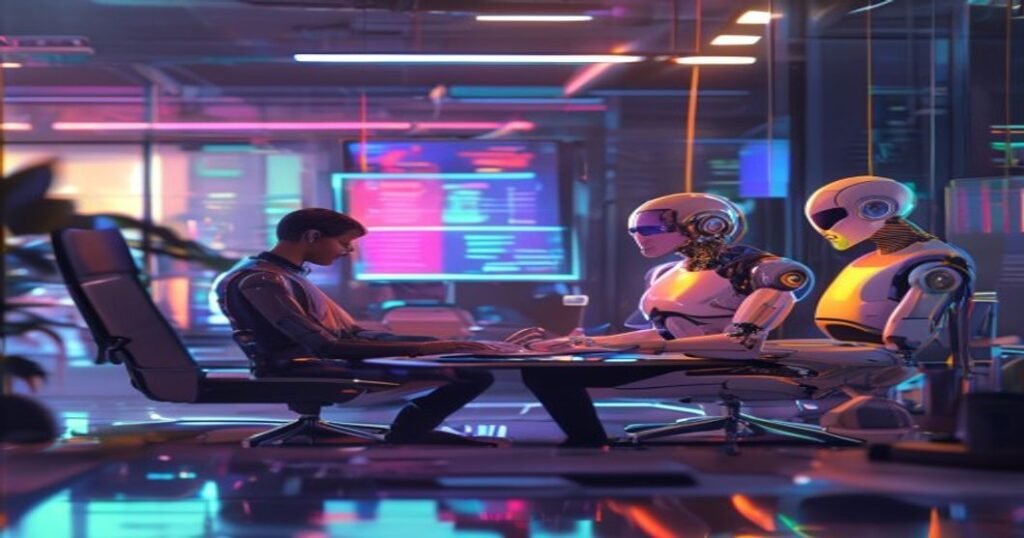
The core shift isn’t about humans vs. machines; it’s about humans *with* machines. AI isn’t here to replace human ingenuity; it’s here to augment it, amplify it, and, in many cases, unleash it. The professional of today, and certainly tomorrow, will be defined not just by their core skills, but by their ability to leverage AI tools to achieve more, faster, and with greater impact. This is where the magic happens, where the human touch meets machine efficiency.
New Roles Emerging from the AI Crucible:
- AI Trainer/Data Annotator: Someone has to teach the AI, right? These roles involve feeding vast amounts of data to AI models, ensuring accuracy, and refining their understanding of the world.
- Prompt Engineer/AI Whisperer: Crafting the perfect prompts to get the best output from Generative AI models is an art and a science. It requires creativity, critical thinking, and a deep understanding of how these models ‘think’.
- AI Ethicist/Governance Specialist: As AI becomes more powerful, ensuring it’s used responsibly, fairly, and ethically is paramount. These professionals help shape the moral compass of AI development and deployment.
- AI Integration Specialist: Businesses need experts to seamlessly weave AI tools into their existing workflows and systems, optimizing processes and ensuring smooth transitions.
- AI-Powered Content Creator/Strategist: While AI can generate text and images, the strategic vision, nuanced understanding of audience, and unique brand voice still come from humans. These roles involve directing AI to produce content that resonates.
- Robotics & Automation Engineers: Designing, building, and maintaining the physical manifestations of AI intelligence.
This isn’t an exhaustive list, but a glimpse into the vast landscape of new opportunities that are blossoming right before our eyes. It’s a testament to how AI’s silent revolution is crafting unprecedented futures, not just in technology, but across every conceivable industry.
Reskilling and Upskilling: The Unavoidable Imperative
So, what does this mean for *you*? It means that continuous learning isn’t just a good idea; it’s essential for survival and prosperity in this rapidly evolving landscape. The skills that were valuable a decade ago might still be relevant, but they’re likely enhanced, if not entirely redefined, by AI’s capabilities.
The good news is that access to learning resources has never been easier. Online courses, bootcamps, certifications – the pathways to acquiring AI literacy are abundant. It’s not about becoming a full-fledged AI developer overnight, but about understanding how AI can augment your current role and recognizing the skills that will be in demand.
Key Skills to Cultivate in the AI Era:
- AI Literacy: Understanding what AI can do, its limitations, and how to interact with it effectively.
- Critical Thinking & Problem Solving: AI can provide answers, but humans still need to ask the right questions and interpret the results critically.
- Creativity & Innovation: These uniquely human traits are amplified by AI. Focus on divergent thinking, ideation, and novel approaches. This is where Generative AI is supercharging human potential, helping us go beyond what we thought possible.
- Emotional Intelligence & Collaboration: AI lacks empathy and the nuances of human interaction. Roles requiring strong interpersonal skills, leadership, and collaboration become even more valuable.
- Adaptability & Lifelong Learning: The pace of change is accelerating. Those who can learn, unlearn, and relearn quickly will thrive.
- Data Fluency: Even if you’re not a data scientist, understanding how to interpret and use data effectively is crucial, as AI is inherently data-driven.
Beyond Automation: AI as a Co-Pilot for Human Genius
I genuinely believe that the most profound impact of AI on jobs will not be replacement, but augmentation. Imagine a graphic designer who can iterate on hundreds of design concepts in minutes with Generative AI, then refine the best ones with their unique artistic vision. Or a writer who uses AI to brainstorm ideas, overcome writer’s block, and generate first drafts, freeing them to focus on narrative, voice, and emotional depth. Or a doctor using AI to analyze vast medical datasets for quicker, more accurate diagnoses, allowing them to spend more quality time with patients.
This isn’t science fiction; it’s happening right now. AI is becoming our intelligent co-pilot, handling the mundane, repetitive, and computationally intensive tasks, thereby freeing us to engage in higher-order thinking, creativity, strategic planning, and the uniquely human aspects of work that truly add value. This transformative power extends beyond the pixels and prose, rewriting reality as we know it across industries.
The Future is Collaborative, Creative, and Continuously Evolving
The jobs of tomorrow won’t just be about what you can do, but how effectively you can collaborate with intelligent machines. It’s a partnership, an exciting new frontier where human intuition and machine intelligence converge to solve problems that were previously intractable. My advice? Don’t fear the machine; learn to dance with it. Embrace the opportunity to upskill, reskill, and reimagine your career path. The demand for human skills that AI cannot replicate – empathy, critical judgment, creativity, strategic thinking, and complex problem-solving – will only grow stronger.
The job market is not shrinking; it’s transforming. It’s becoming more dynamic, more demanding of our adaptability, and, in my opinion, far more interesting. The challenge, and the immense opportunity, lies in positioning ourselves to be part of this new wave, to ride the AI revolution rather than be swept away by it. So, ask yourself: are you ready to learn, adapt, and build the future of work, one AI-powered skill at a time?


