
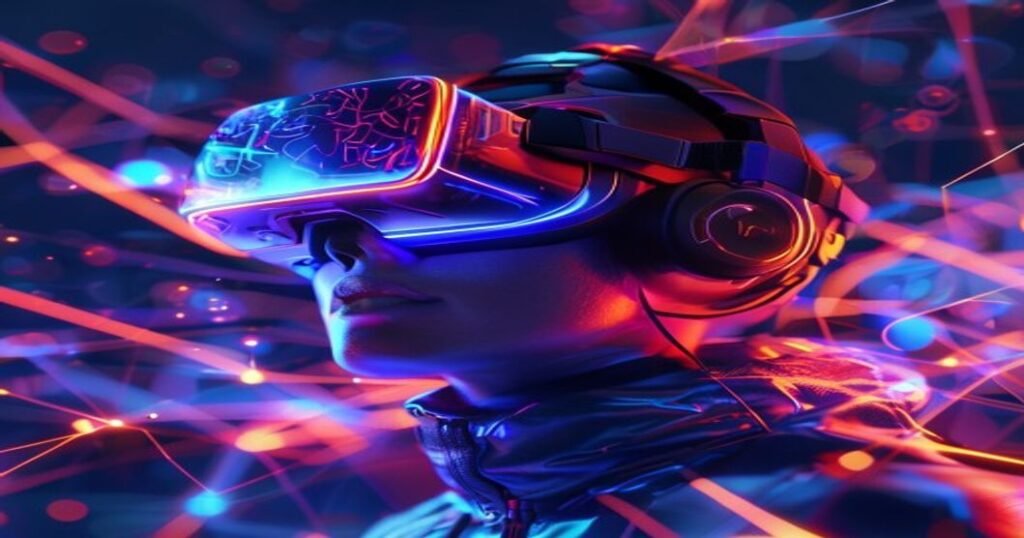

Remember when Artificial Intelligence in games meant slightly smarter enemies who followed predictable patterns? Those days, my friends, are rapidly fading into the pixelated annals of history. What we’re witnessing right now is a silent, profound revolution, a tectonic shift powered by AI that’s not just making games better, but fundamentally changing how we create them, play them, and even experience them. If you thought gaming was immersive before, buckle up – because the true age of intelligent, dynamic virtual worlds is just beginning.
It’s no longer just about the graphics or the sprawling open worlds; it’s about the underlying intelligence that breathes life into every corner of those worlds. From the way our opponents react to our actions to the very fabric of the game’s narrative, AI is the invisible conductor orchestrating an symphony of unprecedented gaming experiences. And frankly, it’s exhilarating to watch unfold.
Beyond the Bots: AI as the Soul of the Game World
For a long time, ‘AI’ in games was synonymous with Non-Player Characters (NPCs). They were the nameless guards patrolling a fixed route, the shopkeepers with a limited dialogue tree, or the bosses with a memorized attack sequence. While these elements are still crucial, modern AI is taking on a much more ambitious role. It’s becoming the very soul of the game world, capable of generating content, adapting to players, and creating experiences that feel truly unique.
Dynamic Worlds That Respond to YOU
Imagine a game world that evolves based on your choices, not just predefined branching paths, but truly emergent behavior. AI is making this a reality. Procedural content generation, supercharged by machine learning, can now create vast, intricate landscapes, unique quests, and even entire ecosystems on the fly. This isn’t just random generation; it’s intelligent design at scale, ensuring every playthrough offers something genuinely new. The game world isn’t a static backdrop; it’s a living entity that learns and grows alongside you.
This level of dynamism means fewer repetitive elements and more genuine surprises. Developers can focus on crafting core mechanics and narratives, while AI handles the heavy lifting of populating and diversifying the world. It’s a game-changer for replayability, offering potentially infinite content that feels fresh every time you dive in.
NPCs with Actual Personalities (and Memories!)
The days of cardboard cutout NPCs are numbered. Modern AI is enabling characters that remember your past interactions, develop opinions, and even form relationships with you and other in-game entities. Imagine a village elder who genuinely remembers that time you saved their grandchild from a goblin attack, and offers you a quest tailored to your heroic reputation. Or a rival who genuinely learns your combat style and adapts their tactics in subsequent encounters.
This goes far beyond simple scripting. These advanced AI models leverage natural language processing and complex behavioral algorithms to create believable, engaging personalities. It blurs the line between pre-written narrative and emergent storytelling, making every interaction feel meaningful. It’s a remarkable feat, transforming what used to be static background noise into vibrant, interactive participants in your adventure.
The Player Experience: Hyper-Personalization and Immersion
The true magic of AI in gaming, from a player’s perspective, lies in its ability to tailor the experience to individual preferences. It’s about making the game feel like it was made just for you, constantly adjusting, learning, and surprising you in ways you didn’t anticipate.
Adaptive Difficulty: No More Frustration, Just Flow
We’ve all been there: a game is either too easy and boring, or so punishingly difficult that you want to throw your controller across the room. AI is solving this perennial problem with adaptive difficulty. Instead of static settings, games can now analyze your performance in real-time – your accuracy, decision-making speed, resource management – and subtly adjust enemy strength, resource availability, or puzzle complexity. The goal isn’t to make it easy or hard, but to keep you in that sweet spot of ‘flow,’ where the challenge feels just right, pushing your skills without overwhelming you. It’s truly a smarter way to play, and it significantly enhances overall enjoyment.
Narrative Branching and Emotional Depth
Beyond simple choices, AI can influence narrative on a deeper, more emotional level. Imagine characters whose emotional states are dynamically generated based on events, leading to unpredictable dialogue and reactions. AI can help create more nuanced storylines, where a character’s reaction to your actions isn’t just ‘good’ or ‘bad’ but a complex spectrum of emotions, making the game world feel infinitely more alive and your impact more profound. This evolution of interactive storytelling is what makes me believe we’re truly just scratching the surface of what gaming can become.
AI in the Trenches: Powering Game Development
While players experience the magic of AI on screen, its impact behind the scenes is equally transformative. Game development is an incredibly complex and resource-intensive endeavor, and AI is stepping in as an invaluable assistant, streamlining workflows and unlocking new creative possibilities.
Content Creation on Steroids
Think about the sheer amount of assets needed for a modern AAA game: 3D models, textures, animations, sound effects, music. AI tools are now assisting artists and designers by generating preliminary assets, suggesting variations, and even automating tedious tasks. Imagine an AI that can generate hundreds of unique tree models based on a few parameters, or compose background music that dynamically adapts to the in-game mood. This doesn’t replace human creativity; it augments it, freeing up developers to focus on the truly innovative and artistic aspects. It’s part of a larger trend where AI is quietly rebuilding every industry from the ground up, and gaming is certainly at the forefront.
Intelligent Testing and Quality Assurance
Finding bugs in massive open-world games is like finding a needle in a digital haystack. AI-powered testing agents can tirelessly explore game environments, execute complex sequences, and identify glitches and exploits far more efficiently than human testers ever could. This means more stable launches, fewer frustrating bugs for players, and a smoother overall gaming experience. It’s an ‘invisible playmaker’ in its own right, silently improving the quality of our beloved titles, much like how AI is silently rewriting the rules of sports by analyzing performance and strategy.
Player Analytics and Game Design Feedback
Understanding how players interact with a game is crucial for improvement. AI-driven analytics can process vast amounts of player data – where they get stuck, what areas they avoid, which mechanics they enjoy – and provide actionable insights to developers. This allows for data-driven design decisions, ensuring that updates and future games are finely tuned to player preferences, creating a more engaging and satisfying product for everyone.
The Future is Now: What’s Next for AI in Gaming?
We’re living through an incredible moment in gaming history, and the pace of innovation isn’t slowing down. As AI continues its exponential growth, its integration into gaming will only become more seamless and profound.
The Rise of AI Companions and Storytellers
Imagine a truly intelligent in-game companion, one that understands complex voice commands, engages in natural conversation, and offers insightful advice based on your current situation. Or an AI dungeon master, capable of improvising entire campaigns on the fly, tailoring challenges and narratives to your party’s strengths and weaknesses. The interactive stories of our dreams are closer than ever.
Cloud Gaming and Mobile AI Power
The synergy between cloud gaming and AI is particularly exciting. With vast processing power available in the cloud, AI models can become even more complex and sophisticated, powering massive, dynamic worlds without taxing local hardware. And speaking of hardware, the increasing AI capabilities of our smartphones mean that even mobile gaming is becoming incredibly sophisticated, turning the AI brain in your pocket into a powerful gaming platform capable of delivering rich, AI-driven experiences on the go.
The Metaverse and Beyond: Persistent, Intelligent Worlds
As the concept of the metaverse gains traction, AI will be indispensable in building and sustaining truly persistent, intelligent virtual worlds. These aren’t just games; they’re digital realities where AI agents will help manage economies, facilitate social interactions, and ensure that these worlds remain vibrant and engaging, even when players aren’t actively present.
The Human Element: Ethics and the Creative Spark
Of course, with great power comes great responsibility. As AI takes on more creative and complex roles in gaming, important discussions about ethics, authorship, and the future of human jobs in game development will continue to evolve. Will AI stifle creativity or unlock new forms of artistic expression? My opinion is firmly in the latter camp. AI, at its best, is a tool, an amplifier for human ingenuity, not a replacement.
The magic of gaming has always been about crafting compelling experiences, pushing boundaries, and telling unforgettable stories. AI is simply the latest, most powerful brush in the artist’s toolkit, allowing them to paint on canvases previously unimaginable.
Final Thoughts: Get Ready for the Next Level
The AI revolution in gaming isn’t a distant future; it’s happening right now, quietly shaping the games we play and the worlds we inhabit. It’s making games more personal, more immersive, and more dynamic than ever before. As a gamer, a tech enthusiast, and frankly, just a human who loves a good story, I find this transformation utterly captivating.
So, the next time you marvel at a game’s intelligent enemies, its dynamically shifting landscape, or a character’s surprisingly nuanced reaction, take a moment to appreciate the silent power of AI at work. It’s not just code; it’s the intelligence that’s redefining what gaming truly means. And trust me, we’ve only just begun to scratch the surface of what’s possible.


