
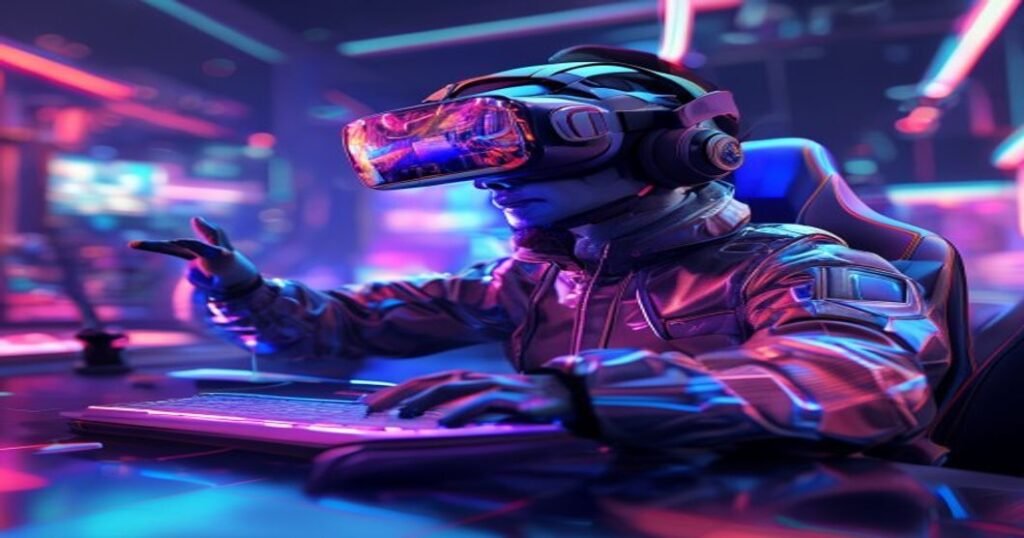

Remember the good old days? Back when a game’s NPCs (Non-Player Characters) had about three lines of dialogue and followed predictable, often hilarious, patrol routes? We loved them, sure, but let’s be honest, they weren’t exactly convincing. Fast forward to now, and we’re on the cusp of a gaming revolution so profound, it’s going to redefine what it means to ‘play’. We’re talking about Artificial Intelligence, and it’s not just tweaking the edges; it’s completely rewriting the rulebook for game development and player experience.
As a lifelong gamer and someone obsessed with how technology shapes our world, I’ve seen a lot of hype cycles come and go. But AI in gaming? This isn’t hype; it’s a fundamental shift. Think about it: smarter enemies, dynamic storylines that adapt to your choices, entire worlds that evolve in real-time, and characters that genuinely feel alive. This isn’t sci-fi anymore; it’s the immediate future of our beloved pastime.
The Dawn of Truly Intelligent Worlds
The first major impact of AI is behind the scenes, in the very creation of the games themselves. Game developers are no strangers to complex tools, but AI is unlocking capabilities that were once the stuff of dreams. Imagine a world designer feeding a few parameters to an AI, and it generates an entire sprawling city, complete with unique architecture, bustling markets, and hidden alleyways, all based on a specific historical or fantastical style. This isn’t just about making assets faster; it’s about crafting environments with a depth and originality that would take human teams years to accomplish.
Generative AI: The Ultimate Creative Co-Pilot
Generative AI, the technology behind those stunning art pieces and compelling text snippets you’ve seen online, is now being put to work in gaming. It’s helping sculpt intricate landscapes, design unique character models, and even write dialogue and quest lines that feel organic and engaging. This isn’t replacing human artists or writers; it’s empowering them. Think of it as having an endlessly creative assistant who can churn out a thousand variations of a concept in minutes, allowing the human touch to refine and perfect the truly brilliant ones. It’s a testament to The Soul of the Machine: How Generative AI is Unleashing a New Era of Human Creativity (and What It Means for YOU), proving that technology can amplify, not diminish, our inherent imaginative spirit.
- Procedural Generation on Steroids: AI algorithms can generate vast, unique worlds that feel handcrafted, ensuring no two players have the exact same experience.
- Dynamic Storytelling: Forget branching narratives; AI allows for genuinely adaptive plots where your choices ripple through the game world in unpredictable and meaningful ways.
- Asset Creation Acceleration: From textures to 3D models, AI can rapidly create and iterate on game assets, freeing up artists for higher-level creative tasks.
NPCs That Actually Feel Alive (and a Little Scary)
This is where the rubber meets the road for players. The days of robotic NPCs are numbered. Modern AI is enabling characters that learn from player behavior, adapt their strategies in combat, and even express emotions that are contextually appropriate. Imagine a shopkeeper who remembers your past purchases and offers personalized recommendations, or an enemy general who studies your tactics and sets traps tailored to your playstyle. This isn’t just about difficulty; it’s about immersion.
In competitive multiplayer games, AI is also becoming an invaluable tool for maintaining fair play. Advanced anti-cheat systems powered by AI can detect suspicious patterns of behavior that human moderators might miss, ensuring a level playing field for everyone. This shift towards AI-driven realism and responsiveness is transforming our living rooms into portals to these intelligent, dynamic universes. Indeed, The AI Revolution in Your Living Room: How Tech is Rewriting the Rules of Modern Lifestyle (And Why You’re Already Hooked) is undeniably manifesting itself through these incredible gaming advancements.
Personalized Gaming: Your Game, Your Rules (Sort Of)
AI isn’t just making games smarter; it’s making them personal. Think about adaptive difficulty that genuinely understands your skill level and adjusts accordingly, not just by boosting enemy health but by changing their tactics or introducing new challenges as you improve. Imagine games that curate content specifically for you, recommending quests or areas based on your past preferences and play history. This level of personalization means every playthrough could feel truly unique, catering to your specific desires and challenges.
The AI Game Economy: Beyond the Pixels
It’s not just about what happens inside the game; it’s about the entire ecosystem. Game developers and publishers are leveraging AI to understand player behavior at an unprecedented level. This data-driven approach isn’t just for marketing; it’s informing design choices, identifying pain points, and even predicting future trends. Understanding what keeps players engaged, what makes them return, and what leads to frustration is crucial for building successful, long-lasting game experiences. In many ways, the strategic application of AI in understanding player engagement and market trends echoes the broader phenomenon described in The AI Seismic Shift: How Generative AI is Rewriting the Rules of Digital Marketing & SEO (And Why You Can’t Afford to Ignore It). Developers are using AI to optimize everything from game loops to monetization strategies, ensuring their creations resonate with a global audience.
The Future is Bright, But Not Without Its Challenges
While the prospect of AI-powered games is incredibly exciting, we can’t ignore the potential pitfalls. Over-reliance on AI could lead to generic experiences if not properly guided by human creativity. There are ethical considerations around data privacy, especially as AI analyzes player behavior in increasingly nuanced ways. And, of course, the age-old question remains: will AI eventually create games entirely on its own, diminishing the need for human developers?
My take? Unlikely. AI is a tool, albeit an incredibly powerful one. It excels at complex calculations, pattern recognition, and rapid iteration. But the spark of true innovation, the emotional resonance, the human touch that makes a game truly unforgettable – that still comes from us. AI will elevate game design, making it more efficient and capable, but the heart and soul of a game will always be the creative vision of its human creators. We’re not looking at AI replacing game developers, but rather augmenting them, allowing them to focus on the grander vision while the AI handles the heavy lifting and intricate details.
Embrace the Evolution: Your Gaming Experience is About to Level Up
We are standing at a fascinating crossroads in the gaming world. The infusion of AI isn’t just a technological upgrade; it’s a philosophical shift in how games are made, played, and experienced. Get ready for games where every NPC has a believable agenda, where stories unfold uniquely for each player, and where the world itself feels like a living, breathing entity. It’s a future where the lines between virtual and reality blur in the most captivating ways, pulling us deeper into the narratives and challenges presented. This isn’t just about better graphics or faster load times; it’s about a fundamentally richer, more intelligent, and infinitely more engaging journey into the digital realms we love to explore. So, charge your controllers, clear your schedules, and prepare to be amazed. The next level of gaming is here, and it’s powered by AI, ready to blow your mind.


