
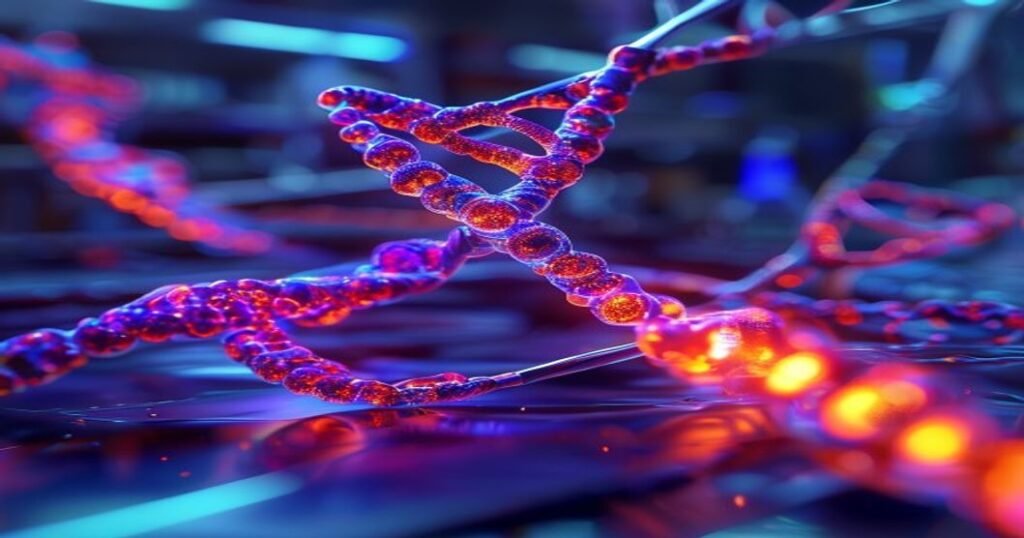

Rewriting Life’s Code: Are We Ready for the Ultimate Power of Gene Editing?
Imagine a world where the very blueprint of life, the DNA that makes us who we are, isn’t a fixed destiny but a malleable script. A script we can edit, correct, and perhaps even enhance. Sounds like science fiction, doesn’t it? Well, buckle up, because that world is no longer a distant dream. It’s here, and it’s called gene editing, spearheaded by a revolutionary technology known as CRISPR.
For me, the sheer audacity and brilliance of gene editing ignite both profound wonder and a deep sense of trepidation. It’s like we’ve been handed the keys to the universe’s most intricate machine – life itself – and now we have to figure out if we’re mature enough to drive it responsibly. The potential is breathtaking, promising cures for diseases that have plagued humanity for millennia. But the ethical tightrope we’re walking? That’s where things get really interesting, and frankly, a little terrifying.
The Dawn of a New Era: What Exactly is CRISPR?
Before we dive into the philosophical deep end, let’s get grounded. At its heart, CRISPR (Clustered Regularly Interspaced Short Palindromic Repeats) is a molecular marvel. Think of it as a pair of incredibly precise molecular scissors that can cut DNA at exact locations. This isn’t some mad scientist’s invention; it was discovered as a natural defense mechanism in bacteria, used to chop up invading viral DNA. Scientists, with their innate curiosity, realized they could harness this bacterial superpower for human purposes.
How does it work? Essentially, you program a ‘guide RNA’ to match a specific sequence of DNA you want to target. This guide RNA, acting like a GPS, leads the CRISPR-associated protein (often Cas9) to that exact spot on the DNA helix. Once there, Cas9 makes a precise cut. The cell, in its attempt to repair this cut, can then be tricked into inserting new genetic material, deleting faulty genes, or simply turning genes on or off. It’s a level of control over the genome we could only dream of just a few years ago. And it’s not just a lab curiosity; it’s already showing incredible promise in real-world applications.
The Promise: Curing the ‘Uncurable’ and Redefining Health
The immediate and most compelling application of gene editing lies in medicine. Imagine eradicating genetic diseases that currently condemn millions to suffering. Diseases like sickle cell anemia, cystic fibrosis, Huntington’s disease, and even certain types of cancer – these could become relics of the past. Clinical trials are already underway, showing incredible results in correcting the genetic errors responsible for some of these conditions. For individuals living with such relentless illnesses, CRISPR offers a glimmer of hope that no other technology has provided.
- Sickle Cell Anemia: Early trials have shown success in editing patients’ own blood stem cells to produce healthy red blood cells, potentially offering a one-time cure.
- Cancer Treatment: Researchers are using CRISPR to engineer immune cells (T-cells) to more effectively recognize and destroy cancer cells, leading to a new frontier in immunotherapy.
- Blindness & Deafness: Hereditary forms of these conditions, caused by single gene mutations, are prime targets for gene correction.
- Agriculture: Beyond human health, gene editing promises to revolutionize agriculture, creating crops that are more resistant to pests and diseases, more nutritious, and better able to withstand climate change. Think about addressing global food security with a new level of precision.
The implications are staggering. We’re not just treating symptoms; we’re addressing the root cause, fixing the errors in our very biological instruction manual. This isn’t just a medical advancement; it’s a profound shift in our relationship with disease, moving from management to potential eradication.
The Peril: Ethical Quandaries and Unforeseen Consequences
But with great power, as they say, comes great responsibility. And here’s where my excitement often gives way to a serious pause. The ability to rewrite life’s code opens up a Pandora’s Box of ethical dilemmas. The most infamous, and rightly so, is the concept of ‘designer babies.’ If we can correct faulty genes, what’s to stop us from trying to enhance ‘desirable’ traits like intelligence, athletic ability, or even eye color? The line between therapy and enhancement is incredibly blurry, and its implications for human diversity and equality are profound.
There’s a critical distinction to be made between somatic gene editing and germline gene editing:
- Somatic Editing: This involves editing cells in a patient’s body (e.g., blood cells, liver cells). The changes made are confined to that individual and are not passed down to their children. This is where most current therapeutic efforts are focused, and it’s largely seen as ethically sound, similar to a new drug treatment.
- Germline Editing: This involves editing reproductive cells (sperm, eggs) or early embryos. Changes made here would be heritable, meaning they would be passed down through generations. This is where the ethical alarm bells truly ring. Altering the human germline means making permanent, irreversible changes to the human gene pool, with potential long-term consequences that we simply cannot foresee. What if we introduce unintended negative consequences that propagate through humanity?
Beyond designer babies, other concerns include:
- Off-target edits: Even the most precise scissors can sometimes slip, leading to unintended cuts in other parts of the genome, potentially causing new problems.
- Accessibility and Equity: Who gets access to this incredible technology? Will it be a luxury for the wealthy, exacerbating health disparities and creating a genetic divide between the ‘haves’ and ‘have-nots’?
- Ecological Impact: Applying gene drives (a form of gene editing designed to spread specific genes rapidly through a population) to eradicate disease-carrying insects or invasive species could have unforeseen and potentially catastrophic effects on ecosystems.
The Unseen Hand: How AI is Accelerating Our Genetic Future
It might seem like gene editing is purely a biological endeavor, but make no mistake, Artificial Intelligence is playing an increasingly pivotal role. The sheer volume of genomic data, the complexity of predicting protein interactions, and the painstaking process of designing optimal guide RNAs for CRISPR – these are tasks where human intuition, while brilliant, simply can’t keep up. This is where the quiet, pervasive power of AI comes into play. AI algorithms can analyze vast datasets of genetic information, identify patterns, and even predict potential off-target effects of CRISPR edits with remarkable accuracy. They are accelerating the pace of discovery, making gene editing safer and more efficient.
In a world where AI is rapidly transforming virtually every sector, from optimizing logistics to even crafting personalized holiday itineraries – truly, how AI is completely reshaping your next adventure – it’s hardly surprising to see its profound impact on something as fundamental as our understanding of life itself. The capabilities that allow for the invisible hand in your suitcase, secretly crafting your dream vacation, are being leveraged in scientific labs to process genomic information at speeds unimaginable just a decade ago. It’s part of a broader phenomenon, an undeniable surge, which we refer to as The AI Acceleration: Why Every Corner of Our World is Being Remade – And What It Means for You, Right Now!. This integration of AI means faster drug discovery, more precise diagnoses, and a more nuanced approach to genetic interventions, pushing the boundaries of what’s possible in gene editing science.
Navigating the Future: A Call for Deliberation
Given the immense power and ethical complexities, responsible governance and public dialogue are not just important; they are absolutely critical. We need robust regulatory frameworks that can adapt to rapid scientific advancements. We need international collaboration to ensure that guidelines are consistent and that gene editing isn’t used for nefarious purposes or to create a genetically stratified society.
Scientists, ethicists, policymakers, and the public must engage in open, informed discussions. We need to decide, as a global community, where the red lines are. What diseases are acceptable targets for germline editing, if any? How do we ensure equitable access? How do we balance the incredible potential to alleviate suffering with the risk of unintended consequences and the potential for misuse?
My Take: Awe, Fear, and the Inevitable March of Progress
As a human being fascinated by science and its societal impact, I find myself in a constant tug-of-war between awe and apprehension when it comes to gene editing. The thought of eliminating debilitating diseases is profoundly moving. The idea of preventing a child from ever suffering from a genetic disorder fills me with immense hope. But then, the specter of unintended consequences, of tampering with the very essence of what it means to be human, sends a shiver down my spine.
My opinion? We cannot, and should not, stop the march of scientific progress. Gene editing is here, and its potential for good is too vast to ignore. However, we must proceed with an unparalleled level of caution, humility, and foresight. This isn’t just another medical breakthrough; it’s a fundamental shift in our relationship with life itself. It demands continuous, earnest, and inclusive ethical debate, ensuring that we use this ultimate power not just for what is possible, but for what is truly good and equitable for all of humanity. The future of our genetic code is no longer just in the hands of nature; it’s increasingly in ours. Let’s hope we prove worthy of the immense responsibility.


