
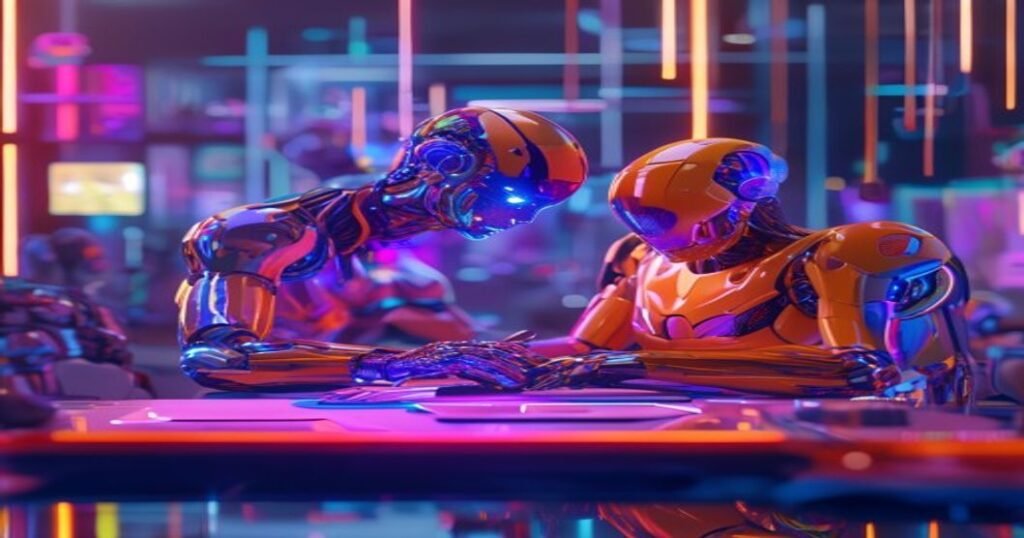

Future-Proof Your Career: Why AI Won’t Steal Your Job, It’ll Transform It (And How to Thrive)
Let’s be real. Every other headline screams about AI taking over, about robots replacing us, about a jobless future. It’s enough to make anyone a little uneasy. But what if I told you that the narrative isn’t quite so apocalyptic? What if, instead of being replaced, your job is about to get a massive upgrade? What if AI isn’t the enemy, but a powerful co-pilot, ready to free you from the mundane and unleash your true potential?
I’ve been watching the tech landscape evolve for years, and frankly, the current discussion around Artificial Intelligence feels a lot like those early days of the internet – a mix of fear, awe, and a fundamental misunderstanding of its true impact. Yes, AI is undeniably a game-changer. It’s rewriting reality, and what it means for you, not just as a consumer, but as a professional navigating a rapidly shifting job market. But here’s my take: the sky isn’t falling. The ground beneath our feet is simply being reshaped, and those who learn to dance on the new terrain will not just survive, but absolutely thrive.
The AI Tsunami: Understanding the Real Impact
The first step to navigating any storm is understanding its nature. AI isn’t a single entity; it’s a vast ecosystem of technologies – machine learning, natural language processing, computer vision, robotics, and more – all working to automate, analyze, and innovate at unprecedented speeds. And yes, this will undoubtedly impact jobs. Repetitive, rules-based tasks are the first in line for automation. Think data entry, routine customer service, some forms of accounting, and even basic content generation.
This isn’t just a prediction; it’s already happening. Businesses are adopting AI tools to streamline operations, cut costs, and improve efficiency. But instead of seeing this as a direct threat to your livelihood, consider it a reallocation of human effort. Imagine shedding the most tedious parts of your workday, allowing you to focus on the strategic, creative, and uniquely human aspects of your role. That’s the real promise of AI.
New Jobs Are Being Born (Yes, Really!)
For every job AI automates, new ones are emerging – often in fields we couldn’t have imagined a decade ago. Just as the internet created roles like ‘web developer’ and ‘digital marketer,’ AI is spawning a whole new class of professions:
- AI Trainers & Annotators: Humans are needed to teach AI models, label data, and ensure their outputs are accurate and unbiased. It’s a critical, behind-the-scenes role.
- Prompt Engineers: This is a fascinating new field! As AI models become more sophisticated, knowing how to craft the perfect ‘prompt’ (the instructions you give an AI) to get the desired output is becoming a highly sought-after skill. It’s part art, part science.
- AI Ethicists & Governance Specialists: Ensuring AI is developed and used responsibly, fairly, and without harmful bias is paramount. These roles are about setting standards and guiding AI’s moral compass.
- AI Integration Specialists: Someone needs to bridge the gap between AI technology and business needs. These professionals help organizations seamlessly adopt and integrate AI solutions into their existing workflows.
- Robotics Technicians & Engineers: As physical robots become more prevalent, the demand for skilled individuals to design, build, maintain, and repair them will skyrocket.
These are just a few examples. The landscape is constantly evolving, proving that human ingenuity, when combined with technological advancement, always finds new frontiers.
The Irreplaceable Human Element: Your Secret Weapon
Here’s the heart of the matter: while AI excels at pattern recognition, data processing, and automation, it still struggles with (and largely lacks) the fundamental human qualities that make us indispensable. These are the skills that will truly future-proof your career:
- Creativity & Innovation: AI can generate variations on existing themes, but true, out-of-the-box conceptualization, artistic vision, and breakthrough innovation still belong to us. The ability to dream, to imagine, to build something truly new – that’s our domain. In fact, for many, generative AI is becoming our new co-pilot, amplifying human creativity rather than replacing it.
- Critical Thinking & Problem-Solving: While AI can analyze data to identify problems, it’s human judgment, nuance, and strategic thinking that truly solve complex, ambiguous issues with no clear-cut answer.
- Emotional Intelligence & Empathy: AI can simulate conversation, but it can’t genuinely understand human emotions, build rapport, or offer true empathy. Roles requiring deep human interaction – therapy, sales, leadership, teaching, nursing – are inherently human-centric.
- Complex Decision Making: Especially when ethical dilemmas, unforeseen variables, or profound human consequences are involved, AI’s data-driven logic needs human oversight and final decision-making power.
- Adaptability & Learning Agility: The ability to learn new skills, adapt to new technologies, and embrace change is perhaps the most critical skill in an AI-driven world.
These are the superpowers that AI, for all its brilliance, cannot replicate. Cultivate them, and you’ll always find your place.
Reskilling and Upskilling: Your Career’s New Best Friends
Okay, so we know AI won’t take *all* our jobs, and it will create new ones. The crucial bridge between ‘then’ and ‘now’ is continuous learning. This isn’t about going back to university for another four years, necessarily. It’s about a mindset of lifelong learning, of actively seeking out opportunities to adapt and grow. The good news? The resources are more accessible than ever before.
Embrace Lifelong Learning:
- Online Courses: Platforms like Coursera, edX, Udemy, and LinkedIn Learning offer a wealth of courses on AI fundamentals, data science, coding, and even soft skills like critical thinking and emotional intelligence. Many are affordable, and some even free.
- Certifications: Industry-recognized certifications can quickly validate your new skills to potential employers.
- Workshops & Bootcamps: Intensive, focused programs can provide a rapid immersion into specific AI tools or concepts.
- Networking: Connect with professionals in AI-related fields. Learn from their experiences, understand the challenges, and identify emerging trends.
- Self-Directed Learning: Read books, follow industry blogs, experiment with AI tools (ChatGPT, Midjourney, etc.) yourself. There’s no better way to learn than by doing.
Remember, the AI revolution in education means learning just got a massive upgrade. It’s no longer a linear path, but a dynamic, personalized journey that can empower you to stay relevant and valuable.
AI as a Co-Pilot: Augmenting Human Potential
Instead of viewing AI as a replacement, let’s reframe it as an incredibly powerful tool. Imagine a surgeon using AI to precisely identify a tumor, or a lawyer using it to sift through millions of documents in seconds, or a marketer predicting consumer trends with unprecedented accuracy. These aren’t jobs being lost; they are professions being supercharged.
AI tools can:
- Automate mundane tasks: Freeing up your time for higher-value work.
- Provide data-driven insights: Helping you make more informed decisions.
- Enhance creativity: Suggesting ideas, generating drafts, or exploring visual concepts.
- Improve efficiency: Speeding up processes and reducing errors.
- Personalize experiences: From customer service to learning paths.
The key is to learn how to effectively leverage these tools. The future belongs not to those who can do things without AI, but to those who can do *more* and do it *better* with AI. It’s about human-AI collaboration, where each brings its unique strengths to the table.
Navigating the Future: Practical Steps for Today
So, what can you do, starting right now, to ensure you’re not just riding the wave, but actively steering your career?
- Assess Your Current Skills: Identify which parts of your job are repetitive and ripe for automation, and which require uniquely human attributes.
- Identify Skill Gaps: Based on the ‘irreplaceable human element’ list, where can you improve? What new skills (technical or soft) will make you more valuable in an AI-augmented world?
- Experiment with AI Tools: Don’t just read about AI; use it! Play with ChatGPT, try an AI image generator, explore AI-powered coding assistants. Get a feel for their capabilities and limitations.
- Network Strategically: Connect with people who are already working with AI. Attend virtual conferences, join online communities, and engage in discussions.
- Cultivate a Growth Mindset: The world is changing fast. Your greatest asset will be your willingness to learn, adapt, and embrace new challenges. See every change as an opportunity, not a threat.
A Word of Caution (and Optimism)
Of course, this transformation won’t be without its challenges. There will be some displacement, and certain sectors will face significant disruption. We must also grapple with ethical considerations, bias in AI models, and the need for robust regulatory frameworks. These are important conversations we must have as a society.
However, I firmly believe that human adaptability and ingenuity will prevail. Every major technological revolution – from the industrial revolution to the digital age – has created more opportunities than it destroyed, albeit different ones. AI is no different. It’s a tool, a powerful extension of our capabilities. It’s up to us to learn how to wield it wisely, ethically, and creatively.
The Takeaway
The future of work isn’t about AI replacing humans; it’s about humans and AI working together in unprecedented ways. It’s about shedding the drudgery and embracing a new era of innovation, creativity, and strategic thinking. Don’t fear the AI wave; learn to surf it. Your career isn’t just safe; it’s about to become more exciting, more impactful, and more human than ever before. Start learning today, because your future depends on it.


