
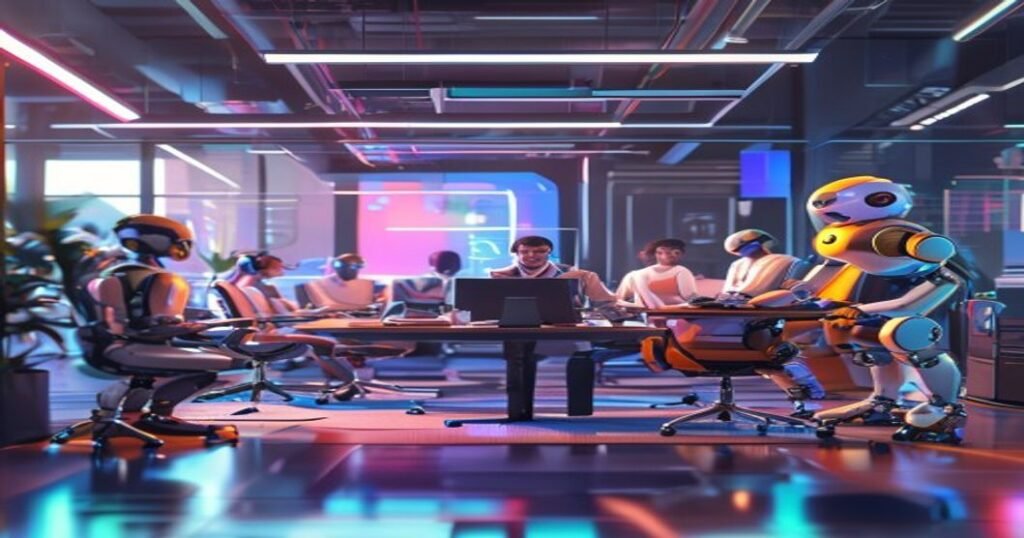

Alright, let’s get real for a moment. Every day, it feels like we’re bombarded with headlines about artificial intelligence. One minute, it’s going to solve all our problems; the next, it’s coming for our jobs. It’s enough to make anyone feel a mix of excitement, anxiety, and frankly, a bit of existential dread. But here at startupurdu.com, we believe in cutting through the noise to give you the actionable insights you need to thrive, not just survive.
So, let’s talk about the future of work. It’s not a distant, sci-fi fantasy anymore. It’s here, it’s evolving at warp speed, and it’s being fundamentally reshaped by AI and automation. The big question isn’t whether AI will impact your job – it’s how, and more importantly, how you can adapt and even flourish amidst this monumental shift. Trust me, this isn’t just about tech; it’s about redefining what it means to be human in a rapidly digitizing world.
The AI Tsunami Isn’t Coming; It’s Already Here
For years, we’ve heard whispers of a future where machines handle the mundane, freeing us for higher-level tasks. Well, those whispers have turned into a roaring AI Tsunami. From automating customer service and data entry to drafting marketing copy and analyzing complex datasets, smart algorithms are no longer just tools; they’re integral parts of our operational infrastructure. This isn’t just happening in Silicon Valley boardrooms; it’s happening in every industry, in every corner of the globe.
I remember a conversation with a seasoned marketing professional just recently. She was initially skeptical about AI’s role in creative fields. Fast forward a few months, and she’s using AI tools to brainstorm campaign ideas, personalize ad content, and even optimize her SEO strategies. Her team isn’t smaller; it’s more productive, more innovative, and delivering results faster than ever before. This isn’t about AI replacing her; it’s about AI elevating her capabilities, allowing her to focus on the strategic, human-centric aspects of her job that truly matter.
Beyond Replacement: The Rise of Augmentation
This is where the narrative often gets skewed. The fear-mongering suggests AI is only about job displacement. While some tasks, and indeed some roles, will undoubtedly be automated, the more powerful and often overlooked trend is augmentation. AI isn’t just taking over; it’s extending our reach, enhancing our decision-making, and supercharging our productivity.
- Data Analysis: AI can sift through mountains of data in seconds, identifying patterns and insights that would take humans weeks. This frees analysts to focus on interpreting these insights and strategizing.
- Creative Fields: From graphic design to music composition, AI assists by generating variations, suggesting palettes, or even drafting initial melodies, allowing human creators to refine and infuse their unique artistic vision.
- Healthcare: AI assists doctors in diagnostics, identifies potential drug interactions, and helps personalize treatment plans, making healthcare more efficient and precise.
- Customer Service: Chatbots handle routine inquiries, allowing human agents to dedicate their time to complex problems requiring empathy and nuanced understanding.
Think of it less as a competition and more as a dynamic partnership. AI handles the computational heavy lifting, while humans bring the critical thinking, creativity, emotional intelligence, and ethical judgment that machines simply can’t replicate (at least not yet!).
Anticipating Tomorrow: Where Human and Machine Meet
The future of work isn’t just about what AI can do; it’s about how we interact with it. Our devices are becoming less about command and more about anticipation. Your next smartphone won’t just respond to your touch; it’ll anticipate you. It’ll know when you need to leave for a meeting, suggest relevant information before you even ask, and intelligently filter your digital world to present what truly matters.
This paradigm shift in human-computer interaction will naturally extend to our workplaces. Imagine AI assistants that proactively manage your schedule, draft emails based on your style, or even prepare summaries of complex documents before your meeting. This kind of anticipatory technology isn’t just a convenience; it’s a fundamental change in how we allocate our cognitive resources, freeing up mental bandwidth for strategic thinking and problem-solving.
The Skills That Matter: Future-Proofing Your Career
So, if machines are getting smarter, what skills should we be cultivating? This is the million-dollar question, and frankly, it’s simpler than you might think. Focus on what makes us uniquely human:
- Critical Thinking & Problem Solving: AI can present data, but humans must interpret it, identify root causes, and devise innovative solutions.
- Creativity & Innovation: While AI can generate ideas, true innovation comes from human imagination, divergent thinking, and the ability to connect seemingly disparate concepts.
- Emotional Intelligence & Empathy: Understanding human needs, motivations, and emotions is crucial for leadership, customer service, and team collaboration – areas where AI falls short.
- Complex Communication: Persuading, negotiating, storytelling, and building relationships require nuanced communication skills that AI cannot fully replicate.
- Digital Literacy & AI Fluency: You don’t need to be a programmer, but understanding how AI works, its capabilities, and its limitations will be as essential as basic computer literacy once was.
- Adaptability & Lifelong Learning: The pace of change means that what’s relevant today might be obsolete tomorrow. A growth mindset and a commitment to continuous learning are paramount.
The good news? Many of these are ‘soft skills’ that are deeply ingrained in human nature, but often undervalued in traditional educational systems. Now, they are becoming our most valuable assets.
The Startup Revolution: Igniting New Possibilities
This era of profound technological change isn’t just for the tech giants. In fact, startups are often the most agile and daring players in leveraging AI to create new solutions and redefine industries. They’re not burdened by legacy systems or bureaucratic inertia, allowing them to experiment, iterate, and innovate at a blistering pace.
We’re witnessing The Digital Roar as youth, particularly in emerging markets like Pakistan, embrace entrepreneurship powered by AI. They’re seeing opportunities where others see challenges – building AI-driven solutions for local problems, creating new digital services, and proving that innovation isn’t confined to specific geographies. This energy is not just about building businesses; it’s about reshaping economies and empowering a new generation to take charge of their future.
These startups are not just adopting AI; they are defining how it will be used in specialized niches, from personalized education platforms to precision agriculture solutions. They’re creating new job categories that didn’t exist a decade ago – prompt engineers, AI ethicists, data narrators, human-AI interface designers. This is where the future of work isn’t just about adapting to change, but actively creating it.
Navigating the Ethical Landscape: The Silent Takeover’s Responsibility
While the opportunities are vast, we cannot ignore the ethical considerations. The Silent Takeover of AI is rewriting every rule of our world, and with that comes immense responsibility. Issues of data privacy, algorithmic bias, job displacement, and the potential for misuse demand our attention. As we design and implement AI in the workplace, we must prioritize human well-being, fairness, and transparency.
This means fostering a culture of ethical AI development, ensuring diverse teams build these technologies, and creating robust regulatory frameworks. It’s not enough to simply develop powerful AI; we must ensure it serves humanity responsibly. This is not just a job for policymakers; it’s a shared responsibility for every developer, entrepreneur, and user.
Your Role in the Rewired Future
So, where does that leave you? Are you an ‘AI-proof’ individual? The answer is: you can be. The future of work isn’t about hunkering down and hoping AI passes you by. It’s about leaning in, understanding the landscape, and proactively shaping your skills and career trajectory.
Embrace continuous learning, cultivate your uniquely human attributes, and view AI as a powerful partner rather than an insurmountable threat. The jobs of tomorrow will increasingly require collaboration between humans and intelligent machines, creating roles that are more strategic, more creative, and ultimately, more fulfilling. The future of work is not just about technology; it’s about humanity’s incredible capacity to adapt, innovate, and thrive in the face of monumental change. Let’s build it, together.


