

Let’s be brutally honest: the natural world is in trouble. We’ve all seen the headlines, the heartbreaking documentaries, the stark warnings about species extinction and habitat loss. For decades, conservation efforts have been a noble, uphill battle, often feeling like a losing one against immense, global forces. But what if I told you that the very technology driving our modern lives, the algorithms powering our apps, and the sensors connecting our world, are now stepping up as unexpected heroes in the fight to save Earth’s wildest creatures?
It’s true. We’re witnessing a quiet revolution, a paradigm shift where artificial intelligence, IoT devices, and advanced data analytics are no longer confined to boardrooms or smart homes. They’ve gone wild, quite literally, and they’re reshaping the future of animal conservation in ways that would have seemed like science fiction just a short while ago. And frankly, it’s about time. This isn’t just a niche topic for nature enthusiasts; it’s a profound demonstration of how human ingenuity, when applied with purpose, can reverse some of our most devastating impacts.
The Eyes and Ears of the Wild: Unseen Guardians
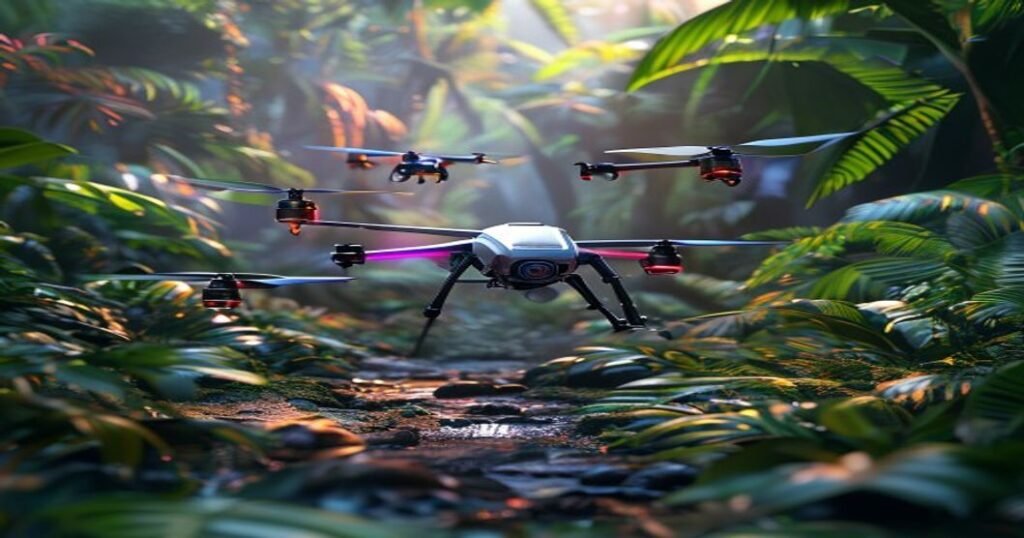
Imagine vast, remote jungles, sprawling savannas, or deep, unexplored oceans. For conservationists, monitoring these areas effectively has always been a logistical nightmare. Traditional methods are costly, dangerous, and often limited in scope. Enter AI and IoT. Drones, equipped with thermal cameras and AI-powered vision, can autonomously patrol vast areas, spotting poachers, detecting illegal logging, or monitoring animal populations with unprecedented efficiency. Acoustic sensors, scattered throughout forests, can pick up the distinctive calls of endangered species or the tell-tale sounds of chainsaws, immediately alerting rangers.
This isn’t just about individual gadgets; it’s about building an interconnected ecosystem of information. Think of it like this: just as AI and IoT are secretly constructing the intelligent networks that run our cities and industries, they are also becoming The Invisible Architects: How AI and IoT are Secretly Building the Intelligent Networks of Tomorrow (And It Means For You) – in this case, for wildlife protection. These networks allow real-time data collection, remote monitoring, and proactive intervention. For example, smart collars on elephants can not only track their movements but also detect unusual behavior patterns (like increased heart rate due to a predator or poacher presence) and send instant alerts. This kind of always-on, intelligent surveillance is literally saving lives.
Cracking Nature’s Code: AI as the Ultimate Interpreter
Beyond simply observing, AI’s real power lies in its ability to process and interpret immense amounts of data. Wildlife generates a staggering volume of information: migratory patterns, feeding habits, social structures, responses to environmental changes, even the nuances of their vocalizations. For human researchers, sifting through this ocean of data would take lifetimes. For AI, it’s a Tuesday afternoon.
AI algorithms can identify individual animals by unique markings or facial recognition, track population trends with incredible accuracy, and even predict potential disease outbreaks by analyzing health indicators or environmental factors. It’s like having The Digital Rosetta Stone: How AI and Modern Tech are Cracking History’s Toughest Codes (And Rewriting Everything You Thought We Knew), but for the intricate, often silent language of the natural world. This allows conservationists to understand complex ecological relationships, identify critical habitats, and pinpoint the most effective intervention strategies far faster and more accurately than ever before. We’re not just collecting data; we’re extracting profound insights that are fundamentally changing our understanding of animal behavior and ecosystem dynamics.
The Time Machine Effect: Learning from the Past, Protecting the Future
One of the most fascinating applications of AI in conservation is its ability to reconstruct past ecological landscapes. By analyzing historical satellite imagery, climate data, and even old explorers’ logs, AI can create incredibly detailed models of how ecosystems used to look, how species populations have changed over time, and what factors led to their decline. This is where AI truly becomes The Ultimate Time Machine: How AI is Unlocking History’s Secrets and Rewriting Everything We Thought We Knew about historical animal populations and environments.
Understanding these historical baselines is crucial. It gives us a clearer picture of what ‘healthy’ looks like for a particular ecosystem and provides targets for restoration efforts. AI can simulate different conservation scenarios, predicting the long-term impact of reintroducing a species, establishing a protected area, or changing land use policies. This foresight allows conservation efforts to move from reactive measures to proactive, data-driven strategies, optimizing resource allocation and maximizing impact.
Beyond the Hype: My Take on the Human Element
Now, I’m an optimist when it comes to technology, but let’s be clear: AI isn’t a magic bullet. It’s a tool, albeit an incredibly powerful one. My biggest concern? That we might become *too* reliant on it, forgetting the invaluable human element. Indigenous knowledge, the wisdom of local communities, and the sheer dedication of rangers on the ground are irreplaceable. AI enhances their efforts; it doesn’t replace them.
There are also ethical considerations. Who owns the data collected? How do we ensure privacy for both animals and the people living near them? And how do we prevent this sophisticated technology from falling into the wrong hands? These are questions we must grapple with as this field evolves. We need to ensure that the AI revolution in conservation, much like the The AI Revolution in SEO & Content: Are We Riding the Wave or Drowning in the Tsunami?, doesn’t overwhelm us but rather empowers us to navigate complex challenges more effectively.
Furthermore, access to this technology isn’t universal. Many of the areas most in need of conservation are in developing nations with limited resources. Bridging this digital divide, ensuring equitable access, and providing training are critical components of any successful global conservation strategy. It’s not enough to build the tools; we must empower everyone to use them.
The Future is Wild (and Smart)
Looking ahead, the integration of AI and smart tech into animal conservation is only going to deepen. We’ll see more sophisticated predictive models, AI-powered genetic analysis to boost biodiversity, and even robotic companions assisting in fieldwork. Imagine tiny, autonomous robots designed to monitor elusive species without disturbing them, or AI systems that can translate animal vocalizations into human-understandable patterns, giving us unprecedented insight into their inner lives.
The stakes are incredibly high. The biodiversity of our planet isn’t just a pretty picture; it’s the foundation of all life, including our own. It provides the air we breathe, the water we drink, and the stability of our climate. When we lose a species, we lose a piece of the intricate web that sustains us all. By harnessing the incredible power of AI and smart technology, we’re not just saving rhinos or rainforests; we’re investing in our own future, ensuring that the symphony of life on Earth continues to play its vibrant, essential tune.
So, the next time you hear about AI, don’t just think about self-driving cars or smart assistants. Think about the silent sentinels watching over our planet’s most vulnerable inhabitants, think about the algorithms deciphering nature’s deepest secrets, and know that humanity’s greatest technological advancements are finally being put to work for the wildest, most vital cause of all. It’s a future where technology empowers empathy, and innovation sparks preservation. And that, I believe, is a story worth telling – and a future worth fighting for.


